When you click on links to various merchants on this site and make a purchase, this can result in this site earning a commission. Affiliate programs and affiliations include, but are not limited to, the eBay Partner Network.
Recently I have seen a few threads with videos of compression tests done by "rotary shops". These were done with a piston compression tester which will not yield any real results besides showing that it is blown (0 compression). Trying to determine that an engine has low compression with a piston tester is a bad idea. The cranking speed of the engine plays a huge role in capturing the correct compression.
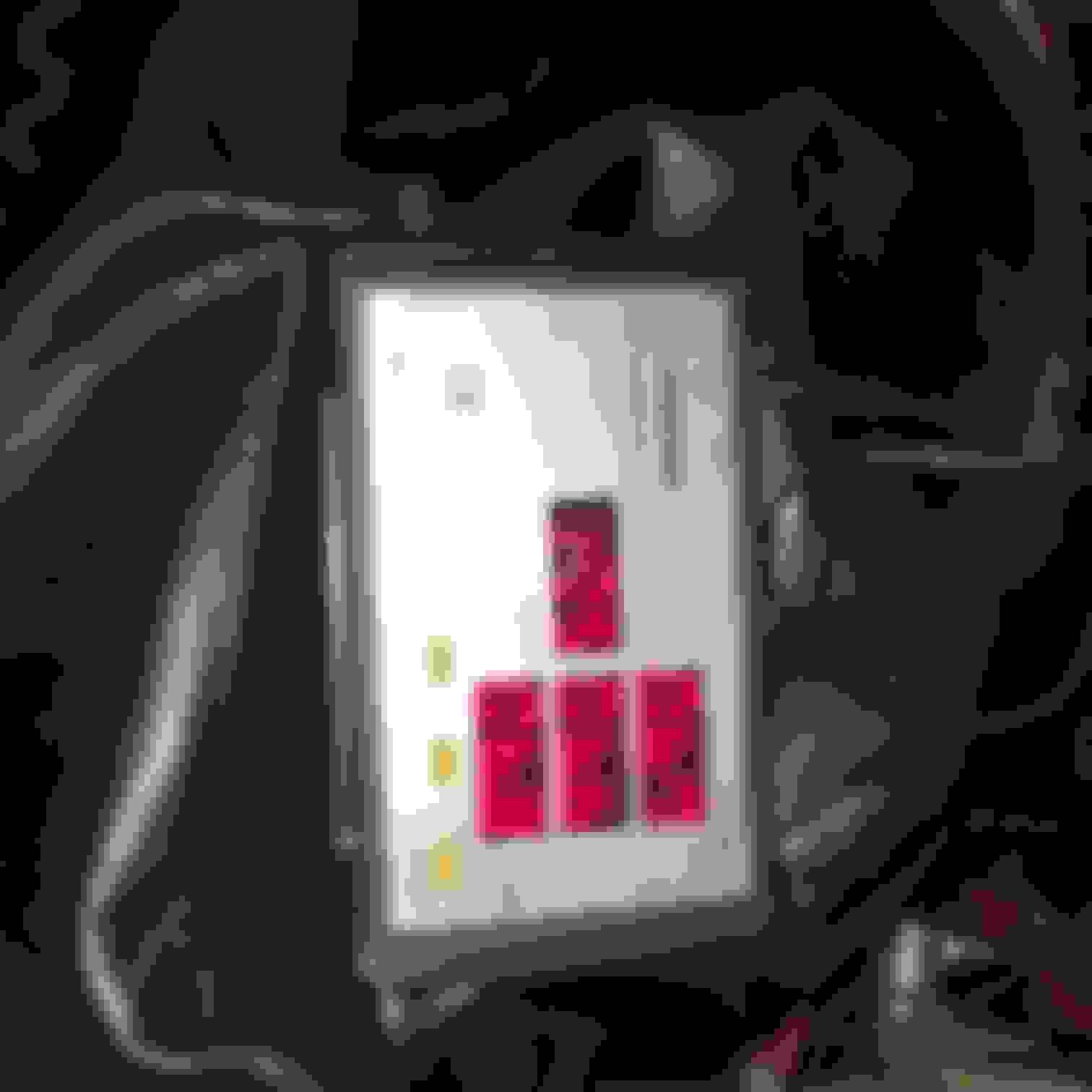
Here is the newest edition of the Mazda Rotary Engine Compression Tester, that we have had for several years. Notice that in the first picture the compression is low 6.7, 6.6, 6.8 (around 95psi) with the rpm reading at 175. The Mazda tester has a 250 RPM normalization button, in the next picture you can see that the compression is perfect 8.5,8.5,8.6 (around 125psi)
No he's showing how much of a difference the proper RPM makes in determining compression...
I'm sure a Mazda compression tester like that runs an arm and a leg. There is a vender that just popped up that has something similar that's around $350.
Piston testers will really only tell you if the engine has some sort of seal failure. The actual numbers that it yields should not be used. The recent video that I saw was a "shop" showing the customer they had low compression, which simply can not be determined with a piston tester since there is no way to capture the cranking speed. It is pretty easy for an unscrupulous "shop" to show 60-70 psi compression, if the engine we were testing above had compression of 105 @ 250rpm it would be down in the 70's @175rpm and this is if the test is done properly with the throttle held wide open. Leave the throttle closed and the compression drops even more drastically.
Last edited by Banzai-Racing; Apr 9, 2016 at 06:59 AM.
But gas is cheap and the drive through the smokies is fantastic! Seriously though, we have family in Carmel so this would likely be just a side trip to consider while visiting this summer. Maybe we can talk about some mods as well. I'll look you up.
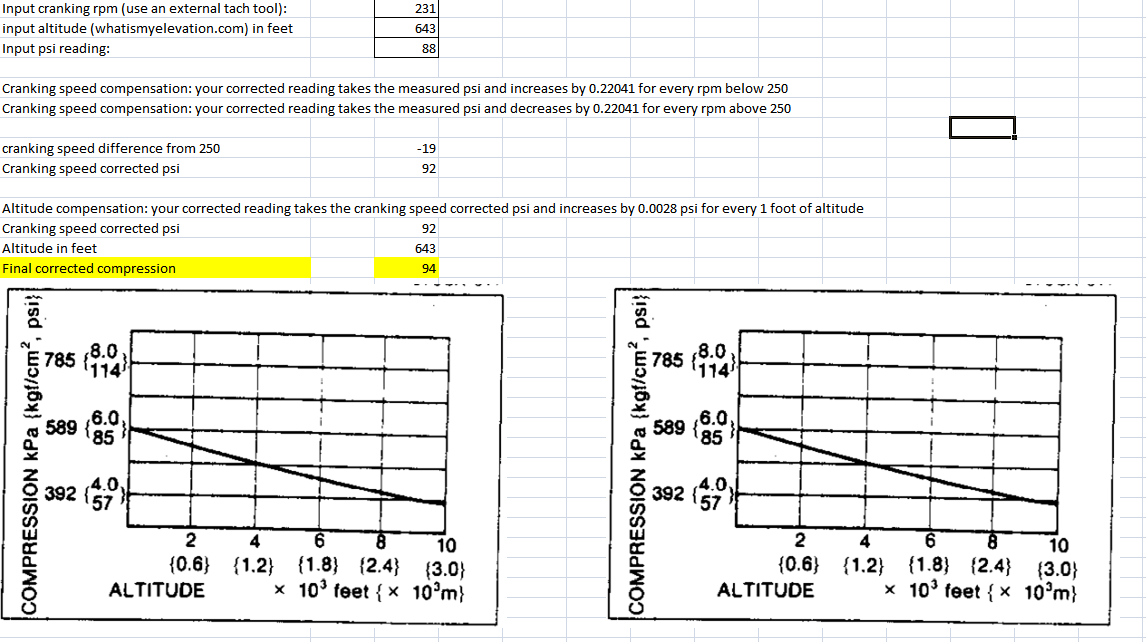
Mazda tester is ideal but You can normalize your compression test with the service manual diagrams for altitude and cranking speed compensation. See page C-10 of the service manual.
The problem is that most people have no idea what their cranking speed is. In the example above the 75rpm difference is not detectable on the tachometer. Even at 175rpm the car has no problem starting.
most of the so called aftermarket compression tester is really just a clone of the Mazda's unit. I seen a few.
For personal use, I think these aftermarket testers are ok. but some of them uses some lame *** pressure sensor that falls apart after couple of times.
what about using the rpm reading on the power fc? it seems pretty accurate. how would one regulate their cranking rpm to ensure that 250rpm is whats happening?
Yes something along those lines. When I deflood, I unplug the coil pack harness and unplug the the fuel pump in the trunk. I remove the spark plugs too of course and I get an rpm reading on the power fc. What im interested in is how to regulate cranking rpm.
Why not unplug the coil harness and take the EGI relay out, that would stop the spark and fuel and then you can read the engine RPM on the commander?
Pull the EGI relay and the PFC gets no power at all, commander will not even light up.
Originally Posted by cr-rex
Yes something along those lines. When I deflood, I unplug the coil pack harness and unplug the the fuel pump in the trunk. I remove the spark plugs too of course and I get an rpm reading on the power fc. What im interested in is how to regulate cranking rpm.
That is a lot of work to deflood , when you just need to pull a relay.
You can't regulate cranking RPM, that is why there is a normalization table in the FSM for cranking speed and altitude. page C-10
My rule of thumb is taking the car to the track and measuring it's trap speed. If that numbers makes you happy then rotor on.
Of course this doesn't help when buying a used car but I prefer this test to any other.
Originally Posted by Banzai-Racing
Recently I have seen a few threads with videos of compression tests done by "rotary shops". These were done with a piston compression tester which will not yield any real results besides showing that it is blown (0 compression). Trying to determine that an engine has low compression with a piston tester is a bad idea. The cranking speed of the engine plays a huge role in capturing the correct compression.
Here is the newest edition of the Mazda Rotary Engine Compression Tester, that we have had for several years. Notice that in the first picture the compression is low 6.7, 6.6, 6.8 (around 95psi) with the rpm reading at 175. The Mazda tester has a 250 RPM normalization button, in the next picture you can see that the compression is perfect 8.5,8.5,8.6 (around 125psi)
I realize that I suggested people reading this thread use the compensation curves in the service manual, but it's not entirely obvious how to do that. So I went ahead and made a Microsoft Excel tool to assist. I am going to make a separate thread to spread the word.
It uses the cranking speed (from some source besides the tachometer in the instrument panel), compression reading in psi, and altitude that can be easily looked up online (whatismyelevation.com). The compensation formula came from determining the linear slope of the curves in the service manual diagrams.
This isn't as good as using a real Mazda compression tester but it's a step towards a more accurate understanding of engine health.