


Opinions on my 180,xxx housings(Pic heavy...ish)


Thread Starter
Too Many Questions
Joined: Jan 2009
Posts: 737
Likes: 0
From: Claremore, Oklahoma
Opinions on my 180,xxx housings(Pic heavy...ish)
I have taken apart my 13b with over 184,xxx miles on it. Both of the housings measure between spec in width. But what gets me is deciding what is usable and what isn't. I have done some searching, and the comparisons between what is usable and what is not is almost conclusive upon the moment its looked at.
Basically, can you help me double check my conclusion on whether to trash these?
Front
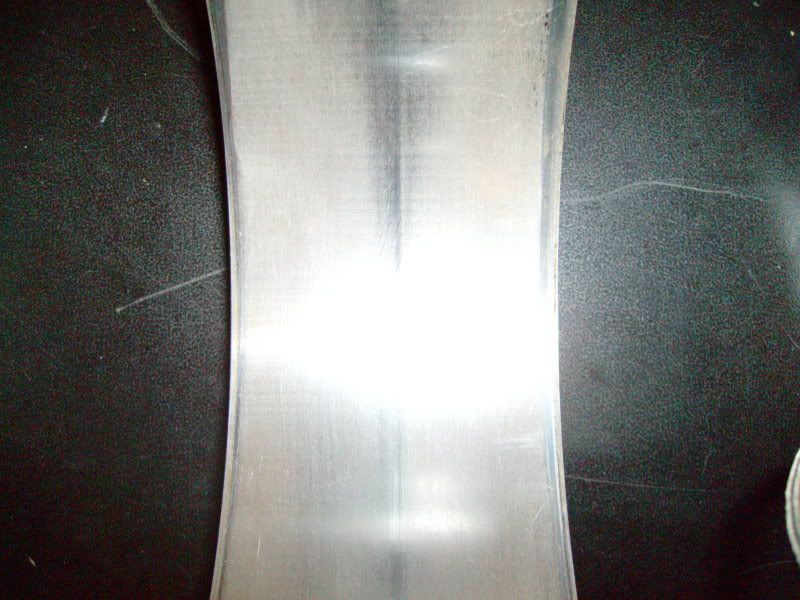
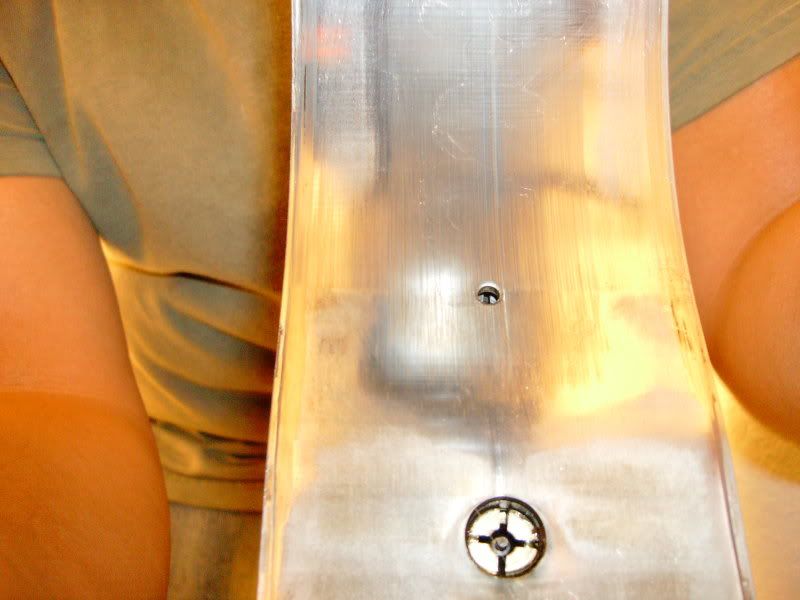
Here is the Front housing. I believe it is trash. The coolant passageways show no signs of deterioration, or cracks. The corner seal trace can be felt with a fingernail slightly; I can't feel chatter marks with my finger. But, above the trailing spark plug, is a groove that I can feel(if the housing was a graph it would be on the X-axis at 2 if it was in mm spacing, and its visible). It isn't deep enough to catch my fingernail though. It can be seen in the second picture. The bottom and top are similar to the first picture.
Rear
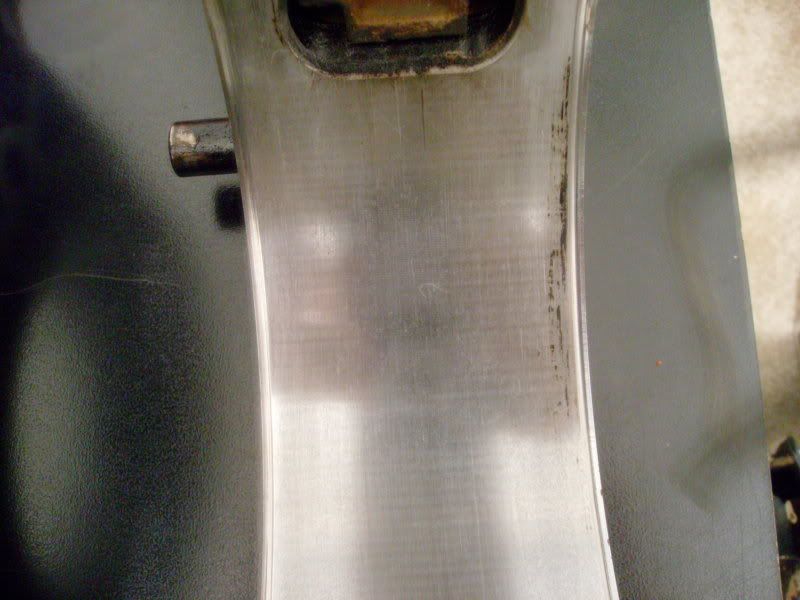
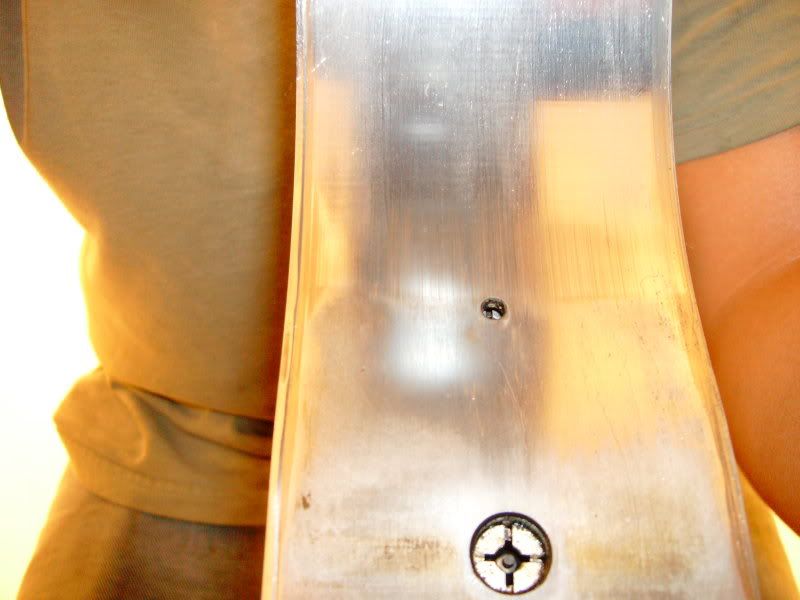
This is the Rear housing. I believe it is re-usable. I cannot feel any chatter marks ;the corner seal trace mark can slightly be felt with my fingernail. There are no cracks around the spark plugs or any signs of deterioration in the coolant passageways. But based on my research, it is acceptable.
*As a bonus, I'm interested in the idea of sending these to JHB Performance to be resurfaced and coated. Since anyone who has had their housings serviced by JHB have not shown their housings further down the road as sort of a "they work/don't work" thing(except 2 that I can find), would these be acceptable candidates?
Tell me what you think based on these pictures, I can produce more if needed.
Thanks for the help!
Basically, can you help me double check my conclusion on whether to trash these?
Front
Here is the Front housing. I believe it is trash. The coolant passageways show no signs of deterioration, or cracks. The corner seal trace can be felt with a fingernail slightly; I can't feel chatter marks with my finger. But, above the trailing spark plug, is a groove that I can feel(if the housing was a graph it would be on the X-axis at 2 if it was in mm spacing, and its visible). It isn't deep enough to catch my fingernail though. It can be seen in the second picture. The bottom and top are similar to the first picture.
Rear
This is the Rear housing. I believe it is re-usable. I cannot feel any chatter marks ;the corner seal trace mark can slightly be felt with my fingernail. There are no cracks around the spark plugs or any signs of deterioration in the coolant passageways. But based on my research, it is acceptable.
*As a bonus, I'm interested in the idea of sending these to JHB Performance to be resurfaced and coated. Since anyone who has had their housings serviced by JHB have not shown their housings further down the road as sort of a "they work/don't work" thing(except 2 that I can find), would these be acceptable candidates?
Tell me what you think based on these pictures, I can produce more if needed.
Thanks for the help!





Thread Starter
Too Many Questions
Joined: Jan 2009
Posts: 737
Likes: 0
From: Claremore, Oklahoma
DD streetport/ do cool stuff. Cool stuff is like drift, autox, rev at stuff.
My irons where also in spec and very nice. It lead me to believe that my engine was rebuilt, but the two previous owners I showed my internals too didn't blame the condition because they babied it too.
My irons where also in spec and very nice. It lead me to believe that my engine was rebuilt, but the two previous owners I showed my internals too didn't blame the condition because they babied it too.


Trending Topics


Joined: Mar 2001
Posts: 31,863
Likes: 3,245
From: https://www2.mazda.com/en/100th/
those look pretty good for 180k... since you're just building a fun toy, i'd be tempted to reuse.
another thing to check is flatness around the compression side, basically around the trailing plug hole. the housings sag = lost compression.
if its a serious car you should buy NEW housings. every engine i've built with new housings (even better irons and rotors too) has been really good
for fun experimental toy? those don't look too bad
another thing to check is flatness around the compression side, basically around the trailing plug hole. the housings sag = lost compression.
if its a serious car you should buy NEW housings. every engine i've built with new housings (even better irons and rotors too) has been really good
for fun experimental toy? those don't look too bad

Thread Starter
Too Many Questions
Joined: Jan 2009
Posts: 737
Likes: 0
From: Claremore, Oklahoma
Pretty much.
...
They had great compression before I pulled my engine. I was using a "piston compression gauge", the front was 112,114,110; the rear was 112,114,112. Way back they were lower, it could of been the weather, and I digress.
So I'm going to port them, change the sleeves, and hope for the best.
*I have another question before this all happens. Is there something I can do to make these have a uniform finish with out removing up to .001 of material?
...
They had great compression before I pulled my engine. I was using a "piston compression gauge", the front was 112,114,110; the rear was 112,114,112. Way back they were lower, it could of been the weather, and I digress.
So I'm going to port them, change the sleeves, and hope for the best.
*I have another question before this all happens. Is there something I can do to make these have a uniform finish with out removing up to .001 of material?

Housing looks pretty good at 180k miles. But it has a slight flaking.. to me, any flaking means failed
Compression number looks good but at what rpm and was the engine fully warmed up
Compression number looks good but at what rpm and was the engine fully warmed up

but lapping will also remove the factory's nitride treatment.
I mean anything before 1979 never had that treatment and it still works fine, if you're on a budget or if you don't need every single bit of durability then I guess it's not bad.
I mean anything before 1979 never had that treatment and it still works fine, if you're on a budget or if you don't need every single bit of durability then I guess it's not bad.




I once revved it outside a church. There were bands playing outside with tons of people. They were all pretty damn mad and i manage to scare the **** out of a pack of kids. Good times...
As for those housing they look good for 180k. You had solid compression before the tear down so i say use them.
As for those housing they look good for 180k. You had solid compression before the tear down so i say use them.

If the irons are in spec, don't lap them. You're better off re-using them as is, with a little prep with an orbital sander and kerosene.
For the housings, they look typical of an engine that had the oil changed regularly and had the oil metering system in place. No visible chatter, not much flaking chrome. The grooves concern me a bit. I would replace them, but if it's just a fun car, go ahead and re-use them.
For the housings, they look typical of an engine that had the oil changed regularly and had the oil metering system in place. No visible chatter, not much flaking chrome. The grooves concern me a bit. I would replace them, but if it's just a fun car, go ahead and re-use them.
Thread Starter
Too Many Questions
Joined: Jan 2009
Posts: 737
Likes: 0
From: Claremore, Oklahoma
I'm going to most likely try to get new TII housings and the caps when I actually build my engine, or try to find "like new ones".
For the irons, I tried Lynn E. Hanover's way, but I felt dumb. They are in spec, so I'm going to just leave it at that.
I want it to be a fun car, but reliability is still at the top.


it's your first build, am i correct? if i recall, you're also porting for the first time, too, right? as long as you've resigned yourself to possible mistakes, then i say use them. it might even be better that way in case things go south. you wouldn't want to hose better housings and be stuck with "less-than-better" housings.

The grooves on the edges, is that normal? I pulled a blown motor apart + the side that didn't blow an apex seal had a groove like that on the edge. I can feel it w my finger. Good or bad?

Thread
Thread Starter
Forum
Replies
Last Post
Skeese
Adaptronic Engine Mgmt - AUS
65
Mar 28, 2017 03:30 PM
