


What PSI are you running on your tires?

Thread Starter
TopGunM2k


Joined: Sep 2004
Posts: 302
Likes: 27
From: San Jose, CA
What PSI are you running on your tires?
Hi guys, I have always made it a habit to run 80-88% of the max psi marked on the tires. I started doing this long ago when I noticed that certain tires have a higher max psi and the posted psi on the door jam didn’t cut it. I am currently running Kuhmo 185/70/13 (stock x wheel) at 36psi all around that have a max psi of 44. I found this to be the best overall for my setup that includes BC coilovers and a rear sway bar delete. I tried running 32 psi and 29 psi in the rear as I did when I last owned a 1st gen running 17’s. I did not like running them that low as the car felt too soft on high speed turns. The steering also felt too stiff and less responsive. I wanted to see what success others have had in dialing in their psi for their specific setup.
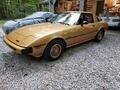

You do not want to run the max inflation pressure listed on the tire in the tire. I always go by the manufacturer's suggested inflation and adjust to what is comfortable for the tires and the car. I run 35psi in all of my RX-7's. It seems to be a good balance of pressure, allowing the vehicle to track well and also does not effect fuel economy in a negative way.
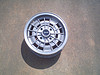
I have 205/50x15 Falken Azenzi 660+ tires on konig wheels and I routinely run 33 in the front and 31 in the rear. I still have my rear swaybar and lowering the rear pressure makes it stick better.


Joined: Mar 2001
Posts: 31,796
Likes: 3,210
From: https://www2.mazda.com/en/100th/
its complicated, and i could go on, but briefly, if its a street car, you want to start with the recommended pressure in the door jamb (or better if the tires had something)with the tires cold. if its a race car you'd start at that PSI with the tires hot
basically a hot race tire runs around 160-180f, and since air expands when it heats up, to go from ~50f to 160f is about 7psi.
on a street car measuring it with the tires cold means you start at the minimum and go up. race car we don't care about that, we're trying to hit the target temp.
i could keep going if you'd like
basically a hot race tire runs around 160-180f, and since air expands when it heats up, to go from ~50f to 160f is about 7psi.
on a street car measuring it with the tires cold means you start at the minimum and go up. race car we don't care about that, we're trying to hit the target temp.
i could keep going if you'd like

Full Member
Joined: Apr 2025
Posts: 107
Likes: 29
From: SE Ontario, Canada
Problems with everything posted so far. j9fd3s Has the best closest answer but if you're running tires different than what shipped with the car...
The best answer I've seen so far is to inflate to recommended pressure on the cars info plate (close enough for now). Then mark your tires across the tread with some chalk or whatever. Roll the vehicle back and forth until some of that wears off.
If the middle wears off first, you're under inflated.
If the outside wears off first, you're over inflated.
If the chalk/marking wears pretty much uniformly, you're in the sweet spot.
The best answer I've seen so far is to inflate to recommended pressure on the cars info plate (close enough for now). Then mark your tires across the tread with some chalk or whatever. Roll the vehicle back and forth until some of that wears off.
If the middle wears off first, you're under inflated.
If the outside wears off first, you're over inflated.
If the chalk/marking wears pretty much uniformly, you're in the sweet spot.

84SE-EGI helpy-helperton
Joined: Oct 2002
Posts: 3,573
Likes: 536
From: Phoenix, AZ
Yokohama AVS, 205/55×15 on 15×7 wheels on an SE with RB springs, stabilizer bars and reinforced Watts Link, front triangulating strut bar, and Mariah airdam, ground effects, with a Pacific whale tail, and about 30lbs of Dynamat added to the bottom floorpan and rear deck. Running 28psi rear and 32psi front, because I deactivated the power steering. I weigh 177lbs in fighting form, and I don't tend to carry passengers.
The reason why I mention all of those details is because EVERY car is going to be different. Try moving PSI up or down a few and driving it that at for awhile. Eventually you'll settle on what feels best - and it's a blend of ride comfort vs. cornering feel. You'll need to experiment a bit,...
The reason why I mention all of those details is because EVERY car is going to be different. Try moving PSI up or down a few and driving it that at for awhile. Eventually you'll settle on what feels best - and it's a blend of ride comfort vs. cornering feel. You'll need to experiment a bit,...

Trending Topics

Rereading the original post, it seems like you are looking for tire pressure recommendation related to performance driving and not necessarily longevity.
36psi, which is high for normal street driving in a light weight car, feels better when you push your car because of the tires you are using and the suspension updates you have made. The Kumho tires your are using are not performance tires and they have a tall side wall. The BC Coil Over setup is stiffer than the stock springs that came on your car. In circumstances like this, a higher tire pressure is a common band aide. We will do this to improve the performance for a new person that shows up at an autox on all season/high tread wear tires. We add air. Depending on the tires and the car, pressures might end up in the 40+psi range.
Why? All tires "roll over" or deform when lateral forces are applied. When a tire "rolls over" more of the side wall of the tire contacts the road or track surface. For high profile/non-performance tires the tendency of the tire to roll over will be much more pronounced and it will happen very quickly. This can be made worse when these kinds of tires are paired with a performance oriented suspension (coil overs, sway bars, etc.). Racing tires, DOT R-Comp TIres and really good 200TW tries are less prone to this. However, it can still happen if these tires are under inflated, the car is camber challenged (Mini Cooper) and or the car's alignment doesn't have enough negative camber dialed in.
Measuring tire roll over is easily accomplished with chalk. I have attached a video that explains this. Chalk is my go-to if I don't have my pyrometer with me and it is how we typically tune tires for new autox drivers. If you want something more accurate than chalk, you will need a probe type digital pyrometer and good tire gauge.
36psi, which is high for normal street driving in a light weight car, feels better when you push your car because of the tires you are using and the suspension updates you have made. The Kumho tires your are using are not performance tires and they have a tall side wall. The BC Coil Over setup is stiffer than the stock springs that came on your car. In circumstances like this, a higher tire pressure is a common band aide. We will do this to improve the performance for a new person that shows up at an autox on all season/high tread wear tires. We add air. Depending on the tires and the car, pressures might end up in the 40+psi range.
Why? All tires "roll over" or deform when lateral forces are applied. When a tire "rolls over" more of the side wall of the tire contacts the road or track surface. For high profile/non-performance tires the tendency of the tire to roll over will be much more pronounced and it will happen very quickly. This can be made worse when these kinds of tires are paired with a performance oriented suspension (coil overs, sway bars, etc.). Racing tires, DOT R-Comp TIres and really good 200TW tries are less prone to this. However, it can still happen if these tires are under inflated, the car is camber challenged (Mini Cooper) and or the car's alignment doesn't have enough negative camber dialed in.
Measuring tire roll over is easily accomplished with chalk. I have attached a video that explains this. Chalk is my go-to if I don't have my pyrometer with me and it is how we typically tune tires for new autox drivers. If you want something more accurate than chalk, you will need a probe type digital pyrometer and good tire gauge.
Thread Starter
TopGunM2k
Joined: Sep 2004
Posts: 302
Likes: 27
From: San Jose, CA
I forgot to add to the list; I also have a 12 inch Alpine Type R Sub (24+lbs) and Big Vented Box with 2 AMP's bolted on (30+lbs). This extra weight is probably why the 36 psi seems to work best for me. I actually reduced the rear to 34psi this weekend and noticed it felt better on turns. In my case, my sweet spot is the 34psi-36psi range it seems.

Thread
Thread Starter
Forum
Replies
Last Post