


Vacuum advance question. I do this right?




Lives on the Forum

Joined: Jun 2004
Posts: 11,359
Likes: 14
From: Grand Rapids Michigan
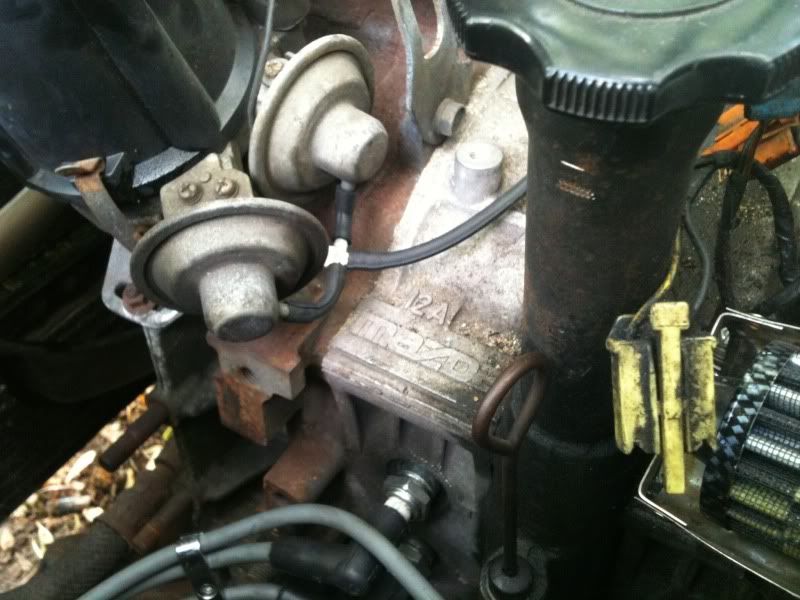
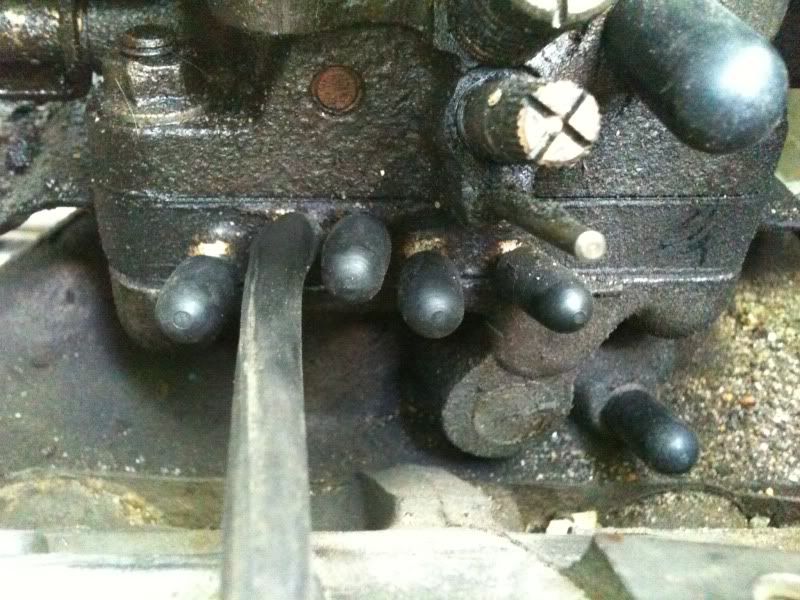
Try it there, and then try it on the port farthest forward. I believe the port you are using is manifold vacuum, whereas the port farthest forward is ported vacuum.
Since you don't have the rat's nest, you don't want to use manifold vacuum. Because, that would mean that it would advance the timing at idle, then retard it as soon as you press the accellerator. That would result in reduced performance.
Ported vacuum would leave the timing alone at idle, then advance it as you begin to accelerate, resulting in increased power and torque.
You can try it both ways to see what you think works best, just remember that you'll have to check/adjust the timing when changing between the two.
When you have the rat's nest installed, I believe there is a solenoid or switch that controls it to keep it from degrading performance. But without it, you should consider ported.
Make sense?
.
Since you don't have the rat's nest, you don't want to use manifold vacuum. Because, that would mean that it would advance the timing at idle, then retard it as soon as you press the accellerator. That would result in reduced performance.
Ported vacuum would leave the timing alone at idle, then advance it as you begin to accelerate, resulting in increased power and torque.
You can try it both ways to see what you think works best, just remember that you'll have to check/adjust the timing when changing between the two.
When you have the rat's nest installed, I believe there is a solenoid or switch that controls it to keep it from degrading performance. But without it, you should consider ported.
Make sense?
.


For stock operation on the 12A, two vacuum solenoids control the vacuum, as well as the throttle position sensor. This allows the manifold vacuum to be converted into pseudo port vacuum. The operation is as follows:
At idle, there is no vacuum present.
At 1000-1200 RPM, the leading vacuum solenoid opens applying leading vacuum advance.
At 2900-3100 RPM, the trailing vacuum solenoid opens applying trailing vacuum advance.
If throttle is released past 4000 RPM, both trailing and leading vacuum advance is cut.
Main thing is to have either port vacuum as Kentetsu said or use the stock solenoids with the TPS to convert the manifold vacuum.
At idle, there is no vacuum present.
At 1000-1200 RPM, the leading vacuum solenoid opens applying leading vacuum advance.
At 2900-3100 RPM, the trailing vacuum solenoid opens applying trailing vacuum advance.
If throttle is released past 4000 RPM, both trailing and leading vacuum advance is cut.
Main thing is to have either port vacuum as Kentetsu said or use the stock solenoids with the TPS to convert the manifold vacuum.


also, i've always read on here to have it hooked to the second nipple from the left, from driver's side perspective (as Joe currently has it). unfortunately i let my girlfriend borrow my car so i don't have it with me to go check if there is vacuum at idle or not.

Absolute Power is Awesome

Joined: Mar 2001
Posts: 1,973
Likes: 5
From: Issaquah, WA
Try it there, and then try it on the port farthest forward. I believe the port you are using is manifold vacuum, whereas the port farthest forward is ported vacuum.
Since you don't have the rat's nest, you don't want to use manifold vacuum. Because, that would mean that it would advance the timing at idle, then retard it as soon as you press the accellerator. That would result in reduced performance.
Ported vacuum would leave the timing alone at idle, then advance it as you begin to accelerate, resulting in increased power and torque.
You can try it both ways to see what you think works best, just remember that you'll have to check/adjust the timing when changing between the two.
When you have the rat's nest installed, I believe there is a solenoid or switch that controls it to keep it from degrading performance. But without it, you should consider ported.
Make sense?
.
Since you don't have the rat's nest, you don't want to use manifold vacuum. Because, that would mean that it would advance the timing at idle, then retard it as soon as you press the accellerator. That would result in reduced performance.
Ported vacuum would leave the timing alone at idle, then advance it as you begin to accelerate, resulting in increased power and torque.
You can try it both ways to see what you think works best, just remember that you'll have to check/adjust the timing when changing between the two.
When you have the rat's nest installed, I believe there is a solenoid or switch that controls it to keep it from degrading performance. But without it, you should consider ported.
Make sense?
.
Ask me about my wankel

Joined: May 2006
Posts: 571
Likes: 0
From: Bay City, Michigan
I used the 2nd port too.
Kentetsu does it make that much of a diffrence? I'll have to try it.
JoeNoble did you notice a large decrees in MPG? When I did mine I lost 5MPG not that it matters but was just curious. I’m also running a RB collected system.
Kentetsu does it make that much of a diffrence? I'll have to try it.
JoeNoble did you notice a large decrees in MPG? When I did mine I lost 5MPG not that it matters but was just curious. I’m also running a RB collected system.
Trending Topics

Junior Member
Joined: Apr 2010
Posts: 24
Likes: 0
From: vermont
also there are alot of pictures missing in there.

In Carl, and Pratch's Rats nest removal tutorial, it's connected to the 2nd nipple. Probably because that's where it goes stock, and they didn't have time to experiment with different vac sources for everything. I tried it on the "port farthest forward"= the nipple to the left of the the one used in Joe's photo, AKA #1, and liked the results.
Lives on the Forum
Joined: Jun 2004
Posts: 11,359
Likes: 14
From: Grand Rapids Michigan
The biggest difference I felt (using the nipple at the base of the carb, closest to the front of the car) was an increase in torque in the low to mid-range operation. Made the car very peppy.
Junior Member
Joined: Apr 2010
Posts: 24
Likes: 0
From: vermont
Im a noob so don't shoot me, but has any one experimented with using both vac sources and hooking them up so one goes to leading and the other to trailing. or do they need to share a vac source? this way one would be activated at idle and the other would not, or visa versa.
Absolute Power is Awesome
Joined: Mar 2001
Posts: 1,973
Likes: 5
From: Issaquah, WA
This is the difference you felt between the two nipples? I wouldn't expect much difference at all in the way the car runs, just some idle smoothness differences since the vacuum signal should be the same once the throttle is cracked open.


Junior Member
Joined: Apr 2010
Posts: 35
Likes: 0
From: Oregon
Where is the source of vacuum on the first nipple? Im having trouble with my advance as well. I only get advance without vacuum to the dizzy, this seems backwards to me. It should be adv. with vacuum right?
When at idle if I apply vacuum with a pump it goes retarded, wtf?
When at idle if I apply vacuum with a pump it goes retarded, wtf?
Lives on the Forum
Joined: Jun 2004
Posts: 11,359
Likes: 14
From: Grand Rapids Michigan
(without rat's nest):
Manifold: press accelerator and you start losing vacuum, which results in less advance just when you could really use it.
Ported: press accelerator and you begin advancing ignition, which results in increased torque.
.................................................. .................................................. ......................
Keep in mind that the differences will mainly be felt at lower rpms, and at partial throttle. It makes for a whole different driving experience around town, or in traffic. The difference is definitely noticeable.

Absolute Power is Awesome
Joined: Mar 2001
Posts: 1,973
Likes: 5
From: Issaquah, WA
No, the vacuum signals are reversed between the two setups.
(without rat's nest):
Manifold: press accelerator and you start losing vacuum, which results in less advance just when you could really use it.
Ported: press accelerator and you begin advancing ignition, which results in increased torque.
.................................................. .................................................. ......................
Keep in mind that the differences will mainly be felt at lower rpms, and at partial throttle. It makes for a whole different driving experience around town, or in traffic. The difference is definitely noticeable.
(without rat's nest):
Manifold: press accelerator and you start losing vacuum, which results in less advance just when you could really use it.
Ported: press accelerator and you begin advancing ignition, which results in increased torque.
.................................................. .................................................. ......................
Keep in mind that the differences will mainly be felt at lower rpms, and at partial throttle. It makes for a whole different driving experience around town, or in traffic. The difference is definitely noticeable.
http://www.corvetteactioncenter.com/...m-advance.html


Lives on the Forum
Joined: Jun 2004
Posts: 11,359
Likes: 14
From: Grand Rapids Michigan
Not that I want to get into this again, but you really do want manifold vacuum for vacuum advance.
http://www.corvetteactioncenter.com/...m-advance.html
http://www.corvetteactioncenter.com/...m-advance.html
(Shakes head, turns off computer, then throws it out the window)
Absolute Power is Awesome
Joined: Mar 2001
Posts: 1,973
Likes: 5
From: Issaquah, WA
Corvette, Moped, lawn mower, airplane, Rx-7, combustion doesn't care much.
either way, i felt some vacuum at idle from that nipple (the one furthest forward) and it stayed constant even under load.
I did feel a bit more torque, but it made my idle a bit lumpy, which i guess would be fixed once i get a timing lamp to set the trailing right where it needs to be, since i don't have one, i can only set the leading by aligning the marks on the dizzy.
I did feel a bit more torque, but it made my idle a bit lumpy, which i guess would be fixed once i get a timing lamp to set the trailing right where it needs to be, since i don't have one, i can only set the leading by aligning the marks on the dizzy.