


Nikki issues!


If I'm accelerating with the choke activated (pull out the ****), and then shut the choke off (push in the ****) I get a ~.5s burst of acceleration, and then I can hear intake noise and nothing else. AP isn't pumping any fuel into the primary barrels.
New carb rebuild kit hits my doorstep today. I'll try and get the AP installed this weekend before leaving on Sunday.
So I didn't get my new AP diaphgram installed before leaving for my work road trip. Here is a question that has been nagging me since I left:
The large diameter weight goes under the AP nozzle, and the small diameter weight goes above the check ball between the AP and the rear fuel bowl, correct?
The large diameter weight goes under the AP nozzle, and the small diameter weight goes above the check ball between the AP and the rear fuel bowl, correct?


Joined: Jun 2008
Posts: 8,376
Likes: 28
From: Chino Hills, CA
Large diameter weight goes above the check ball, below the nozzle bolt and gasket, yes;
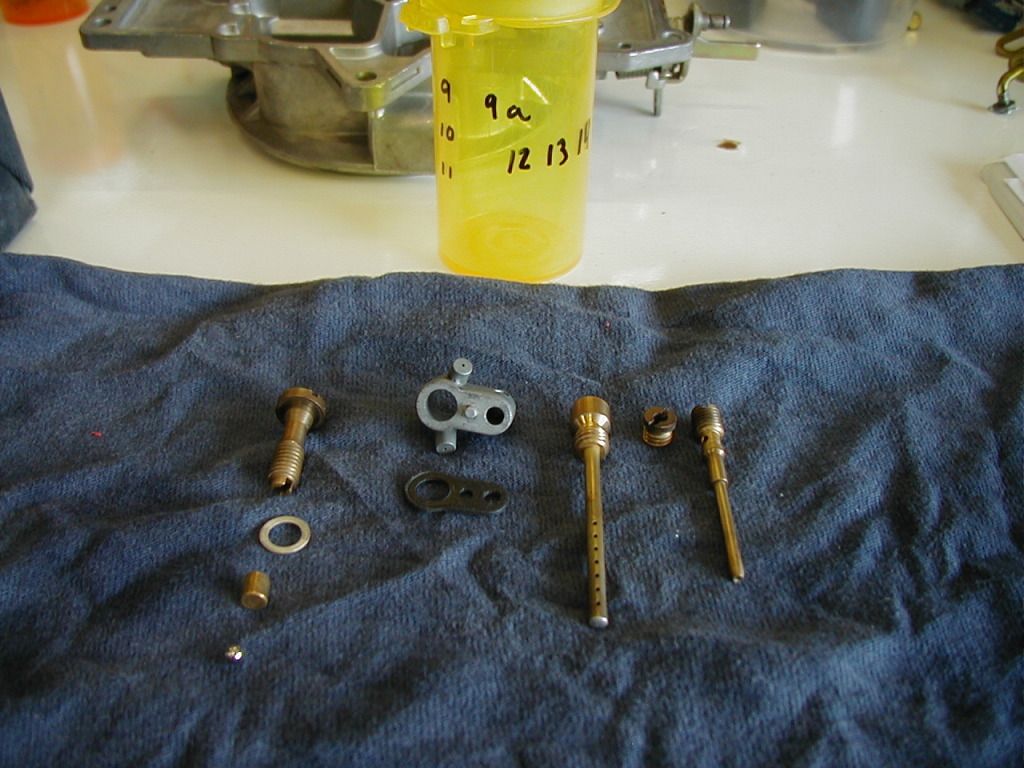
Small diameter weight goes above the check ball, below the AP pump inlet seat screw.
Small diameter weight goes above the check ball, below the AP pump inlet seat screw.


I've had them out twice and made sure that they were clear. Chem dip + air compressor first time, and aerosol carb cleaner + air compressor second time. They're clean.
Forgot to check if the jets were in the correct place last night. I'll pull the carb off soon and check them.
I also found that when I fill my secondary fuel bowl completely (with the carb top off) and actuate the AP by hand, air bubbles escape from a port adjacent to the AP pump inlet orface. What would be causing that?
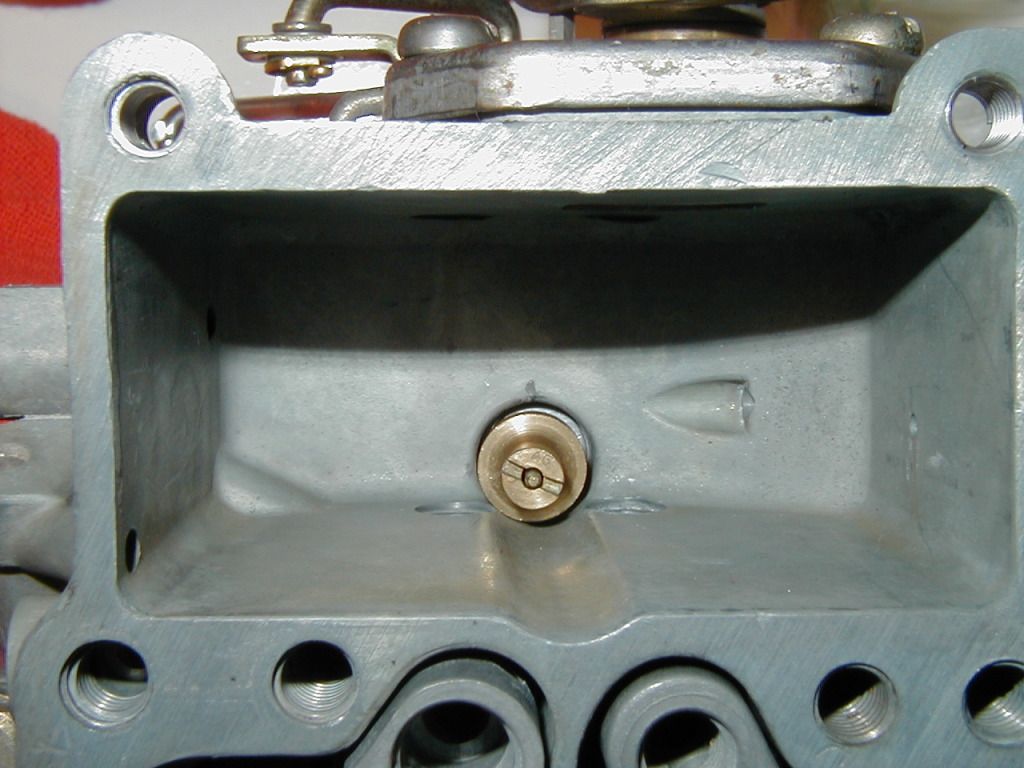
To give you an idea where the hole is: look directly above the AP inlet area in the secondary fuel bowl, on the narrow vertical surface. There is a small diameter hole about 1" above the bottom of the fuel bowl. That is where air is escaping. If I plug that with my finger, I get a shot from the AP.
I also found that when I fill my secondary fuel bowl completely (with the carb top off) and actuate the AP by hand, air bubbles escape from a port adjacent to the AP pump inlet orface. What would be causing that?
To give you an idea where the hole is: look directly above the AP inlet area in the secondary fuel bowl, on the narrow vertical surface. There is a small diameter hole about 1" above the bottom of the fuel bowl. That is where air is escaping. If I plug that with my finger, I get a shot from the AP.

Senior Member
Joined: Nov 2009
Posts: 346
Likes: 3
From: Australia
Forgot to check if the jets were in the correct place last night. I'll pull the carb off soon and check them.
I also found that when I fill my secondary fuel bowl completely (with the carb top off) and actuate the AP by hand, air bubbles escape from a port adjacent to the AP pump inlet orface. What would be causing that?
To give you an idea where the hole is: look directly above the AP inlet area in the secondary fuel bowl, on the narrow vertical surface. There is a small diameter hole about 1" above the bottom of the fuel bowl. That is where air is escaping. If I plug that with my finger, I get a shot from the AP.
I also found that when I fill my secondary fuel bowl completely (with the carb top off) and actuate the AP by hand, air bubbles escape from a port adjacent to the AP pump inlet orface. What would be causing that?
To give you an idea where the hole is: look directly above the AP inlet area in the secondary fuel bowl, on the narrow vertical surface. There is a small diameter hole about 1" above the bottom of the fuel bowl. That is where air is escaping. If I plug that with my finger, I get a shot from the AP.
Joined: Jun 2008
Posts: 8,376
Likes: 28
From: Chino Hills, CA
I'm not entirely sure, but I have a grotty old carb I planned on tearing down tomorrow night to see what's salvageable from it; I will investigate for you.
I expect it's probably an escape path for air trapped in the system, or an over-pressure bypass return. It probably sits above that tiny orifice in the plug that goes on top the inlet check ball and spring.
I expect it's probably an escape path for air trapped in the system, or an over-pressure bypass return. It probably sits above that tiny orifice in the plug that goes on top the inlet check ball and spring.
Senior Member
Joined: Nov 2009
Posts: 346
Likes: 3
From: Australia
If you have no AP shot then most likely your check ***** aren't sealing properly, assuming that everything is assembled correctly and working (spring under the diaphragm, no leaks, nothing is blocked, etc). If you are unable to clean up the check ball seats with compressed air or whatever, you will need a new carby main body. If the check ***** themselves are the problem, grab one of the GP sorensen kits 96-555 from Autozone which has replacements.
IMO this is one of the biggest flaws in working on these carbies. A minor blockage that you can't remove due to the circuit being so inaccessible means your carby main body is useless.
Joined: Jun 2008
Posts: 8,376
Likes: 28
From: Chino Hills, CA
1980's OEM carbs were at their technological limit.
My suspicion is that it's an attempt to solve leakage issues through the threaded stopper thing above it. Without gasket sealant I've seen these leak when the AP is pressurised. So the hole just returns that little extra bit of fuel to the bowls.
If you have no AP shot then most likely your check ***** aren't sealing properly, assuming that everything is assembled correctly and working (spring under the diaphragm, no leaks, nothing is blocked, etc). If you are unable to clean up the check ball seats with compressed air or whatever, you will need a new carby main body. If the check ***** themselves are the problem, grab one of the GP sorensen kits 96-555 from Autozone which has replacements.
IMO this is one of the biggest flaws in working on these carbies. A minor blockage that you can't remove due to the circuit being so inaccessible means your carby main body is useless.
If you have no AP shot then most likely your check ***** aren't sealing properly, assuming that everything is assembled correctly and working (spring under the diaphragm, no leaks, nothing is blocked, etc). If you are unable to clean up the check ball seats with compressed air or whatever, you will need a new carby main body. If the check ***** themselves are the problem, grab one of the GP sorensen kits 96-555 from Autozone which has replacements.
IMO this is one of the biggest flaws in working on these carbies. A minor blockage that you can't remove due to the circuit being so inaccessible means your carby main body is useless.
I filled that hole with QwikSteel....Now my AP works and the car makes good power below 4000 rpm. I don't know what's causing my secondaries to not open fully, but I'm leaning toward doing a mechanical secondary conversion when I get back home from California. It's shocking how much torque these little motors make with good compression.
Joined: Jun 2008
Posts: 8,376
Likes: 28
From: Chino Hills, CA


Not sure if it applies, but when I got my carb kit 12A '82GSL, neither of the two options had the proper gasket for the AP. I had to silicone one of the holes of some sort. It's been a few years but I distinctly remember doing this because the gasket didn't match up appropriately. It wasn't a flow passage IIRC but something that needed to be sealed or the AP wouldn't work correctly or it'd leak.
Joined: Jun 2008
Posts: 8,376
Likes: 28
From: Chino Hills, CA
I went ahead and looked into it anyway; The hole in question is in fact an air-bleed return.
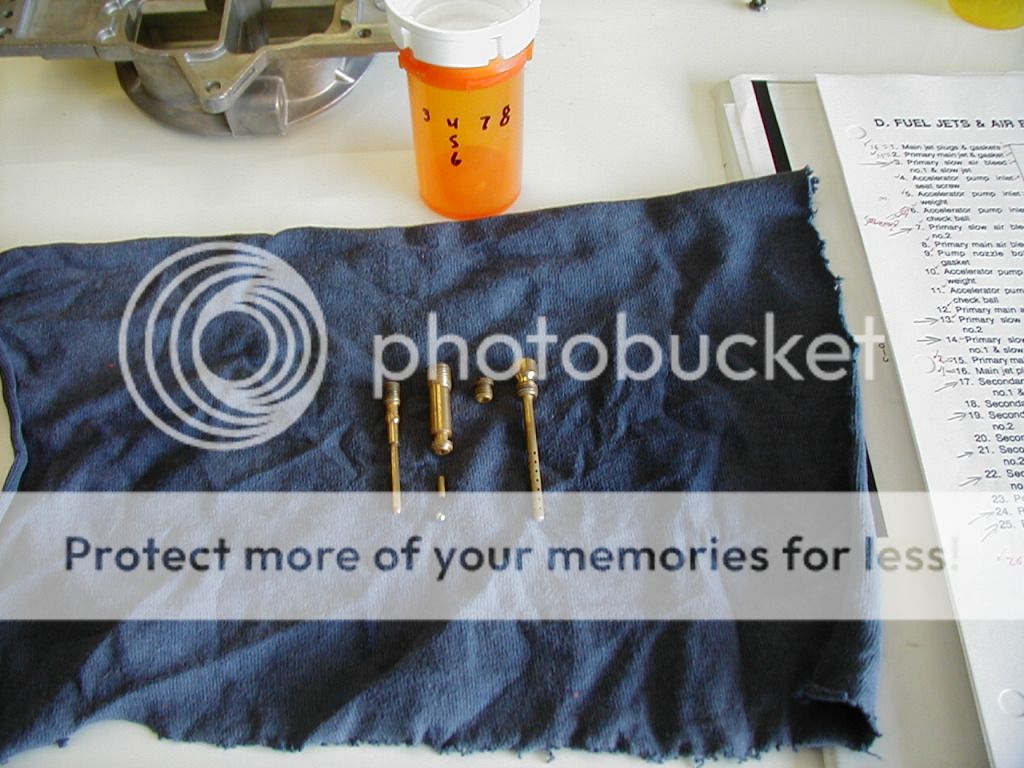
It connects directly to the bore for for the "Check Ball Seal - Accelerator Pump Inlet" just above the flared lower tip of that part. The Seal is the long brass part that screws in on top of the check ball and weight; Second from the left in the pic below, above the ball and weight.
The Check Ball Seal has a tiny hole in its lower tip that leads to this area above the flare. Its purpose appears to be to bleed off any air that may get trapped in the pump circuit, essentially making the pump self-priming.
Because the orifice is so tiny, under normal conditions the small amount of the fuel shot that escapes via this path doesn't matter.
If the hole in the plug tip got enlarged (like by cleaning it out with a wire instead of air/solvent), or if the flared tip of the plug were damaged or didn't fit its seat in the bore tightly, then too much fuel would get bypassed instead of being delivered to the nozzles. This would be especially true if the pump outlet circuit or the nozzles were partly clogged or constricted.
So, your problem was likely caused by a worn/damaged/improperly seated plug, & possibly made worse by a partly-clogged outlet path.
By 'fixing' it via plugging the bowl connection, you've eliminated your pump's ability to self-prime if air gets trapped in it.
It connects directly to the bore for for the "Check Ball Seal - Accelerator Pump Inlet" just above the flared lower tip of that part. The Seal is the long brass part that screws in on top of the check ball and weight; Second from the left in the pic below, above the ball and weight.
The Check Ball Seal has a tiny hole in its lower tip that leads to this area above the flare. Its purpose appears to be to bleed off any air that may get trapped in the pump circuit, essentially making the pump self-priming.
Because the orifice is so tiny, under normal conditions the small amount of the fuel shot that escapes via this path doesn't matter.
If the hole in the plug tip got enlarged (like by cleaning it out with a wire instead of air/solvent), or if the flared tip of the plug were damaged or didn't fit its seat in the bore tightly, then too much fuel would get bypassed instead of being delivered to the nozzles. This would be especially true if the pump outlet circuit or the nozzles were partly clogged or constricted.
So, your problem was likely caused by a worn/damaged/improperly seated plug, & possibly made worse by a partly-clogged outlet path.
By 'fixing' it via plugging the bowl connection, you've eliminated your pump's ability to self-prime if air gets trapped in it.
I went ahead and looked into it anyway; The hole in question is in fact an air-bleed return.
It connects directly to the bore for for the "Check Ball Seal - Accelerator Pump Inlet" just above the flared lower tip of that part. The Seal is the long brass part that screws in on top of the check ball and weight; Second from the left in the pic below, above the ball and weight.
The Check Ball Seal has a tiny hole in its lower tip that leads to this area above the flare. Its purpose appears to be to bleed off any air that may get trapped in the pump circuit, essentially making the pump self-priming.
Because the orifice is so tiny, under normal conditions the small amount of the fuel shot that escapes via this path doesn't matter.
If the hole in the plug tip got enlarged (like by cleaning it out with a wire instead of air/solvent), or if the flared tip of the plug were damaged or didn't fit its seat in the bore tightly, then too much fuel would get bypassed instead of being delivered to the nozzles. This would be especially true if the pump outlet circuit or the nozzles were partly clogged or constricted.
So, your problem was likely caused by a worn/damaged/improperly seated plug, & possibly made worse by a partly-clogged outlet path.
By 'fixing' it via plugging the bowl connection, you've eliminated your pump's ability to self-prime if air gets trapped in it.
It connects directly to the bore for for the "Check Ball Seal - Accelerator Pump Inlet" just above the flared lower tip of that part. The Seal is the long brass part that screws in on top of the check ball and weight; Second from the left in the pic below, above the ball and weight.
The Check Ball Seal has a tiny hole in its lower tip that leads to this area above the flare. Its purpose appears to be to bleed off any air that may get trapped in the pump circuit, essentially making the pump self-priming.
Because the orifice is so tiny, under normal conditions the small amount of the fuel shot that escapes via this path doesn't matter.
If the hole in the plug tip got enlarged (like by cleaning it out with a wire instead of air/solvent), or if the flared tip of the plug were damaged or didn't fit its seat in the bore tightly, then too much fuel would get bypassed instead of being delivered to the nozzles. This would be especially true if the pump outlet circuit or the nozzles were partly clogged or constricted.
So, your problem was likely caused by a worn/damaged/improperly seated plug, & possibly made worse by a partly-clogged outlet path.
By 'fixing' it via plugging the bowl connection, you've eliminated your pump's ability to self-prime if air gets trapped in it.
Senior Member
Joined: Nov 2009
Posts: 346
Likes: 3
From: Australia
Interesting, good research Divin. I never noticed the hole in the tip of the check ball seal, and often wondered what that shape was for. It's hard to see through without being able to put a source of light behind it.
I'm going to investigate this next time I'm down in the shed. Glad to see that these carbs still have a few surprises.
I'm going to investigate this next time I'm down in the shed. Glad to see that these carbs still have a few surprises.