When you click on links to various merchants on this site and make a purchase, this can result in this site earning a commission. Affiliate programs and affiliations include, but are not limited to, the eBay Partner Network.
Hi!
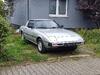
I got a 1980 RX-7, rebuild the engine because the seals were stuck inside the rotors. And now motor is back in the car. I have new fuel pump, filter, soft lines, pressure regulator because new pump gives to much, carb rebuild. All new vacuum houses. New spark plugs, spark plugs wires, distributor cap and rotor, and new leading coil (yes only the leading one) only old things in the ignition system are the pick-up's and igniter's.
My problem is that I lose spark and/or it's week. When checking with a strobe light the light is dim and not consistent, and after a few tries of starting it completely won't catch, I can fire it up maybe 2-3 times and then nothing until charging the battery and next day. When running it's shaky and can't idle, I have to keep my foot lightly on the gas to keep it running. (carb has set idle srew to 4 turns out and mixture screw 2 turns out as I found in the rebuild kit) It seems a bit like losing ground but the problem would be something more instant I think, because it has spark when running but it's hard to restart, I added extra wire to ground the igniters straight to the chassis bolt that ground the whole car. It also won't start with choke, no choke and a bit opened throttle do the trick to start it.
Have you tried swapping the leading and trailing ignitors? It could be an ignitor issue. Also the 80 ignition is weak in general because the ignitors are not on the distributor itself but off on the side of the drivers shock tower. This causes the ignitor signal to travel several feet to get to the ignition box. The signal is very faint and the reluctor wheel in the 80 dizzy is a poor design that doesn't deliver the best signal. All that said, when it works well its not a problem. I suspect the problem is either the ignitor(s) or the ignition box itself which holds some circuitry for the ignition implementation. I have a thread in my signature TFIDFIS which describes how I had to implement a replacement ignition when my own 80 ignition box failed (it had a burned up trace in the circuit). That may help you as well.
Also check to make sure the engine wire loom that carries the wires from the dizzy to the ignition box is not pinched or otherwise damaged since you did an engine swap. Its possible it got hit or pinched when swapping the new engine in.
What is the ignition box? The little box on the strut tower has inside only 2 igniters and nothing else. Where's it located? The coils have just connection to key +12V, igniters that's -, and the leading one also has +12V to igniters and on the - side also a tachometer signal. Inside the distributor there are only pick up's and vacuum advance linkages, on the outside there's also a condenser and as I recall that's all for the ignition system, is it not?
What is the ignition box? The little box on the strut tower has inside only 2 igniters and nothing else. Where's it located? The coils have just connection to key +12V, igniters that's -, and the leading one also has +12V to igniters and on the - side also a tachometer signal. Inside the distributor there are only pick up's and vacuum advance linkages, on the outside there's also a condenser and as I recall that's all for the ignition system, is it not?
Before the engine swap was it running ok? I know you say it was stuck but before that happened do you know if it ran ok prior to the engine seizing up? I only ask so that you can rule out the internal circuit and ignitors being an issue.
The ignition box has the ignitors mounted on the back side but inside there is a circuit board that can sometimes fail as mine did. The box comes apart and has the circuit board inside.
I have no clue how the car ran, as it wasn't touched for a veeeeeery long time and unfortunately I don't know the previous owner (I think he passed away as he was the first and only owner before me)
Not the best photo I know but this one was the only one that I could find on my phone right now.
But that's mostly irrelevant now.
Also the seals weren't just "stuck" they were "frozen" inside, maybe 2 of them all didn't need hammer, soaking in God knows how many chemicals, freezing blowing with propane torch and so on.
My ignition box has only igniters inside, nothing more and not even pegs for mounting that circuit, also it doesn't have that extra connector that's marked "not needed" in your photo, my spare one that came with the car is the same as the one on the car right now.
This may be because it was made in Japan for export to Europe (not JDM and not made in America as probably yours).
Last edited by Cciekawe; Dec 16, 2025 at 10:25 AM.
My ignition box has only igniters inside, nothing more and not even pegs for mounting that circuit, also it doesn't have that extra connector that's marked "not needed" in your photo, my spare one that came with the car is the same as the one on the car right now.
This may be because it was made in Japan for export to Europe (not JDM and not made in America as probably yours).
Hmmm, interesting. Could be the board was USDM only for emissions to pass in places like California. I would double check the loom going from the dizzy to the ignitors for any issues. In the my car it ran down the side of the dizzy, under the AC bracket and back up to the ignitor box. Then I would swp the ignitor connections to see if the leading is having an issue.
When you swapped in the new engine did you reuse the dizzy from the old one? Also make sure your static timing is set correctly. Its not unheard of for the front pulley to be put on wrong and have the timing out of sync by 90 or 180 degrees.
Love to see pictures of your dizzy without the cap and rotor and also of the ignitor box.
I'll check everything tomorrow and send pictures.
It's the same engine just rebuild not engine swapped so the same dizzy is used. I think the static timing is correct, to install the dizzy I turned the engine to TDC (first mark on the pulley) and lined the dot on the distributor gear with associated line, then I just inserted the dizzy into the front cover. When the dizzy is roughly in the middle position the timing light shows the spark is on the dot on the pulley that is when cranking the engine and not it running (haven't checked at higher rpm).
I don't think I could install the pulley rotated as it has a wedge connecting it to the engine shaft.
I managed to pull out some time to make photos but didn't change anything on the car.
Here is the igniters box, with well... Igniters
As for the igniters, you said to change the the connectors to check if the leading one was faulty, but to do that I also need to change the inputs because if not then the leading coil would fire up with trailing timing and trailing also the other way around, but I cannot unplug this wires at the back of the igniter, in my head if I change the connectors at the bottom of igniters and change the coil HV wires around that should check the igniter (and the coil but I have some hope in the new one).
And the dizzy without the cap and rotor. (This blue markings were already here before me)
Last edited by Cciekawe; Dec 16, 2025 at 06:14 PM.
Yep, thats an 80 dizzy and wow, theres no extra circuitry in the ignition box. @DivinDriver I didn't realize the non-USDM markets didn't have that circuit board. Learn something new everyday.
You plan to swap ignitors connections and the HV coil wires sounds right. Especially if you don't want to disturb the ignitors as mounted the to back of the box.
I had some free time to work on the car, and even better my dad had time too, so he could help me. We fought bravely with many things, including a boat battery, the starter, fuses, and whatnot.
But that’s not the main issue. The main problem still seems to be the ignition. We cleaned the connection between the back of the igniter and its box, and then installed the cleaned spare igniter box.
At the end of the day, the car was able to start, but it was still shaking like hell. I believe it’s still an ignition issue, because the carburetor is set to 2 turns out on the bottom screw (mixture?) and 4 turns out on the big top one (idle), when fiddling with them it seems only to make things worse. So I suspect I still have an irregular spark even after changing igniters.
Another interesting problem we found was that the alternator was not charging the b
atteries (one boat battery and one normal one connected in parallel). Even though the voltage at the alternator was 14V, the batteries only showed 12.4V while the engine was running.
So no happy updates this time. Next, we’re going to chase the alternator issue, and after that go back to the ignition... Or maybe tackle both problems at the same time. We’ll see.
Make sure to use thermal paste on the back of those ignitors. It won't help with the issue, but it will help them from burning up. You might also try swapping the ignitors. Generally, if the leading ignitor is out, you can get ruff idle. If it's the trailing ignitor that is bad, many times you would not even notice.
I'll try swapping leading with trailing, but I don't have high hopes for it as I tried 2 pairs of igniters, it would be funny coincidence if in both boxes leading igniter would be dead.
It turns out I don't have a charging problem, it just didn't have enough run time to "activate". Today I starter the car with again the boat battery (tried with mine but no dice) and could keep it running for longer, I was alone but earlier I connected a multimeter to the battery and was looking into the voltage, just after starting it didn't change and it was 12V with something, but after a moment it started climbing to 14.3V with 2k RPM. So luckily the charging problem is no longer my problem and I can focus on the shaky engine.
Unfortunately I didn't record the start, but it went like this:
First I tried to start it with just choke no gas pumps or anything, but it wasn't very happy about that, so I added more choke, that especially didn't help as the cranking slowed down and still no signs of live, so I switched my strategy to less choke and in fact no choke was the best it was catching something but not starting, holding pedal to the floor help it, but the start was hmmmm how to say it like it "charged" itself with each revolution it was faster and at some point I stopped cranking and it stayed running.
While operating it was shaking but not that bad, in the range of 1-1,5k RPM it even somewhat run good but it wouldn't idle and after a while something changed, RPM went up a bit and it was making some interesting noises it had like a hiccup, it was somewhat regular but not too often and that sounds like too lean mixture, keep in mind no choke and I kept my foot on the throttle to keep it running.
And it died, I think it didn't hold up at idle and fell down. After this I couldn't restart it dunno why. Also I have no clue how was the spark as a second pair of hands is helpful for that, and yes I didn't change anything from previous time.
Todays setup looked like this: Looking at battery voltage, intake vacuum and timing light at 1'st rotor, leading sparkplug.
I deflooded it today and tried firing up, after some cranking (like 15-30s maybe) it caught, i had my foot on gas, it was going fast in rpm so I let go of gas and it instantly died. After that again couldn't restart it.
I think I need to change my suspect, timing light showed consistent spark while cranking, but haven't checked on running motor as it only lasted seconds
I may have some problem with vacuum as this gauge didn't even budge but that may be sign of it not working, I tried connecting it as vacuum advance on the distributor on both, leading and trailing but nothing was showing on it, and in the picture you can see that it isn't showing 0 even though it's just connected to manifold. But problem with the vacuum would be strange as I checked with a smoke generator connected to the airbox and no leaks (not counting leaks on the folds on the airbox, and some pipes that we didn't plug), no leaks between the carb itself and with the intake.
If not vacuum maybe something in the carb, I got the horn off couple weeks ago, and looked at almost all jets and they were perfectly clean and let light through them, didn't only check the ones in the float chambers. One think that I know is not the best are the two adjusting screws, but it's only minor indent almost nail doesn't catch, even though I cleaned it a bit with scotch brite pad.
Or It might just be slow cranking, positive stud on the starter is a bit wobbly and might have a week connection. Can I only change the started solenoid and if yes what specification should it have?
I'll try again sometime in this week and if it fires up and the spark is good I'll end this thread. Maybe start a new one about carb but first I'll look into the already existing ones.
What you described is exactly what will cause the engine to be flooded and not starting. If you run the engine and don't let it warm up, it will almost always flood it. I know it doesn't hold idle right away but next time hold the gas and run it until it warms up. You need to adjust the carb when its hot to start with.
If it won't stay running at or below 2000 RPM with the choke and/or gas, something other than warming up is wrong. If it only runs at say 3000 RPM, sounds like a big vacuum leak to me. At worse something with the rotor seals is going on.
With gas I can hold it easily below 2000 when getting close to 1000 and below it just dies.
Choke on the other hand rather kills it than helps, every time I tried it, RPM starts dropping and it's too low to stand up again with gas.
With gas I can hold it easily below 2000 when getting close to 1000 and below it just dies.
Choke on the other hand rather kills it than helps, every time I tried it, RPM starts dropping and it's too low to stand up again with gas.
This helps. Keep it running for five minutes. In the five minutes, start at 2000 and go to 1500 after a few minutes. We're looking for the engine to go into closed loop when the thermostat opens. At this point it should stay running.
The choke not being able to be pulled out to start it concerns me.
I tried to change my starter to 2kW Rx8 one, I saw it was popular swap for FD guys, so I got one and disassembled both to change the aluminium casting and shockingly it doesn't fit, my 80 SA starter is a direct drive and the Rx8 N3Z1 has a planetary reduction, so the old casting doesn't reach the black cylinder with windings.
So I just cleaned and greased my old one and threw it back in the car. I don't know if it's a placebo or not but it spins fast, in fact fast enough to make the whole car shake with only the starter.
After some cranking and pulling out choke it fired, and I could run it at 1,7k RPM or more easily 2k RPM, mistakenly I pushed back choke and after some time partially let go of the gas pedal to see if it'll hold on lower in the RPMs.
It wont, at 1,5k RPM it imminently died, I tried some new deflooding technique in which you unplug coils and crank with gas pedal to the floor for couple of seconds. Instead of my previous method that included removing the spark plugs, cranking the engine (obviously without spark) and cleaning the spark plugs with a rag. This new method help a bit as the car showed some signs of live but I tried it 2-3 times and the starter got real hot, so I stopped and that's it.
To sum it up I didn't accomplished anything new just tripped my smoke detector in next room.
No, I don't have a rotary compression tester. I just rebuild that engine with every new seal, it had some chrome flaking like 1,5mm or something like that, it was just at mazda specification to keep it. Without the plugs it creates nice strong and even pulses on front rotor and slightly worse on the back one.
next time I can try before staring to pour some oil into the carburetor but low compression wouldn't explain not running slow, or would it? Its more likely ignition and carb aren't set correctly.
Not wanting to handle low RPMs can be a symptom of low compression. I've seen a few rotary engines that sounded and ran great at 1.500 to 2000 rpms but had low compression. A new rebuild can take longer to build up compression. I run new rebuilds for 30 minutes. If you get it started again, run it for 30 minutes at 1.5k.
The good news now is that it ran with the choke out. You can place something behind the choke **** to make sure it stays at higher RPMs.