


Just ordered new tires :)


Just ordered new tires :)
205/50R15 Bridgestone Potenza RE11's.
Cost: 109 per through TireRack.com
Belle Tire wanted $180 per and it would be 2 weeks before they'd be in.
Discount Tire wanted $119 per
Plus, TireRack has a $100 mail in rebate on 4 Bridgestones, if ordered in April.
Arrival date is 4/19 or 4/20. I'll post a review of the tires when I get them mounted and test them out.
Upgrading from 185/70R13 BFG all season radials
Cost: 109 per through TireRack.com
Belle Tire wanted $180 per and it would be 2 weeks before they'd be in.
Discount Tire wanted $119 per
Plus, TireRack has a $100 mail in rebate on 4 Bridgestones, if ordered in April.
Arrival date is 4/19 or 4/20. I'll post a review of the tires when I get them mounted and test them out.
Upgrading from 185/70R13 BFG all season radials


Will do. They should be in 4/19 or 4/20, then it's getting them mounted and balanced, then put on the car.
Hopefully Racing Beat ships my strut and brake pads soon... (i've been waiting 2 weeks as of today. The pads were on back order through Hawk and came in to their shop yesterday, but now they have to wait for Tokico to get back to them about when they can get a strut in to replace the one i'm buying before they can ship anything.... I'm about to cancel my order and get the parts elsewhere. For those who are going to say "contact them"...I've been in contact with Mike Liao through the whole process, and it's just taking forever.)
Hopefully Racing Beat ships my strut and brake pads soon... (i've been waiting 2 weeks as of today. The pads were on back order through Hawk and came in to their shop yesterday, but now they have to wait for Tokico to get back to them about when they can get a strut in to replace the one i'm buying before they can ship anything.... I'm about to cancel my order and get the parts elsewhere. For those who are going to say "contact them"...I've been in contact with Mike Liao through the whole process, and it's just taking forever.)


 ).
). Thanks again Mike.
Trending Topics
Sorry for the delay. The past few days have been busy.
Pics:


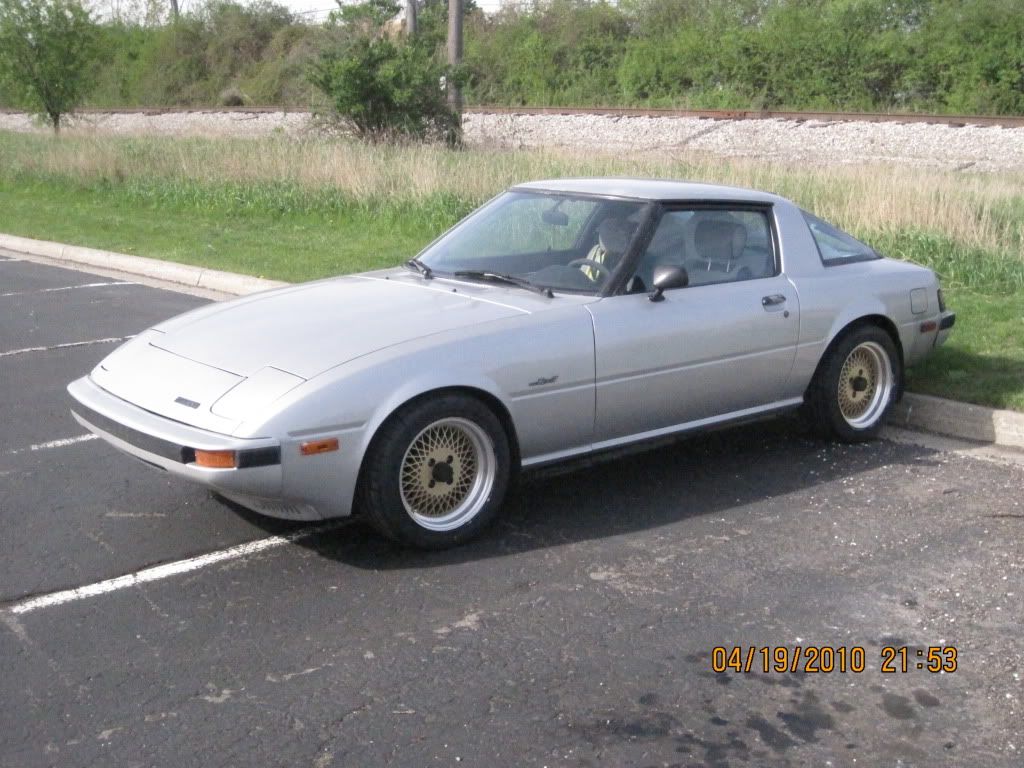
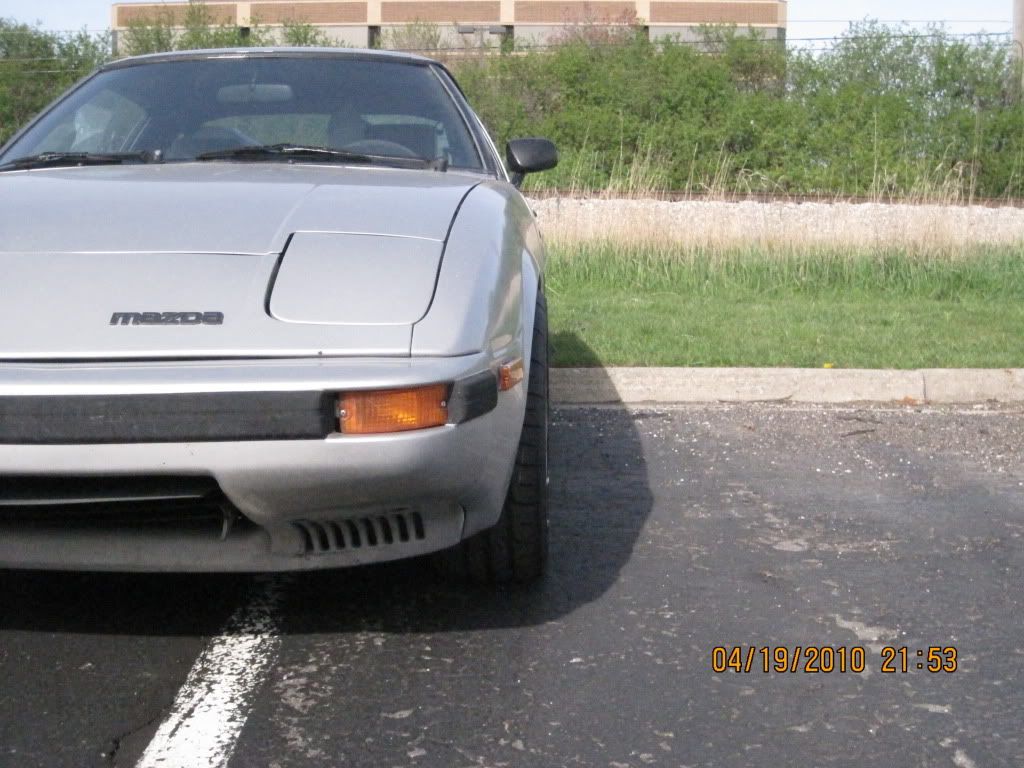
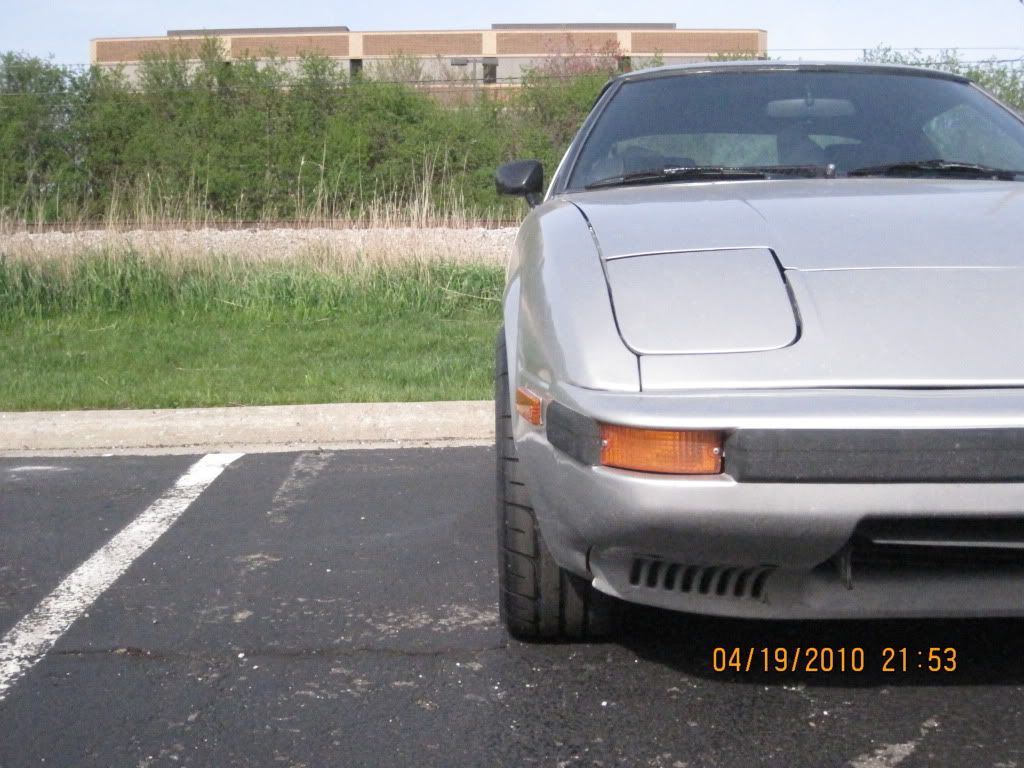
Driving impressions:
These tires are silent compared to my old 185/70R13 BFG all season radials. No tire thrum. No unpleasant noises over bumps (from the tires at least).
Low speed steering effort has actually gone down. I'm dealing with a broken right wrist, and it's much easier to maneuver at low speeds. I'm going to attribute this to not only a stiffer sidewall, but probably also the mold release agent that's still in the tires.
Now to what people really care about: actually driving the car.
First of all, these tires tramline like it's their job. I'm thinking that it's a combination of offset and width that's causing this, along with some wondersteer.
Transient response is right now. I would turn the wheel with my old tires, the car would start to lean into the turn, then the tires would grab and jerk the car around. Very unsettling, and it would upset the stomach. Not with these. You turn the wheel a little, the car follows. Turn it a lot, and hold on, because the tires just grab and go. No sidewall flex.
Grip: holy hell. I went for a right hand turn on my way to work this morning at twice the speed I would even think of attempting it on my old tires (not realizing my entrance speed), and no drama whatsoever. Stable. Planted. NO tire squeal. The F150 that wouldn't get off my *** was left wondering where I went.
In short, in the dry, these tires are epic. Well worth the $109 per that I spent on them. I'll polish the wheels this weekend, wash and wax the car, and get more pictures. Also, stay tuned for more driving impressions as I put more miles on them. Wear rate, wet grip, etc. will all be reported on.
Pics:
Driving impressions:
These tires are silent compared to my old 185/70R13 BFG all season radials. No tire thrum. No unpleasant noises over bumps (from the tires at least).
Low speed steering effort has actually gone down. I'm dealing with a broken right wrist, and it's much easier to maneuver at low speeds. I'm going to attribute this to not only a stiffer sidewall, but probably also the mold release agent that's still in the tires.
Now to what people really care about: actually driving the car.
First of all, these tires tramline like it's their job. I'm thinking that it's a combination of offset and width that's causing this, along with some wondersteer.
Transient response is right now. I would turn the wheel with my old tires, the car would start to lean into the turn, then the tires would grab and jerk the car around. Very unsettling, and it would upset the stomach. Not with these. You turn the wheel a little, the car follows. Turn it a lot, and hold on, because the tires just grab and go. No sidewall flex.
Grip: holy hell. I went for a right hand turn on my way to work this morning at twice the speed I would even think of attempting it on my old tires (not realizing my entrance speed), and no drama whatsoever. Stable. Planted. NO tire squeal. The F150 that wouldn't get off my *** was left wondering where I went.
In short, in the dry, these tires are epic. Well worth the $109 per that I spent on them. I'll polish the wheels this weekend, wash and wax the car, and get more pictures. Also, stay tuned for more driving impressions as I put more miles on them. Wear rate, wet grip, etc. will all be reported on.
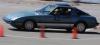
What width wheels are you running? I scanned over the post and didn't see it.
Also any of the "high performance" tires are going to tramline more than all seasons. It only gets worse when you have an alignment with some toe-in or out. Leaving toe at 0 helps reduce it, but it will never go away.
Enjoy the tires The rebate convinced us to buy another set to replace the Kumho XS's.
Also any of the "high performance" tires are going to tramline more than all seasons. It only gets worse when you have an alignment with some toe-in or out. Leaving toe at 0 helps reduce it, but it will never go away.
Enjoy the tires
The rebate convinced us to buy another set to replace the Kumho XS's.

Sorry for the delay. The past few days have been busy.
Pics:
Driving impressions:
These tires are silent compared to my old 185/70R13 BFG all season radials. No tire thrum. No unpleasant noises over bumps (from the tires at least).
Low speed steering effort has actually gone down. I'm dealing with a broken right wrist, and it's much easier to maneuver at low speeds. I'm going to attribute this to not only a stiffer sidewall, but probably also the mold release agent that's still in the tires.
Now to what people really care about: actually driving the car.
First of all, these tires tramline like it's their job. I'm thinking that it's a combination of offset and width that's causing this, along with some wondersteer.
Transient response is right now. I would turn the wheel with my old tires, the car would start to lean into the turn, then the tires would grab and jerk the car around. Very unsettling, and it would upset the stomach. Not with these. You turn the wheel a little, the car follows. Turn it a lot, and hold on, because the tires just grab and go. No sidewall flex.
Grip: holy hell. I went for a right hand turn on my way to work this morning at twice the speed I would even think of attempting it on my old tires (not realizing my entrance speed), and no drama whatsoever. Stable. Planted. NO tire squeal. The F150 that wouldn't get off my *** was left wondering where I went.
In short, in the dry, these tires are epic. Well worth the $109 per that I spent on them. I'll polish the wheels this weekend, wash and wax the car, and get more pictures. Also, stay tuned for more driving impressions as I put more miles on them. Wear rate, wet grip, etc. will all be reported on.
Pics:
Driving impressions:
These tires are silent compared to my old 185/70R13 BFG all season radials. No tire thrum. No unpleasant noises over bumps (from the tires at least).
Low speed steering effort has actually gone down. I'm dealing with a broken right wrist, and it's much easier to maneuver at low speeds. I'm going to attribute this to not only a stiffer sidewall, but probably also the mold release agent that's still in the tires.
Now to what people really care about: actually driving the car.
First of all, these tires tramline like it's their job. I'm thinking that it's a combination of offset and width that's causing this, along with some wondersteer.
Transient response is right now. I would turn the wheel with my old tires, the car would start to lean into the turn, then the tires would grab and jerk the car around. Very unsettling, and it would upset the stomach. Not with these. You turn the wheel a little, the car follows. Turn it a lot, and hold on, because the tires just grab and go. No sidewall flex.
Grip: holy hell. I went for a right hand turn on my way to work this morning at twice the speed I would even think of attempting it on my old tires (not realizing my entrance speed), and no drama whatsoever. Stable. Planted. NO tire squeal. The F150 that wouldn't get off my *** was left wondering where I went.
In short, in the dry, these tires are epic. Well worth the $109 per that I spent on them. I'll polish the wheels this weekend, wash and wax the car, and get more pictures. Also, stay tuned for more driving impressions as I put more miles on them. Wear rate, wet grip, etc. will all be reported on.
Tramline....
We just call it "tracking"!!! Oh well... learn new words everyday...
The term "tramlining" is being used to describe when directional control is disrupted by the vehicle's tendency to follow the longitudinal ruts and/or grooves in the road. It's name could be compared to the tram or trolley driver who does not steer because his vehicle follows the path established by the tracks.
Any vehicle can exhibit tramlining on certain areas of the highway because of uneven pavement or severe rutting. And all vehicles tramline to some degree rather than obediently following the driver's steering input. For example, there's usually at least a small change in steering resistance felt through the wheel when crossing an uneven expansion joint or asphalt junction during lane changes.
Noticeable increases in tramlining are frequently uncovered when drivers living in the snowbelt make the seasonal changeover from winter tires to summer tires, or when any driver upgrades the performance of their tires using either the same size or going to a "Plus Size" tire and wheel package. The reason that it becomes more pronounced then is because neither the typically narrower and softer handling winter tires nor the Original Equipment tires generate as much grip or responsiveness as the higher performance summer tires. Since the vehicle's suspension works as a complete package, a higher performance tire will also uncover any previously unnoticed looseness in the rest of the suspension.
Components
Tires have the most direct influence on tramlining because they are the part of the vehicle that comes into contact with the road (and the longitudinal ruts and/or grooves that exist there). Unfortunately anything that increases a high performance tire's responsiveness also increases its willingness to tramline.
High performance tires with short sidewalls that develop lots of cornering power at lower slip angles will be more susceptible to tramlining than standard All-Season passenger tires that develop less cornering force until their slip angle increases. A wider treaded tire will encounter more longitudinal ruts and/or grooves in the road than a narrow treaded tire. A tire with large tread blocks that transmits the driver's input to the road with great precision will also transmit the road's imperfections back to the vehicle's suspension. And because tires become more responsive as their tread depth wears away (which is why tires are shaved for competition and track use), a tire will become more likely to tramline as it wears.
Wheels can influence tramlining as well. Installing wider tires or a "Plus Size" tire and wheel package usually requires using wheels with a different offset then the vehicle's original wheels. In some cases, the new wheel will have slightly less offset than the original and in other cases, slightly more. It all depends on the vehicle's suspension design and available wheelwell clearances. You will even find that Original Equipment manufacturers often use different wheel offsets for their different diameter tire and wheel packages.
Usually the amount of offset change is kept to a minimum and vehicle tracking remains relatively unchanged. However it the offset is significantly different, it will alter the way the road forces are transmitted through the tire and wheel to the suspension. Therefore, large changes in wheel offset will increase the likelihood of tramlining.
Suspension bushings, ball joints and shock absorber mounts have a direct influence on tramlining as well. As miles are driven and the years go by, the suspension's wear parts will deteriorate as they age. This often happens so slowly that it isn't very noticeable. Over time the ever-increasing suspension wear permits play that eventually allows the tire to be directed by the irregularities of the road rather than be controlled by the suspension.
Imagine a worn suspension that allows a front wheel and tire to swing between the recommended 1/16-inch of toe-in and 1/16-inch of toe-out when it encounters a rut in the road. This 1/8-inch difference in the direction that the tire is pointed will result in the vehicle tramlining. Replace the worn part to remove the play and you will significantly reduce or remove the tramlining. Many drivers with higher mileage cars have reported that replacing worn suspension components has eliminated tramlining and made the car drive like it is new again...which I guess it essentially is!
Service Adjustments
Using higher tire pressures than recommended by the vehicle manufacturer for your driving conditions will unnecessarily stiffen the tire and make it even more willing to cause tramlining. If you are running higher tire pressures than necessary, simply dropping the tire pressures to those recommended by the vehicle manufacturer will help reduce tramlining.
Alignment settings can be key as well. The "camber" and "toe" settings both play a role in vehicle stability and the propensity for tramlining. Extreme positive or negative camber settings will make a vehicle more sensitive, especially when only one wheel encounters a longitudinal rut and/or groove at a time. Even if all the tires are "aimed" straight ahead when the vehicle is in motion, a tire that is "cambered" wants to turn. This is the result of the "camber thrust" generated by a leaning tire (it is also part of the explanation of how motorcycles turn). A vehicle suspension using lots of negative camber for competition or the track will experience more tramlining on the street.
Additionally, the drivers who use additional toe-out settings to encourage their vehicle to turn into corners better also encourage tramlining because the extra toe-out will reduce vehicle stability in a straight line.
In the case of the competition driver who uses non-factory alignment settings, the amount of tramlining that is acceptable has to be left up to the driver. For only street-driven cars, getting them aligned with negative camber and toe settings within the factory's specifications is an important first step.
Roads
On a multi-lane highway, usually the left lane offers the smoothest road surface because it sees the least amount of heavy truck traffic. Unfortunately, on many interstate highways, it's not legal to continually drive there (pull right except to pass). While the center lane can be almost as smooth on a six-lane highway, there can be exceptions. For example, in the case of I-94 between Chicago and Milwaukee, you will find that when the road was widened from two to three lanes, the center of the new center lane is on top of the original junction between the earlier two lanes. This means that vehicles traveling in the new center lane have their right hand tires on the original right hand truck lane and their left side tires are on the original left lane. This can cause an uncomfortable feeling for miles. Usually the right hand lanes are the least smooth because they are rutted by heavy truck traffic. When you drive in those lanes, or drive across them to exit the highway, it's possible that you'll find your vehicle may feel like it wants to follow the truck ruts and has a mind of its own.
Driving Style
If you experience tramlining, the main thing you want to remember is to keep both hands on the steering wheel in the proper "9- and 3-o'clock" positions. This will help you make the precise steering inputs that will help keep your vehicle on course. You sacrifice precise control if you drive with one hand on the wheel or both hands in the wrong place.
The term "tramlining" is being used to describe when directional control is disrupted by the vehicle's tendency to follow the longitudinal ruts and/or grooves in the road. It's name could be compared to the tram or trolley driver who does not steer because his vehicle follows the path established by the tracks.
Any vehicle can exhibit tramlining on certain areas of the highway because of uneven pavement or severe rutting. And all vehicles tramline to some degree rather than obediently following the driver's steering input. For example, there's usually at least a small change in steering resistance felt through the wheel when crossing an uneven expansion joint or asphalt junction during lane changes.
Noticeable increases in tramlining are frequently uncovered when drivers living in the snowbelt make the seasonal changeover from winter tires to summer tires, or when any driver upgrades the performance of their tires using either the same size or going to a "Plus Size" tire and wheel package. The reason that it becomes more pronounced then is because neither the typically narrower and softer handling winter tires nor the Original Equipment tires generate as much grip or responsiveness as the higher performance summer tires. Since the vehicle's suspension works as a complete package, a higher performance tire will also uncover any previously unnoticed looseness in the rest of the suspension.
Components
Tires have the most direct influence on tramlining because they are the part of the vehicle that comes into contact with the road (and the longitudinal ruts and/or grooves that exist there). Unfortunately anything that increases a high performance tire's responsiveness also increases its willingness to tramline.
High performance tires with short sidewalls that develop lots of cornering power at lower slip angles will be more susceptible to tramlining than standard All-Season passenger tires that develop less cornering force until their slip angle increases. A wider treaded tire will encounter more longitudinal ruts and/or grooves in the road than a narrow treaded tire. A tire with large tread blocks that transmits the driver's input to the road with great precision will also transmit the road's imperfections back to the vehicle's suspension. And because tires become more responsive as their tread depth wears away (which is why tires are shaved for competition and track use), a tire will become more likely to tramline as it wears.
Wheels can influence tramlining as well. Installing wider tires or a "Plus Size" tire and wheel package usually requires using wheels with a different offset then the vehicle's original wheels. In some cases, the new wheel will have slightly less offset than the original and in other cases, slightly more. It all depends on the vehicle's suspension design and available wheelwell clearances. You will even find that Original Equipment manufacturers often use different wheel offsets for their different diameter tire and wheel packages.
Usually the amount of offset change is kept to a minimum and vehicle tracking remains relatively unchanged. However it the offset is significantly different, it will alter the way the road forces are transmitted through the tire and wheel to the suspension. Therefore, large changes in wheel offset will increase the likelihood of tramlining.
Suspension bushings, ball joints and shock absorber mounts have a direct influence on tramlining as well. As miles are driven and the years go by, the suspension's wear parts will deteriorate as they age. This often happens so slowly that it isn't very noticeable. Over time the ever-increasing suspension wear permits play that eventually allows the tire to be directed by the irregularities of the road rather than be controlled by the suspension.
Imagine a worn suspension that allows a front wheel and tire to swing between the recommended 1/16-inch of toe-in and 1/16-inch of toe-out when it encounters a rut in the road. This 1/8-inch difference in the direction that the tire is pointed will result in the vehicle tramlining. Replace the worn part to remove the play and you will significantly reduce or remove the tramlining. Many drivers with higher mileage cars have reported that replacing worn suspension components has eliminated tramlining and made the car drive like it is new again...which I guess it essentially is!
Service Adjustments
Using higher tire pressures than recommended by the vehicle manufacturer for your driving conditions will unnecessarily stiffen the tire and make it even more willing to cause tramlining. If you are running higher tire pressures than necessary, simply dropping the tire pressures to those recommended by the vehicle manufacturer will help reduce tramlining.
Alignment settings can be key as well. The "camber" and "toe" settings both play a role in vehicle stability and the propensity for tramlining. Extreme positive or negative camber settings will make a vehicle more sensitive, especially when only one wheel encounters a longitudinal rut and/or groove at a time. Even if all the tires are "aimed" straight ahead when the vehicle is in motion, a tire that is "cambered" wants to turn. This is the result of the "camber thrust" generated by a leaning tire (it is also part of the explanation of how motorcycles turn). A vehicle suspension using lots of negative camber for competition or the track will experience more tramlining on the street.
Additionally, the drivers who use additional toe-out settings to encourage their vehicle to turn into corners better also encourage tramlining because the extra toe-out will reduce vehicle stability in a straight line.
In the case of the competition driver who uses non-factory alignment settings, the amount of tramlining that is acceptable has to be left up to the driver. For only street-driven cars, getting them aligned with negative camber and toe settings within the factory's specifications is an important first step.
Roads
On a multi-lane highway, usually the left lane offers the smoothest road surface because it sees the least amount of heavy truck traffic. Unfortunately, on many interstate highways, it's not legal to continually drive there (pull right except to pass). While the center lane can be almost as smooth on a six-lane highway, there can be exceptions. For example, in the case of I-94 between Chicago and Milwaukee, you will find that when the road was widened from two to three lanes, the center of the new center lane is on top of the original junction between the earlier two lanes. This means that vehicles traveling in the new center lane have their right hand tires on the original right hand truck lane and their left side tires are on the original left lane. This can cause an uncomfortable feeling for miles. Usually the right hand lanes are the least smooth because they are rutted by heavy truck traffic. When you drive in those lanes, or drive across them to exit the highway, it's possible that you'll find your vehicle may feel like it wants to follow the truck ruts and has a mind of its own.
Driving Style
If you experience tramlining, the main thing you want to remember is to keep both hands on the steering wheel in the proper "9- and 3-o'clock" positions. This will help you make the precise steering inputs that will help keep your vehicle on course. You sacrifice precise control if you drive with one hand on the wheel or both hands in the wrong place.
What width wheels are you running? I scanned over the post and didn't see it.
Also any of the "high performance" tires are going to tramline more than all seasons. It only gets worse when you have an alignment with some toe-in or out. Leaving toe at 0 helps reduce it, but it will never go away.
Enjoy the tires The rebate convinced us to buy another set to replace the Kumho XS's.
Also any of the "high performance" tires are going to tramline more than all seasons. It only gets worse when you have an alignment with some toe-in or out. Leaving toe at 0 helps reduce it, but it will never go away.
Enjoy the tires
The rebate convinced us to buy another set to replace the Kumho XS's.A little update on the tires:
Drove the girlfriend to the airport this morning (she's going to Oakland and LA for a conference and to see her family) and noticed that at freeway speeds (75-80 indicated on the speedo), harsh bumps don't cause rubbing, but dips in the road that compress the suspension evenly do cause rubbing, but only on the drivers side. I'm 6'5 and about 215, she's 5'8 and about 155/160, both of us are in pretty decent shape. She had a suitcase and her backpack, I had my laptop bag and gym bag in the car.
The tires also rub on the Racing Beat springs @ full lock when backing out of parking spots.
They did just fine this morning @ 35*F. I guess that's one of the benefits of having no torque...


Thread
Thread Starter
Forum
Replies
Last Post
rx8volks
Canadian Forum
0
Sep 1, 2015 10:46 PM
