


DIY: 50 dollar paint job


Thread Starter
Im a dog, I love hoes

Joined: Nov 2005
Posts: 1,501
Likes: 0
From: pa
DIY: 50 dollar paint job
ok well i dont take any credit for this but i found this kinda interesting and it cost about 50 bucks so why not?
the original thread can be found here http://board.moparts.org/ubbthreads/...gonew=1#UNREAD
Ready to "copy and paste" into a Word document.
Here’s how I painted my car for about $50.
It's actually very easy and the results are amazing!
First off, get a can of Tremclad “Real Orange” (or what ever color you want) in the can form, not spray can.
Tremclad it is acrylic-enamel paint, which is very durable.
Next prep your car as if was any other paint job, fix all the rust, etc....no need to prime the car since the Tremclad already contains elements which allow it to be painted over bare metal.
Next, after prepping the car, get several small 4" professional FOAM rollers, it is tiny and has one end rounded off, and the other cut straight, and is a very high density foam. u also need a jug of mineral spirits to thin the paint.
The thing I really like about this method is that there's no mess, no taping the whole car; just key areas, and you can do it in your home garage.
Since you’re not spraying, there is virtually no dust in the air, hence, no dirt in the paint. - Just make sure to clean your garage first -.
Also, it doesn’t really smell at all, dries overnight and it super tough paint! If you ever decide to later re-paint the car professionally, just prep and paint. There’s no need to strip the Tremclad.
I have done this to a few cars, and I can say it works amazingly well; you just have to be patient.
Next, you thin the paint with Mineral Spirits , to the consistency of water, just a bit thicker.
Then get out the roller and paint!
NOTE: Don’t get the paint shaken when you buy it. Enamel is supposed to be stirred.
Otherwise you'll have bubbles in the paint for a week!
After you lay on two coats, wet sand the whole car, then repeat….
(Two coats/wet sand, two coats/wet sand).
Use progressively finer sand paper each time.
(I painted the whole Charger using only one can of Tremclad. Since you’re rolling, not spraying the car, you use ALL of the paint and don’t lose half in the air).
It’s not really that much work, because you can stop and start any time, you can do just a door, or the hood, etc.
Do one panel at a time, and don't stop once you start. Once you’re done the final coat, wet sand with about 1000 grit to a totally smooth finish.
Then I use a high-speed electric polisher with a buffing bonnet and Turtle Wax polishing compound. I do the whole car with this, and I’m telling you, depending on the amount of time and patience you have, the results are amazing.
Laugh if you want, but for $30 worth of paint, about $20 for rollers and sand paper, it really looks good.
Also you can do these steps overnight, paint one evening and by morning you can wet sand. I have personally done a lot of painting, mostly single stage acrylic enamel, in my garage with really good professional results.
But it stinks; it's a real pain to do, easy to make a mistake, messy, and expensive! The Tremclad is awesome paint, the "Real Orange" is amazingly close to “Hemi Orange”, and almost looks like it has some pearl in the Sun.
It is an awesome colored paint, right out of the can.
I used this technique on my 1974 VW Beetle as well. Here are the results:
http://i32.photobucket.com/albums/d1.../Picture10.jpg
The car before:
http://i32.photobucket.com/albums/d1...n/IM000475.jpg
Another after pic:
http://i32.photobucket.com/albums/d1...n/DSC00164.jpg
Here is a car I sprayed (1971 Beetle, midnight blue metallic):
http://i32.photobucket.com/albums/d1...n/DSC00194.jpg
Here is the car before (1971 Beetle):
http://i32.photobucket.com/albums/d1...n/Picture1.jpg
Here are a few pics of the Charger done:
http://i32.photobucket.com/albums/d1...n/DSC02764.jpg
http://i32.photobucket.com/albums/d1...n/DSC02769.jpg
Well, that's my two cents worth, sorry for the long post. I was bored lol
I painted the orange beetle in 1999, and it still looks like the day I painted it, the 71 blue beetle I painted in 2000, and built the car for my dad, I used the same paint on my Charger, maybe one day I’ll spring for a good paint job, prepping is 90% of the work, stripping the car, sanding, etc..... painting is overrated!!!
So if you have TIME, then I’d say go for it, the worst that could happen is that it doesn’t turn out and your out $50, but if your patient, and experiment with lets say just the trunk panel and if you like it do the whole car, if not just get it done by someone else for $4000. I don't know about you guys, but I would rather spend the $4000 on other parts like getting the mechanics sorted out and new chrome, cause when u have really nice paint and crappy bumpers, door handles it just sticks out more.
Yes I painted it with a "professional" high-density foam roller. The trick is in how you thin the paint, get it as thin as possible without running, and the paint "self levels" it comes out like glass, wet sanding just makes it better, it all depends on how much time u have. I have sprayed a few cars in my garage with single stage acrylic enamel and it's a pain, messy, stinks, etc.
The Tremclad is almost odorless and is really easy to work with. You can paint one day, wet sand the next, and immediately re-coat. Once you got all the coats on, just wet sand and buff with a compound, then wax - and you’re “good to go”.
I’ve painted three cars this way and the 1974 VW Beetle I did six years ago still looks awesome.
The paint is cheap like $30 a gallon; you can get it tinted to any color you’d like. On the Charger, I used about 3/4 of a can.
Even when you spray with a HVLP gun, you still waste about 30% of the paint that just goes in the air. Tremclad is still only “rust paint”, but it is a new type, which is enamel.
I still strip the car of chrome, bumpers, handles; key locks, basically everything, and then tape off where I might get paint on something I don't want painted. The paint is tough, like stove paint when it's done. I’ve spilt gas on it in really hot weather, and it resists stone chips extremely well. Two years ago, I had to repaint a fender on the VW Beetle, so I purchased a small can of paint to do it.
Years later, the color match was exact.
I’m up in Canada, where it's called Tremclad, in the US it would be the Rustoleum. It's a rust paint and it buffs really nice, but make sure it's the new stuff - an enamel, or acrylic enamel.
It goes right over most anything and doesn’t react with any old paint or filler, and doesn't require any primer. On a car I used to have, I had it professionally painted four years after I painted it and they put a base/clear on top of it with no issues. It’s really easy to do, just be patient, take your time, test on something first and perfect the technique. As a hint if you try it first you paint the surface, and then really lightly "skim" the surface with the weight of the roller only to remove any lines bubbles etc, then just leave it for a minute or two and you'll see it just "self levels" totally flat to glass. Then, wet sand it really fine, use a spray bottle and keep the paper really wet, finish with a 1000 grit or so and then buff with a random orbit polisher using Turtle Wax POLISHING compound, NOT the rubbing compound, its' to harsh. It is critical to use the proper roller; it's about 4" wide and about 1.5" thick, and very high-density white foam. It really works and is much tougher paint than today’s single stage or base clear, very hard to scratch, but easy to buff. I get compliments on my paint jobs, and they never believe how I do it.
Well I went to www.rustoleum.com and they gave me a choice between the U.S. and Canada sites; so I went Canadian and they list Tremclad, so it is a Rustoleum Canadian product.
Now who knows how this translates down in the U.S. of A.? But I'm sure with some e-mails and/ or toll free number research w/ the Rustoleum Company, this can be determined!
I did the web search and here's a website, I emailed for application procedures, tools needed and availability, when I hear back I’ll post my findings but see what you can come up with.
I believe the manufacturer is RPM international Inc.
Oh, and here's a link:
http://www.rustoleum.com/product.asp...ct_id=548&SBL=
Guys, all I have to tell you is that I first painted a 1985 Honda CRX at my cottage in one day, did three coats with no sanding and it looked great! I should scan that old pic and show you!
The job only looks as good as the time and effort that you put into it. The paint is extremely durable. Think about it; it's made to paint over rust on metal things like tractors, railings, etc... and still shine. It’s formulated to withstand the elements.
Application technique is critical, as you have to have a "feel" for how much to thin the paint and you HAVE TO use Mineral Spirits, NOT PAINT THINNER like varsol.
I could imagine how well it would turn out if you sprayed it with a HVLP gun and wet sanded and polished. It does "self Level" on the sides just as it does on the flat level surfaces. Like I said before, it is critical on how you thin the paint and how you apply it.
When the paint is thinned properly, you’re barely putting on any paint with each coat. You really need to do about 6 coats total to get enough thickness so you can wet sand and polish.
It took me a long time to figure out what steps to take to get awesome results.
I did my Charger in about 3 days.
I got sick of going to body shops and having them tell me either they don't do classic cars OR if they did, they’d want at least $5000, even though the car was stripped and prepped!!!!
In my opinion, the Auto painting industry is a total rip off! So, if you want it done right and cheap, do it yourself!!!
My 1974 VW Beetle still looks awesome even after 6 years; the paint is still mint. It looks just like the day I did it. That paint dries FAST, so you can wet sand literally overnight.
Keep in mind I know a little bit about painting, as I’ve shot a few cars with single stage enamel with professional results, but it's comparatively expensive and tedious.
I used Duplicolor paint, primer, reducer and primer sealer on this car:
http://i32.photobucket.com/albums/d1...n/DSC00194.jpg
It looked like this before paint:
http://i32.photobucket.com/albums/d1...n/Picture1.jpg
That car was painted midnight metallic blue, and flips awesomely in the Sun. It’s a very hard color to do cause it's almost black and shows every imperfection. But as you can see in the picture, it came out beautiful. However, the materials alone (paint, reducer, primer, primer sealer) cost about $250 Canadian, which was enough, never mind the work.
The Tremclad paint is really an acceptable alternative, and since you’re rolling it on, there's no dust. You can get a really clean paint job even if you do it in your garage, whereas if you spray, there’s a constant battle with dust.
When I paint with Tremclad, I just use the paint: no primer, nothing, just the paint, - right over filler. Like I mentioned before; after wet sanding, use a random orbit polisher and the cheapest polishing compound made by Turtle Wax. It comes in a small round flat container and it's a white paste, almost looking like hand cream (and it smells good too!)
I find that after thinning the paint with Mineral Spirits, the paint "flashes" or dries very quickly, and after a overnight period it is completely dry, unlike automotive paint which can take up to 6 months to fully "cure".
So literally the next day, you can sand, buff, polish, and wax the paint. On the Charger the paint looks really good.
I didn’t take a huge amount of time to perfect it because I really wanted to drive it! This spring, I plan on wet sanding and polishing it more, but yes, it looks like the pictures, …really good. Considering that it cost me about $50.00, I love it and I’m not paranoid about juicing it on a dirt road and going sideways all the while worrying about my “precious” paint job!
I drive the car (hard and a lot) after all, isn’t that what they're made for?
For $50.00 and a few days of work, I can paint it again in a few years!
If you’re not good with your hands, and not a real detail person, let someone else paint your car, because it can get ugly really fast!
If I had a shop, built a paint booth, and sprayed this stuff on, wet sanded and polished it, I’m sure I could paint show quality cars with $30.00 worth of paint.
Keep in mind this paint is really good, like I said before I bought a can three years later to repaint a fender on my 1974 Beetle and it was dead on for color match.
That must tell you about the quality of the paint.
I’d give you $100.00 if you could tell me, in person, which fender I painted on this car: and its' right out of the can:
http://i32.photobucket.com/albums/d1...n/DSC00164.jpg
Keeping in mind that you must still prepare the car as you would with any other paint job. Prepping is all the work and reflects the overall result.
I did not block sand the car, just wet sanded with progressively finer paper by HAND.
No machine sanding, no block nothing.
Using a "block" to sand, I found the paper got dirty fast and got all plugged up, so I recommend doing it by hand and keeping it really wet. Use a water spray bottle in one hand and a folded piece of sandpaper in the other.
Use a clean bucket of water and a shammy (Tip: Dollar Store!) to clean it off to see how it looks. I prepped the car with 80, then 100, then 200, finished with a 400, did all my body work, and painted. After 2 coats (about 4hrs work for the whole car),
I wet sanded with a 600,
…then painted two more coats,
…wet sanded with 800,
…then painted two more coats,
…and sanded with a 1000-1500,
…then polished with Turtle Wax polishing compound,
…followed by wax,
…...done.
Q: I wonder how well it would look if you did this roller method, then followed up by shooting a coat of clear over top of it?
I probably would say it would turn out very nice. But the workability of the paint would end there. Besides the paint buffs to mirror reflection, so I see no need for a clear coat. They have a clear coat in the Tremclad brand, made for the paint, but I don't think it's necessary.
I recently buffed out a huge scratch when a guy tried to jump me at a drive thru ATM and I floored it, ran over his feet when turning the tires, and pinned him between the wall and my car (long story!!!).
The whole rear quarter had a really bad scuff; maybe it was his teeth, or the buttons on his jacket, (?) but it still buffed right out. With clear it would be hard to do that. So I would say there's no need for clear unless you really want a “show car” finish. The thing I like about this paint –A LOT- is that there's no need for primer, sealer etc..
It really simplifies the process.
Shooting a base/clear or single stage acrylic enamel is a pain, as you have "windows" to shoot each color coat (within 30 minutes), and when putting the primer-sealer on, you have 15 days to shoot.
Man! what if something goes wrong?
One more pointer, when you wet sand the final coat, the paint looks flat, like velvet.
If you take a rag soaked with Mineral Spirits, and wipe a spot down that you just sanded, that's what it will look like buffed.
If you buff and decide to paint again, clean the area with Mineral Spirits so residue from the polishing compound is removed, or the paint won't stick.
I’ve had a rock hit my hood so hard it sounded like someone threw a golf ball at my car really hard. I didn’t even want to look, but there was no chip, just bit of dust at the impact sight.
That paint is really good stuff!
I’m sure if it was labeled as ”Auto paint” it would cost $200.00 a can, so keep it quiet shhhhhhh!!!!
As far as temperature goes it really doesn’t matter. When I sprayed a single stage enamel on the 1971 VW Beetle, I had to use the proper temperature reducer.
I painted my 1974 VW Beetle in the dead of winter, when it was -20 degrees Celsius outside. I had a little portable electric heater in the garage, and two 1500-Watt floodlights. I guess it was warm enough.
I painted the Charger this past September in about +25 degrees Celsius temperatures, and even with high humidity, there was no difference.
As far as getting this paint to stick, all I can say is that it is made to be painted on BARE and RUSTED metal. The stuff sticks to rubber, glass, anything, like [Edited by Moparts - Keep it clean] on a blanket (if you have kids you'll know what I mean!).
I have no issues or question in my mind that this stuff sticks like crazy to bare metal. I'm sure it would stick on epoxy primer if you sand it before with 800-grit sandpaper. I have never had any reaction to anything that I’ve painted over, and I’ve painted motorcycle gas tanks and plastic covers, 3 cars, over base clear, the front fenders on the Charger are fiberglass, all with no issues. I’ve painted over automotive primer on my 1974 VW Beetle where I had exposed metal and knew I would leave it exposed for a while and didn’t want it to rust. I painted right over filler, where I had a few really minor scratches and dents that I couldn’t bang out, again with no issues.
I had a drop of the paint on glass, it was really hard to get off, I was afraid to use a razor because it could scratch my new windshield so I used a credit card and it was really, really hard to get off.
I painted the doorjambs, under the trunk lid, under the hood, everything.
Try one panel and see it if works. Guaranteed you will have to experiment with it.
It took a lot of trial and error for me to get the "technique" down pat. My 1974 VW Beetle looks like a $5000.00 paint job because I really took my time with it. I used a foam brush to paint the jambs and tight spots, and just ran the foam roller over it to smooth it out. My Charger is by no means a “show car”, but I couldn’t justify a $5000.00 paint job just after buying the car for $11,000.00, along with: new bumpers, door handles, emblems, all rubber, windshield, brake booster, heater core, headliner, carpet, door panels, brakes, etc....
I spent all my money on the esthetics and mechanics, not to mention the car.
I kind of rushed the Charger because I HAD to drive my dream car as soon as I could. I used Tremclad flat black in a spray can for the rear tail panel on the Charger.
Here are a bunch of close up good high-resolution pictures I just took of the car, the supplies I used, and a few other pictures of the Beetle’s I’ve painted:
http://photobucket.com/albums/d13/69...paint/?start=0
If you have a “show car” that you've rotisserie “nut and bolt” restored, and have $40,000.00 into it, then get it painted by someone for $10,000.00.
If you want a nice, clean, good driver, with a cheap, easy-to-do paint job, and you have the time and patience, then try this method.
If you have the equipment to spray it on, then by all means spray it on, it would turn out just like any other automotive paint job, only the paint would be a lot cheaper! Not to mention you don’t need primer, primer sealer, reducer, etc….
I didn’t want to borrow a compressor again, lug it home, get over-spray everywhere, tape the whole car, worry about dust and do a ton more work associated with spraying…
Been there/done that!
Using a roller makes it super easy to do, but it is tricky.
This method is not for everyone, but it’s the way I did it!!!
I’ve put 35,000 miles on my 1974 VW Beetle (as I mentioned earlier), which was painted in 1999, and the paint still looks like the day I did it.
I did not intend to make my car a “show car”, just a nice driver. It’s not laser straight, dent free, or perfect, but it sure gets me thumbs up where ever I go and I only spent $50.00 on supplies.
And that isn’t too bad at all!
the original thread can be found here http://board.moparts.org/ubbthreads/...gonew=1#UNREAD
Ready to "copy and paste" into a Word document.
Here’s how I painted my car for about $50.
It's actually very easy and the results are amazing!
First off, get a can of Tremclad “Real Orange” (or what ever color you want) in the can form, not spray can.
Tremclad it is acrylic-enamel paint, which is very durable.
Next prep your car as if was any other paint job, fix all the rust, etc....no need to prime the car since the Tremclad already contains elements which allow it to be painted over bare metal.
Next, after prepping the car, get several small 4" professional FOAM rollers, it is tiny and has one end rounded off, and the other cut straight, and is a very high density foam. u also need a jug of mineral spirits to thin the paint.
The thing I really like about this method is that there's no mess, no taping the whole car; just key areas, and you can do it in your home garage.
Since you’re not spraying, there is virtually no dust in the air, hence, no dirt in the paint. - Just make sure to clean your garage first -.
Also, it doesn’t really smell at all, dries overnight and it super tough paint! If you ever decide to later re-paint the car professionally, just prep and paint. There’s no need to strip the Tremclad.
I have done this to a few cars, and I can say it works amazingly well; you just have to be patient.
Next, you thin the paint with Mineral Spirits , to the consistency of water, just a bit thicker.
Then get out the roller and paint!
NOTE: Don’t get the paint shaken when you buy it. Enamel is supposed to be stirred.
Otherwise you'll have bubbles in the paint for a week!
After you lay on two coats, wet sand the whole car, then repeat….
(Two coats/wet sand, two coats/wet sand).
Use progressively finer sand paper each time.
(I painted the whole Charger using only one can of Tremclad. Since you’re rolling, not spraying the car, you use ALL of the paint and don’t lose half in the air).
It’s not really that much work, because you can stop and start any time, you can do just a door, or the hood, etc.
Do one panel at a time, and don't stop once you start. Once you’re done the final coat, wet sand with about 1000 grit to a totally smooth finish.
Then I use a high-speed electric polisher with a buffing bonnet and Turtle Wax polishing compound. I do the whole car with this, and I’m telling you, depending on the amount of time and patience you have, the results are amazing.
Laugh if you want, but for $30 worth of paint, about $20 for rollers and sand paper, it really looks good.
Also you can do these steps overnight, paint one evening and by morning you can wet sand. I have personally done a lot of painting, mostly single stage acrylic enamel, in my garage with really good professional results.
But it stinks; it's a real pain to do, easy to make a mistake, messy, and expensive! The Tremclad is awesome paint, the "Real Orange" is amazingly close to “Hemi Orange”, and almost looks like it has some pearl in the Sun.
It is an awesome colored paint, right out of the can.
I used this technique on my 1974 VW Beetle as well. Here are the results:
http://i32.photobucket.com/albums/d1.../Picture10.jpg
The car before:
http://i32.photobucket.com/albums/d1...n/IM000475.jpg
Another after pic:
http://i32.photobucket.com/albums/d1...n/DSC00164.jpg
Here is a car I sprayed (1971 Beetle, midnight blue metallic):
http://i32.photobucket.com/albums/d1...n/DSC00194.jpg
Here is the car before (1971 Beetle):
http://i32.photobucket.com/albums/d1...n/Picture1.jpg
Here are a few pics of the Charger done:
http://i32.photobucket.com/albums/d1...n/DSC02764.jpg
http://i32.photobucket.com/albums/d1...n/DSC02769.jpg
Well, that's my two cents worth, sorry for the long post. I was bored lol
I painted the orange beetle in 1999, and it still looks like the day I painted it, the 71 blue beetle I painted in 2000, and built the car for my dad, I used the same paint on my Charger, maybe one day I’ll spring for a good paint job, prepping is 90% of the work, stripping the car, sanding, etc..... painting is overrated!!!
So if you have TIME, then I’d say go for it, the worst that could happen is that it doesn’t turn out and your out $50, but if your patient, and experiment with lets say just the trunk panel and if you like it do the whole car, if not just get it done by someone else for $4000. I don't know about you guys, but I would rather spend the $4000 on other parts like getting the mechanics sorted out and new chrome, cause when u have really nice paint and crappy bumpers, door handles it just sticks out more.
Yes I painted it with a "professional" high-density foam roller. The trick is in how you thin the paint, get it as thin as possible without running, and the paint "self levels" it comes out like glass, wet sanding just makes it better, it all depends on how much time u have. I have sprayed a few cars in my garage with single stage acrylic enamel and it's a pain, messy, stinks, etc.
The Tremclad is almost odorless and is really easy to work with. You can paint one day, wet sand the next, and immediately re-coat. Once you got all the coats on, just wet sand and buff with a compound, then wax - and you’re “good to go”.
I’ve painted three cars this way and the 1974 VW Beetle I did six years ago still looks awesome.
The paint is cheap like $30 a gallon; you can get it tinted to any color you’d like. On the Charger, I used about 3/4 of a can.
Even when you spray with a HVLP gun, you still waste about 30% of the paint that just goes in the air. Tremclad is still only “rust paint”, but it is a new type, which is enamel.
I still strip the car of chrome, bumpers, handles; key locks, basically everything, and then tape off where I might get paint on something I don't want painted. The paint is tough, like stove paint when it's done. I’ve spilt gas on it in really hot weather, and it resists stone chips extremely well. Two years ago, I had to repaint a fender on the VW Beetle, so I purchased a small can of paint to do it.
Years later, the color match was exact.
I’m up in Canada, where it's called Tremclad, in the US it would be the Rustoleum. It's a rust paint and it buffs really nice, but make sure it's the new stuff - an enamel, or acrylic enamel.
It goes right over most anything and doesn’t react with any old paint or filler, and doesn't require any primer. On a car I used to have, I had it professionally painted four years after I painted it and they put a base/clear on top of it with no issues. It’s really easy to do, just be patient, take your time, test on something first and perfect the technique. As a hint if you try it first you paint the surface, and then really lightly "skim" the surface with the weight of the roller only to remove any lines bubbles etc, then just leave it for a minute or two and you'll see it just "self levels" totally flat to glass. Then, wet sand it really fine, use a spray bottle and keep the paper really wet, finish with a 1000 grit or so and then buff with a random orbit polisher using Turtle Wax POLISHING compound, NOT the rubbing compound, its' to harsh. It is critical to use the proper roller; it's about 4" wide and about 1.5" thick, and very high-density white foam. It really works and is much tougher paint than today’s single stage or base clear, very hard to scratch, but easy to buff. I get compliments on my paint jobs, and they never believe how I do it.
Well I went to www.rustoleum.com and they gave me a choice between the U.S. and Canada sites; so I went Canadian and they list Tremclad, so it is a Rustoleum Canadian product.
Now who knows how this translates down in the U.S. of A.? But I'm sure with some e-mails and/ or toll free number research w/ the Rustoleum Company, this can be determined!
I did the web search and here's a website, I emailed for application procedures, tools needed and availability, when I hear back I’ll post my findings but see what you can come up with.
I believe the manufacturer is RPM international Inc.
Oh, and here's a link:
http://www.rustoleum.com/product.asp...ct_id=548&SBL=
Guys, all I have to tell you is that I first painted a 1985 Honda CRX at my cottage in one day, did three coats with no sanding and it looked great! I should scan that old pic and show you!
The job only looks as good as the time and effort that you put into it. The paint is extremely durable. Think about it; it's made to paint over rust on metal things like tractors, railings, etc... and still shine. It’s formulated to withstand the elements.
Application technique is critical, as you have to have a "feel" for how much to thin the paint and you HAVE TO use Mineral Spirits, NOT PAINT THINNER like varsol.
I could imagine how well it would turn out if you sprayed it with a HVLP gun and wet sanded and polished. It does "self Level" on the sides just as it does on the flat level surfaces. Like I said before, it is critical on how you thin the paint and how you apply it.
When the paint is thinned properly, you’re barely putting on any paint with each coat. You really need to do about 6 coats total to get enough thickness so you can wet sand and polish.
It took me a long time to figure out what steps to take to get awesome results.
I did my Charger in about 3 days.
I got sick of going to body shops and having them tell me either they don't do classic cars OR if they did, they’d want at least $5000, even though the car was stripped and prepped!!!!
In my opinion, the Auto painting industry is a total rip off! So, if you want it done right and cheap, do it yourself!!!
My 1974 VW Beetle still looks awesome even after 6 years; the paint is still mint. It looks just like the day I did it. That paint dries FAST, so you can wet sand literally overnight.
Keep in mind I know a little bit about painting, as I’ve shot a few cars with single stage enamel with professional results, but it's comparatively expensive and tedious.
I used Duplicolor paint, primer, reducer and primer sealer on this car:
http://i32.photobucket.com/albums/d1...n/DSC00194.jpg
It looked like this before paint:
http://i32.photobucket.com/albums/d1...n/Picture1.jpg
That car was painted midnight metallic blue, and flips awesomely in the Sun. It’s a very hard color to do cause it's almost black and shows every imperfection. But as you can see in the picture, it came out beautiful. However, the materials alone (paint, reducer, primer, primer sealer) cost about $250 Canadian, which was enough, never mind the work.
The Tremclad paint is really an acceptable alternative, and since you’re rolling it on, there's no dust. You can get a really clean paint job even if you do it in your garage, whereas if you spray, there’s a constant battle with dust.
When I paint with Tremclad, I just use the paint: no primer, nothing, just the paint, - right over filler. Like I mentioned before; after wet sanding, use a random orbit polisher and the cheapest polishing compound made by Turtle Wax. It comes in a small round flat container and it's a white paste, almost looking like hand cream (and it smells good too!)
I find that after thinning the paint with Mineral Spirits, the paint "flashes" or dries very quickly, and after a overnight period it is completely dry, unlike automotive paint which can take up to 6 months to fully "cure".
So literally the next day, you can sand, buff, polish, and wax the paint. On the Charger the paint looks really good.
I didn’t take a huge amount of time to perfect it because I really wanted to drive it! This spring, I plan on wet sanding and polishing it more, but yes, it looks like the pictures, …really good. Considering that it cost me about $50.00, I love it and I’m not paranoid about juicing it on a dirt road and going sideways all the while worrying about my “precious” paint job!
I drive the car (hard and a lot) after all, isn’t that what they're made for?
For $50.00 and a few days of work, I can paint it again in a few years!
If you’re not good with your hands, and not a real detail person, let someone else paint your car, because it can get ugly really fast!
If I had a shop, built a paint booth, and sprayed this stuff on, wet sanded and polished it, I’m sure I could paint show quality cars with $30.00 worth of paint.
Keep in mind this paint is really good, like I said before I bought a can three years later to repaint a fender on my 1974 Beetle and it was dead on for color match.
That must tell you about the quality of the paint.
I’d give you $100.00 if you could tell me, in person, which fender I painted on this car: and its' right out of the can:
http://i32.photobucket.com/albums/d1...n/DSC00164.jpg
Keeping in mind that you must still prepare the car as you would with any other paint job. Prepping is all the work and reflects the overall result.
I did not block sand the car, just wet sanded with progressively finer paper by HAND.
No machine sanding, no block nothing.
Using a "block" to sand, I found the paper got dirty fast and got all plugged up, so I recommend doing it by hand and keeping it really wet. Use a water spray bottle in one hand and a folded piece of sandpaper in the other.
Use a clean bucket of water and a shammy (Tip: Dollar Store!) to clean it off to see how it looks. I prepped the car with 80, then 100, then 200, finished with a 400, did all my body work, and painted. After 2 coats (about 4hrs work for the whole car),
I wet sanded with a 600,
…then painted two more coats,
…wet sanded with 800,
…then painted two more coats,
…and sanded with a 1000-1500,
…then polished with Turtle Wax polishing compound,
…followed by wax,
…...done.
Q: I wonder how well it would look if you did this roller method, then followed up by shooting a coat of clear over top of it?
I probably would say it would turn out very nice. But the workability of the paint would end there. Besides the paint buffs to mirror reflection, so I see no need for a clear coat. They have a clear coat in the Tremclad brand, made for the paint, but I don't think it's necessary.
I recently buffed out a huge scratch when a guy tried to jump me at a drive thru ATM and I floored it, ran over his feet when turning the tires, and pinned him between the wall and my car (long story!!!).
The whole rear quarter had a really bad scuff; maybe it was his teeth, or the buttons on his jacket, (?) but it still buffed right out. With clear it would be hard to do that. So I would say there's no need for clear unless you really want a “show car” finish. The thing I like about this paint –A LOT- is that there's no need for primer, sealer etc..
It really simplifies the process.
Shooting a base/clear or single stage acrylic enamel is a pain, as you have "windows" to shoot each color coat (within 30 minutes), and when putting the primer-sealer on, you have 15 days to shoot.
Man! what if something goes wrong?
One more pointer, when you wet sand the final coat, the paint looks flat, like velvet.
If you take a rag soaked with Mineral Spirits, and wipe a spot down that you just sanded, that's what it will look like buffed.
If you buff and decide to paint again, clean the area with Mineral Spirits so residue from the polishing compound is removed, or the paint won't stick.
I’ve had a rock hit my hood so hard it sounded like someone threw a golf ball at my car really hard. I didn’t even want to look, but there was no chip, just bit of dust at the impact sight.
That paint is really good stuff!
I’m sure if it was labeled as ”Auto paint” it would cost $200.00 a can, so keep it quiet shhhhhhh!!!!
As far as temperature goes it really doesn’t matter. When I sprayed a single stage enamel on the 1971 VW Beetle, I had to use the proper temperature reducer.
I painted my 1974 VW Beetle in the dead of winter, when it was -20 degrees Celsius outside. I had a little portable electric heater in the garage, and two 1500-Watt floodlights. I guess it was warm enough.
I painted the Charger this past September in about +25 degrees Celsius temperatures, and even with high humidity, there was no difference.
As far as getting this paint to stick, all I can say is that it is made to be painted on BARE and RUSTED metal. The stuff sticks to rubber, glass, anything, like [Edited by Moparts - Keep it clean] on a blanket (if you have kids you'll know what I mean!).
I have no issues or question in my mind that this stuff sticks like crazy to bare metal. I'm sure it would stick on epoxy primer if you sand it before with 800-grit sandpaper. I have never had any reaction to anything that I’ve painted over, and I’ve painted motorcycle gas tanks and plastic covers, 3 cars, over base clear, the front fenders on the Charger are fiberglass, all with no issues. I’ve painted over automotive primer on my 1974 VW Beetle where I had exposed metal and knew I would leave it exposed for a while and didn’t want it to rust. I painted right over filler, where I had a few really minor scratches and dents that I couldn’t bang out, again with no issues.
I had a drop of the paint on glass, it was really hard to get off, I was afraid to use a razor because it could scratch my new windshield so I used a credit card and it was really, really hard to get off.
I painted the doorjambs, under the trunk lid, under the hood, everything.
Try one panel and see it if works. Guaranteed you will have to experiment with it.
It took a lot of trial and error for me to get the "technique" down pat. My 1974 VW Beetle looks like a $5000.00 paint job because I really took my time with it. I used a foam brush to paint the jambs and tight spots, and just ran the foam roller over it to smooth it out. My Charger is by no means a “show car”, but I couldn’t justify a $5000.00 paint job just after buying the car for $11,000.00, along with: new bumpers, door handles, emblems, all rubber, windshield, brake booster, heater core, headliner, carpet, door panels, brakes, etc....
I spent all my money on the esthetics and mechanics, not to mention the car.
I kind of rushed the Charger because I HAD to drive my dream car as soon as I could. I used Tremclad flat black in a spray can for the rear tail panel on the Charger.
Here are a bunch of close up good high-resolution pictures I just took of the car, the supplies I used, and a few other pictures of the Beetle’s I’ve painted:
http://photobucket.com/albums/d13/69...paint/?start=0
If you have a “show car” that you've rotisserie “nut and bolt” restored, and have $40,000.00 into it, then get it painted by someone for $10,000.00.
If you want a nice, clean, good driver, with a cheap, easy-to-do paint job, and you have the time and patience, then try this method.
If you have the equipment to spray it on, then by all means spray it on, it would turn out just like any other automotive paint job, only the paint would be a lot cheaper! Not to mention you don’t need primer, primer sealer, reducer, etc….
I didn’t want to borrow a compressor again, lug it home, get over-spray everywhere, tape the whole car, worry about dust and do a ton more work associated with spraying…
Been there/done that!
Using a roller makes it super easy to do, but it is tricky.
This method is not for everyone, but it’s the way I did it!!!
I’ve put 35,000 miles on my 1974 VW Beetle (as I mentioned earlier), which was painted in 1999, and the paint still looks like the day I did it.
I did not intend to make my car a “show car”, just a nice driver. It’s not laser straight, dent free, or perfect, but it sure gets me thumbs up where ever I go and I only spent $50.00 on supplies.
And that isn’t too bad at all!
Thread Starter
Im a dog, I love hoes
Joined: Nov 2005
Posts: 1,501
Likes: 0
From: pa
Q: Seems like it may require a little extra pressure on the roller to get in a corner or crevice (like drip rails or around lens openings or any place where it might not be completely flat). I can see that possibly causing excess paint to run from the roller around those areas. My guess is steady pressure on the roller is very important. Any tips for getting around those places?
A: Well, basically I have the roller in one hand, and the foam "paint brush" in the other. You have to work fast because the paint becomes non-workable in about 10 minutes. So I do one panel at a time. It goes quickly, takes about an hour for a coat on the whole car.
I’ve done two coats in one day with no issues. It dries fast. For wet sanding, I usually wait overnight before doing so.
Basically, in the rain channels I would use the brush and cover it completely, then use the rounded end of the roller and go over it.
It's hard to describe, but you just have to be patient and experiment on one panel (like the trunk lid), do the whole process and see if you’re happy.
It's easy to bail the project with only having to re-do the trunk lid if you can't handle it or have one of those "what the hell am I doing?" moments!
I also load the roller up quite heavily, then work it until the roller doesn’t have so much paint in it and do the detail work after. Once you spread the paint wait a minute or so, then gently run the roller - using only the weight of the roller -.
On the sides, just use very light pressure as if it were the weight of it.
How you thin the paint is critical.
I have not had one run in the paint on any of the cars I’ve painted. To give you an idea, you really only start to have full coverage to where you can't see any body work or underlying color through the paint, until the third coat.
Oh, and rid the car of all chrome, bumpers, rubber, door handles, trim, etc...
Nothing looks cheaper than a car that's just taped!
That's the best I can explain it!
I would not compare the shine to a base/clear paint job, but I would compare it to a good single-stage acrylic enamel paint job. Plus, the more you buff it, the shinier it gets.
That’s where I got lazy, but I plan to buff and wet sand more when I have the free time. I did the Charger in three days, and like I said, I was anxious to get it done, doing the ‘pee-pee’ dance dying to drive it, so I rushed it a bit.
In the sun it looks amazing, at night it looks perfect, in the shade you can see some flaws but I was not looking for a "perfect" paint job. The VW Beetle however, I did over the winter and it really looks good, no complaints. Three weeks after I bought the Charger, it was totally stripped, re-did the interior, all the mechanics, body work, and I was driving it. It would have been done sooner if I had got all the parts I had ordered earlier. Looking back I don't regret it at all. It was easy, and got me on the road fast AND cheap.
I can always re-do the paint anytime.
Three days work to get a car on the road, looking great, for around $50.00, I have no complaints. If I get a few years out of it, it's definitely worth it. It all depends on what YOU want out of it. Like I said before, if you spray it on, I’m positive it would come out absolutely amazing.
The paint on the car is not thick at all.
It took a gallon can of midnight blue paint to adequately cover the 1971 Beetle; four coats with an HVLP gunOne initial tack coat, two medium, and one flash coat to get the metallic uniform). Plus take into account that about 1/3 of that is reducer.
All of that on a small car like a Beetle, (they don't get smaller than that!).
I used about 3/4 of a can on the Charger. (The paint is really thin). Like I said earlier, you only cover up the bodywork and underlying colors after the 4th coat. Keep in mind that there is wet sanding in between each 2 coats.
The Charger is at least twice the surface area of the VW Beetle. The paint on the 1971 Beetle is thicker than the paint on the Charger and the 1974 orange VW Beetle. Regarding the shine, if I spent 2 more days wet sanding and buffing on the Charger, the shine would be that of any professional single-stage paint job. That being said, like I mentioned earlier, it depends on what YOU want out of the paint job, the thread topic is "paint job on a budget" and that is exactly what it is.
Plus, I’m not paranoid about doing a “Dukes of Hazzard” drift on a dirt road and worrying about my precious paint. The car gets driven a lot (and hard) every weekend to the cottage (400kilometers round trip) and it gets stone chips, etc...
I’m not worried!
I’m not here to argue about the adhesion properties of the paint, the quality of the paint, what it really is, blah, blah, blah...
I can say the paint IS MADE TO STICK TO BARE METAL, WOOD, FIBERGLASS, RUSTED METAL, CATS, DOGS, BIRDS, GRASS, GERBILS, basically anything (read the can).
It’s real easy to work with, doesn’t smell at all (all you really smell is the mineral spirits used to thin the paint) plus; I have had no reactions with underlying paint in any way shape of form, on all the stuff I painted with it, period.
I would say it sticks roughly at least twice as good as any high quality single-stage paint\primer\primer sealer out there. I've painted it in cold conditions and hot humid conditions with no issues. No fish-eyes, peel, nothing. I’ve painted over it with single stage and BC/CC with NO ISSUES. The paint seems very inert, not prone to any of the stuff that auto paint is prone to. I have used the paint a lot and can say it has not peeled, flaked off, - nothing, on anything I’ve used it on.
Hell, I even still have a 1971 Kawasaki motorcycle I painted 15 years ago over the original paint and it still looks great.
TonyS451; there is no need for primer with this paint, if you have to use primer because you can't sleep at night then do so if you must, but trust me, your just wasting your time.
Automotive paints that are made for cars such as single-stage or BC/CC are made to be sprayed, and NEED reducers/hardeners to cure and dry properly. It’s critical that they be used correctly, there is even different reducers depending on what temperatures you are shooting the paint in. So I would not compare this paint to auto paint nor try to roller auto paint. I have sprayed several cars, the 1971 VW Beetle in the pictures as mentioned before, was painted single-stage acrylic enamel in my garage with a home made ventilation system, and I wetted down the floor when I was painting to keep dust down, and used a tack cloth A LOT. That car came out perfect, very high quality paint BUT it was a major pain in the butt, taping, dust, smell, washing paint out of my hair and nose for a week!!!!
Once again I’ll mention that the thread title is "paint job on a budget" read the thread title BEFORE you comment. If you have a numbers matching Hemi-‘Cuda convertible, or a 1 of 1 concept car, with 0.0003 original miles, and a build sheet engraved in platinum, that you found under the rear seat, get it done professionally!
If you have the skill and time to do it my way, and have a weekend warrior that you don't want to be embarrassed to drive but don't crap money every night after dinner, then give it a shot!!!
Q: Seriously though, your idea is very sound and anyone can tell that you have been experimenting around with this, no matter how much the idea breaks with traditional thinking. Please keep posting more details about this because it's a very interesting topic to a lot of us. I would love to see that Charger if you decide to do even more polishing/buffing. Thanks for the info.
Q: My concern is how to really thin the paint. I’ve got an autocross car I’d be willing to try this on. In any case... I am hoping for a little more scientific approach than it looks a little thicker than water. can we get 1:1 or 1:10 or 1:whatever? Does anyone think you can roll on bc/cc? Who says it has to be spray only? I'm more interested in the method. Anyone can brush/roll on paint and sand it smooth…
A: Well it just goes by "feel", there’s no ratio that I could come up with because once you open the can and pour some out the next day the paint will be a bit thicker. If I had to guess I would say about 20% thinner or so? Just thin it enough that it doesn’t run, but not too thick. Keep in mind that you can always add more paint to the mix if you go too thin. And the coats go on really thin, that is the key, like I said before you don't really have a true non-transparent base until the 3rd or 4th coat.
There is no way I would try to roll on BC/CC it would definitely not work. That paint is meant to be atomized when sprayed, and you could never thin it down to the point where it does not run and is thin enough to apply. Plus it would dry too fast with the correct reducers and flash over too quick. I think it would be impossible. When u just paint and sand, you're going to be sanding too much, and the paint is hard resulting in waves in the paint unless you sand really consistently, so the key is to lay it on thin and sand as little as possible. Also, when the paint layer is thin and the paint is thinned properly, it "self levels" it's like filler; you mix it up and it's just in a blob, let it sit for a few minutes and it flattens out, - that’s just what the paint does.
Q: What about when you have to paint the bulk of the car? Like the roof, pillars and rear 1/4's all at once cause they're all one piece? Doesn't the paint on the roof dry by the time you get done one side and then start on the other, or are you starting on the bottom of one side and working up across and down the other side of the car? Or does the light coats and sanding make it okay? I'm pretty much just wondering if you have any kind of a seam line on the top of the car.
A: I was wondering when someone would ask that question. Well, basically I do the hood, doors, front fenders, and the trunk, that's easy. Then I do the whole roof and sail panels in one shot working fast, there's enough time to do it before the paint tacks up if u rush it, not the time to have a coffee or smoke. I stopped at the rear quarter just below the sail panels and top quarter panel where there is a edge to stop at. Then continue from there on each side meeting in the back rear valance. The trick there is to not leave and raised paint lines, and smooth it out gradually as you approach the point where you stop, then run to the other side and do the other half of the roof and overlap the strokes. Wet sanding does the rest, but u try to make it as smooth as possible, the paint is very thin on each coat.
It’s really hard to describe, but that's where all the experimenting comes in to play.
Oh and yes, I’ve heard of a lot of people using this method to paint fiberglass boats too.
In fact, I painted my little sailboat with it and it's holding up great. My wife actually gave me the idea first about 12 yrs ago one day at the cottage to paint my 1985 Honda CRX (which was white) and we repainted it black.
I just scuffed up the paint, and painted it with some old rust paint and those rollers my dad had in the garage.
Would you believe I drove that car for 3 more years?
It really looked good.
Q: Just curious, what happens when you try rubbing compound? You mention it’s too rough. To me, it seems like too important a step to eliminate from the finishing process. I know in my limited painting experience, if going from wet sanding directly to a machine glaze, the gloss would be nowhere near as deep unless if I had used a rubbing compound first.
A: The rubbing compound could be used if you really want to.
I just found it much better to wet sand with 1000 grit and then go straight to polishing, that's what worked for me.
The rubbing compound seemed to ball up under the polisher and make a mess and scratches when it balled up. I used the polishing compound on a regular bonnet on a 10" electric random orbit polisher.
It's only after polishing that it looks like glass, and I kept it wet with water from a spray bottle on the buffing pad.
(I forgot to mention that: keeping it quite wet worked great).
Q: Ok I was bored tonight so I ran down to Home Depot and picked up a quart of Rustoleum 7747 Sunburst yellow paint. Also got a quart of mineral spirits and the high-density foam rollers. For giggles, I also got a spray can of the same paint.
(I swear that color looks a lot like a cross between Viper Yellow and FY1).
Enter one torn up Duster fender...I painted the bottom with the spray bomb then mixed some paint with the mineral spirits and like he said I just did it till it felt right...took the roller and applied it to the top of the fender. It is cold tonight and actually that isn’t bad since it made it easier to work with. You can do the fender lips and edges using the rounded edge. It seems to give it a different texture but I am thinking it will lie down and not be visible. Well, first coat on and I can tell it is lying down. To be honest the sprayed part looks really good already. I will let it dry tonight and reapply another coat tomorrow then wet sand on Saturday...I will play with this over the weekend and I am really interested to see how this comes out...next up: my Girlfriends’ Neon beater...
A: Do another coat, try to put it on really light; I hope u prepped the fender a little before you started painting. When u wet sand try using 600 to 800 grit, and lightly wet sand the fender with light pressure and A LOT of water. Spraying it on should maybe work better but its messy, stinky, and a pain. When you first start to wet sand you'll notice the paper just kind of glides over the paint and it doesn’t really feel like your sanding anything, keep going, soon the water will stop beading off the paint and it will start to turn yellow. After wet sanding it looks like crap, this is where the polishing come in, brings it to glass.
Q: I wonder how this would work on engine blocks?
A: I’ve painted engine accessories like air cleaners, pulleys, fans, with the rattle can version, but on the block it self I would only use a engine enamel, I wouldn’t want to experiment with the rust paint and have it not hold up to the heat. I have had really good luck with Duplicolor engine enamel in a rattle can, in my pictures, both the Beetle engine tins were painted with it and it looks just like when I did it, also keep in mind that those VW air-cooled Beetles run HOT, over 400 degrees F, and the paint is perfect after 6 years.
Q: Here is my situation: I have been sidetracked from working on my 1973 Barracuda project by a '65 F-100 step side pickup I picked up real cheap (I kick myself for getting side tracked by this project and just want to get it completed and out of the way...) I have completed sand blasting the truck and welding in patch panels. This weekend I planned on doing my first spraying by applying a coat of epoxy primer then starting the filler, sanding, primer, etc. work until I had it ready for paint. I happen to have a can of the Rustoleum rusty metal primer at home, which I have never opened and consider using on the floorboards. I have been told to apply epoxy primer first then body filler and the rest of the bodywork. I want to give this method a try on this truck. Should I just give it a roll-on coat of primer, then do the bodywork then give this method a try or do you recommend putting filler directly over the bare metal and I believe you said to apply this paint directly over filler? Thanks!
A: I didn’t use primer of any kind; I just did the repairs and bodywork using filler, as I had dents, scratches, and chips mostly. I just put filler right over bare metal, and then followed it by the paint, that's it.
As long as water doesn’t get in from behind then it should be okay. If you can access the back of the panel you're repairing, then spray some professional "rubberized" undercoat (not the asphalt stuff). This stuff is even paintable after your done.
Make sure you have all the "cancer" out of the metal, and then go a little more to get rid of any "oxidized" metal so rust doesn’t re-start.
Keep in mind that the rust paint is formulated to go over BARE and RUSTED METAL.
So like I said before, if you can't sleep at night because you didn’t use primer or epoxy sealer, then do it.
- But it's just a waste of time in my opinion -
The 1974 orange VW Beetle was done 6 yrs ago, I’ve put 35,000mi on the car, even in the rain, and I have no issues with any rust at all.
There is a little filler on it but no holes in the metal before the paint. As for getting it smooth:
I would just use fine consistency filler.
Try to keep the layers down, the thinner the better; just enough to make it straight. Block sand the filler to get it absolutely flat, then go straight to paint.
I hope that helps....
Q: You’re going to put me out of business!!!
Here is an article about this same issue:
http://www.bodyshopbusiness.com/bb/bb70556.htm
A lot of bodyshops have went to a roll on primer. No masking, no moving it to a booth to keep over-spray off other cars, etc.
You have to use roll on primer not 2k spray-on. They sell the white foam rollers and pans at the PPG store.
If you try 2k it will solvent pop and be to rough. You will end up sanding it all back off. The other work well. (I think Ill try this on an old fender just to see).
By the way, if someone wants to spray a cheap BC/CC, try Matrix brand. The clear is like 50 with hardener.
I'm a seasoned veteran of these roller jobs before using Tremclad and the technique just like he said.
Always came out great!!!
One note though, where I have to disagree...
Years ago, I went to repaint one of my cars that was rolled-on with Tremclad, and when I sanded it, I found it gummy, and it clogged the sandpaper up badly.
(Rust paint never really hardens, which is why it rolls out so smooth).
Maybe the paint has improved over the years, but my experience is that if you ever decide to repaint it in a proper automotive paint, you'll have to strip the car down...
I have used the Duplicolor to spray too, which worked awesome as well...
A: Did you use mineral spirits to thin down the paint? I think that is the key to get the paint to "harden".
When I first tried this paint 12 years ago, I did notice that it never really got hard, but I can say that all the other jobs I did starting with my 1974 orange VW Beetle I used mineral spirits to thin the paint. That seemed to be the trick. Whether it was over-night or a year later, the paint reached the right "hardness".
The mineral spirits seemed to "flash" the paint, much like a reducer would on a acrylic enamel. I have painted a car over with the rust paint and had MACCO to a cheap paint job that was a single-stage, they had no issues to sand the paint, but I do know what you're describing, that happened to me when I didn’t use Mineral Spirits as a reducer. Literally, overnight it is completely dry and I wet sand the next day.
Q: I'm wondering if you ever used the “Car Skin” product for polishing enamel?
I'm from North Carolina and haven't been able to find the product for over 10 years, It was the best and I hope it is still being made.
We have been using Rustoleum paint for years and I can say it will last 6 years without any maintenance and if I could find some “Car Skin” to polish the old paint I would bet it would shine like new. All the old cars were painted with enamel years ago except for those that could afford lacquer. I would rather use enamel over any of the plastic based products being sold today but then I'm old and like the look of enamel's warmth more so that the clear coat plastic glitter stuff.
A: I have a shelf full of polishing compounds, Mothers, Meguires, etc....And do you know what works the best?
The cheapest one!!! …Turtle wax Polishing Compound in the white paste.
Cost is around $3.00/can.
If you were to polish ANY enamel with an electric random orbit polisher, you'll be impressed...
And just a tip: if you can, try to keep the buffing pad WET, have a spray bottle full of water and spray it on the buffing pad each time you load up the polish paste.
Be very generous with both.
Q: I looked at the Rustoleum site, and they had a clear product as well. Rustoleum 7701 is the clear stuff.
A: I saw that stuff too, I even bought it, but after buffing and testing a piece with and with out, I noticed no real huge difference, plus with no clear if I get even a deep scratch I can touch it up, wet sand, polish and it's gone, with clear it would be allot harder.
Q: I just tried it on half of a hood and I must not have it thinned enough because it's not lying down well and has little bubbles in it.
Do you have any kind of a paint/Mineral Spirits ratio to start with?
A: To answer your question, no.
I’m wondering if you had the paint shaken?
As a rule of thumb you NEVER shake enamel unless you want bubbles in the paint for a week. Always stir the paint.
Secondly, all I can recommend is to thin it down with the mineral spirits until it is just a bit thicker than water, so it runs off a brush or whatever, test it out and thin it until you get the right thickness.
As for the bubbles, you could also make sure you really stirred the paint and mixed it well.
If you see bubbles in the paint in your pan, then mix more until there are no bubbles.
If there are still bubbles in the paint and you mixed it really well, then get some paper towel and "skim" the surface to get rid of the bubbles.
If you get bubbles when you’re painting your pushing down on the roller too hard.
Lighten it up a bit, let the paint sit for 1 minute after you've spread it out nice, then just run the roller over the area VERY gently, using only the weight of the roller.
Then, have a smoke after you've done the panel, and when you’re done your smoke, turn around and you'll see it has "self leveled" before your eyes.
If you’re doing a vertical section just apply a tiny amount of pressure as if it were the weight of the roller alone.
It’s really tricky to do, I can put it down perfectly level, but I have done it a lot. You have to "read" the paint, listen carefully, it will tell you what to do.
I hope this helps!
Well of course I shook the paint!
I only do things to make my job tougher...thanks for all the information.
I didn't think I was going to get it perfect the first try anyway, but now I’ve got to get out of the garage…
I’m getting a heck of a buzz!
A: Well, basically I have the roller in one hand, and the foam "paint brush" in the other. You have to work fast because the paint becomes non-workable in about 10 minutes. So I do one panel at a time. It goes quickly, takes about an hour for a coat on the whole car.
I’ve done two coats in one day with no issues. It dries fast. For wet sanding, I usually wait overnight before doing so.
Basically, in the rain channels I would use the brush and cover it completely, then use the rounded end of the roller and go over it.
It's hard to describe, but you just have to be patient and experiment on one panel (like the trunk lid), do the whole process and see if you’re happy.
It's easy to bail the project with only having to re-do the trunk lid if you can't handle it or have one of those "what the hell am I doing?" moments!
I also load the roller up quite heavily, then work it until the roller doesn’t have so much paint in it and do the detail work after. Once you spread the paint wait a minute or so, then gently run the roller - using only the weight of the roller -.
On the sides, just use very light pressure as if it were the weight of it.
How you thin the paint is critical.
I have not had one run in the paint on any of the cars I’ve painted. To give you an idea, you really only start to have full coverage to where you can't see any body work or underlying color through the paint, until the third coat.
Oh, and rid the car of all chrome, bumpers, rubber, door handles, trim, etc...
Nothing looks cheaper than a car that's just taped!
That's the best I can explain it!
I would not compare the shine to a base/clear paint job, but I would compare it to a good single-stage acrylic enamel paint job. Plus, the more you buff it, the shinier it gets.
That’s where I got lazy, but I plan to buff and wet sand more when I have the free time. I did the Charger in three days, and like I said, I was anxious to get it done, doing the ‘pee-pee’ dance dying to drive it, so I rushed it a bit.
In the sun it looks amazing, at night it looks perfect, in the shade you can see some flaws but I was not looking for a "perfect" paint job. The VW Beetle however, I did over the winter and it really looks good, no complaints. Three weeks after I bought the Charger, it was totally stripped, re-did the interior, all the mechanics, body work, and I was driving it. It would have been done sooner if I had got all the parts I had ordered earlier. Looking back I don't regret it at all. It was easy, and got me on the road fast AND cheap.
I can always re-do the paint anytime.
Three days work to get a car on the road, looking great, for around $50.00, I have no complaints. If I get a few years out of it, it's definitely worth it. It all depends on what YOU want out of it. Like I said before, if you spray it on, I’m positive it would come out absolutely amazing.
The paint on the car is not thick at all.
It took a gallon can of midnight blue paint to adequately cover the 1971 Beetle; four coats with an HVLP gunOne initial tack coat, two medium, and one flash coat to get the metallic uniform). Plus take into account that about 1/3 of that is reducer.
All of that on a small car like a Beetle, (they don't get smaller than that!).
I used about 3/4 of a can on the Charger. (The paint is really thin). Like I said earlier, you only cover up the bodywork and underlying colors after the 4th coat. Keep in mind that there is wet sanding in between each 2 coats.
The Charger is at least twice the surface area of the VW Beetle. The paint on the 1971 Beetle is thicker than the paint on the Charger and the 1974 orange VW Beetle. Regarding the shine, if I spent 2 more days wet sanding and buffing on the Charger, the shine would be that of any professional single-stage paint job. That being said, like I mentioned earlier, it depends on what YOU want out of the paint job, the thread topic is "paint job on a budget" and that is exactly what it is.
Plus, I’m not paranoid about doing a “Dukes of Hazzard” drift on a dirt road and worrying about my precious paint. The car gets driven a lot (and hard) every weekend to the cottage (400kilometers round trip) and it gets stone chips, etc...
I’m not worried!
I’m not here to argue about the adhesion properties of the paint, the quality of the paint, what it really is, blah, blah, blah...
I can say the paint IS MADE TO STICK TO BARE METAL, WOOD, FIBERGLASS, RUSTED METAL, CATS, DOGS, BIRDS, GRASS, GERBILS, basically anything (read the can).
It’s real easy to work with, doesn’t smell at all (all you really smell is the mineral spirits used to thin the paint) plus; I have had no reactions with underlying paint in any way shape of form, on all the stuff I painted with it, period.
I would say it sticks roughly at least twice as good as any high quality single-stage paint\primer\primer sealer out there. I've painted it in cold conditions and hot humid conditions with no issues. No fish-eyes, peel, nothing. I’ve painted over it with single stage and BC/CC with NO ISSUES. The paint seems very inert, not prone to any of the stuff that auto paint is prone to. I have used the paint a lot and can say it has not peeled, flaked off, - nothing, on anything I’ve used it on.
Hell, I even still have a 1971 Kawasaki motorcycle I painted 15 years ago over the original paint and it still looks great.
TonyS451; there is no need for primer with this paint, if you have to use primer because you can't sleep at night then do so if you must, but trust me, your just wasting your time.
Automotive paints that are made for cars such as single-stage or BC/CC are made to be sprayed, and NEED reducers/hardeners to cure and dry properly. It’s critical that they be used correctly, there is even different reducers depending on what temperatures you are shooting the paint in. So I would not compare this paint to auto paint nor try to roller auto paint. I have sprayed several cars, the 1971 VW Beetle in the pictures as mentioned before, was painted single-stage acrylic enamel in my garage with a home made ventilation system, and I wetted down the floor when I was painting to keep dust down, and used a tack cloth A LOT. That car came out perfect, very high quality paint BUT it was a major pain in the butt, taping, dust, smell, washing paint out of my hair and nose for a week!!!!
Once again I’ll mention that the thread title is "paint job on a budget" read the thread title BEFORE you comment. If you have a numbers matching Hemi-‘Cuda convertible, or a 1 of 1 concept car, with 0.0003 original miles, and a build sheet engraved in platinum, that you found under the rear seat, get it done professionally!
If you have the skill and time to do it my way, and have a weekend warrior that you don't want to be embarrassed to drive but don't crap money every night after dinner, then give it a shot!!!
Q: Seriously though, your idea is very sound and anyone can tell that you have been experimenting around with this, no matter how much the idea breaks with traditional thinking. Please keep posting more details about this because it's a very interesting topic to a lot of us. I would love to see that Charger if you decide to do even more polishing/buffing. Thanks for the info.
Q: My concern is how to really thin the paint. I’ve got an autocross car I’d be willing to try this on. In any case... I am hoping for a little more scientific approach than it looks a little thicker than water. can we get 1:1 or 1:10 or 1:whatever? Does anyone think you can roll on bc/cc? Who says it has to be spray only? I'm more interested in the method. Anyone can brush/roll on paint and sand it smooth…
A: Well it just goes by "feel", there’s no ratio that I could come up with because once you open the can and pour some out the next day the paint will be a bit thicker. If I had to guess I would say about 20% thinner or so? Just thin it enough that it doesn’t run, but not too thick. Keep in mind that you can always add more paint to the mix if you go too thin. And the coats go on really thin, that is the key, like I said before you don't really have a true non-transparent base until the 3rd or 4th coat.
There is no way I would try to roll on BC/CC it would definitely not work. That paint is meant to be atomized when sprayed, and you could never thin it down to the point where it does not run and is thin enough to apply. Plus it would dry too fast with the correct reducers and flash over too quick. I think it would be impossible. When u just paint and sand, you're going to be sanding too much, and the paint is hard resulting in waves in the paint unless you sand really consistently, so the key is to lay it on thin and sand as little as possible. Also, when the paint layer is thin and the paint is thinned properly, it "self levels" it's like filler; you mix it up and it's just in a blob, let it sit for a few minutes and it flattens out, - that’s just what the paint does.
Q: What about when you have to paint the bulk of the car? Like the roof, pillars and rear 1/4's all at once cause they're all one piece? Doesn't the paint on the roof dry by the time you get done one side and then start on the other, or are you starting on the bottom of one side and working up across and down the other side of the car? Or does the light coats and sanding make it okay? I'm pretty much just wondering if you have any kind of a seam line on the top of the car.
A: I was wondering when someone would ask that question. Well, basically I do the hood, doors, front fenders, and the trunk, that's easy. Then I do the whole roof and sail panels in one shot working fast, there's enough time to do it before the paint tacks up if u rush it, not the time to have a coffee or smoke. I stopped at the rear quarter just below the sail panels and top quarter panel where there is a edge to stop at. Then continue from there on each side meeting in the back rear valance. The trick there is to not leave and raised paint lines, and smooth it out gradually as you approach the point where you stop, then run to the other side and do the other half of the roof and overlap the strokes. Wet sanding does the rest, but u try to make it as smooth as possible, the paint is very thin on each coat.
It’s really hard to describe, but that's where all the experimenting comes in to play.
Oh and yes, I’ve heard of a lot of people using this method to paint fiberglass boats too.
In fact, I painted my little sailboat with it and it's holding up great. My wife actually gave me the idea first about 12 yrs ago one day at the cottage to paint my 1985 Honda CRX (which was white) and we repainted it black.
I just scuffed up the paint, and painted it with some old rust paint and those rollers my dad had in the garage.
Would you believe I drove that car for 3 more years?
It really looked good.
Q: Just curious, what happens when you try rubbing compound? You mention it’s too rough. To me, it seems like too important a step to eliminate from the finishing process. I know in my limited painting experience, if going from wet sanding directly to a machine glaze, the gloss would be nowhere near as deep unless if I had used a rubbing compound first.
A: The rubbing compound could be used if you really want to.
I just found it much better to wet sand with 1000 grit and then go straight to polishing, that's what worked for me.
The rubbing compound seemed to ball up under the polisher and make a mess and scratches when it balled up. I used the polishing compound on a regular bonnet on a 10" electric random orbit polisher.
It's only after polishing that it looks like glass, and I kept it wet with water from a spray bottle on the buffing pad.
(I forgot to mention that: keeping it quite wet worked great).
Q: Ok I was bored tonight so I ran down to Home Depot and picked up a quart of Rustoleum 7747 Sunburst yellow paint. Also got a quart of mineral spirits and the high-density foam rollers. For giggles, I also got a spray can of the same paint.
(I swear that color looks a lot like a cross between Viper Yellow and FY1).
Enter one torn up Duster fender...I painted the bottom with the spray bomb then mixed some paint with the mineral spirits and like he said I just did it till it felt right...took the roller and applied it to the top of the fender. It is cold tonight and actually that isn’t bad since it made it easier to work with. You can do the fender lips and edges using the rounded edge. It seems to give it a different texture but I am thinking it will lie down and not be visible. Well, first coat on and I can tell it is lying down. To be honest the sprayed part looks really good already. I will let it dry tonight and reapply another coat tomorrow then wet sand on Saturday...I will play with this over the weekend and I am really interested to see how this comes out...next up: my Girlfriends’ Neon beater...
A: Do another coat, try to put it on really light; I hope u prepped the fender a little before you started painting. When u wet sand try using 600 to 800 grit, and lightly wet sand the fender with light pressure and A LOT of water. Spraying it on should maybe work better but its messy, stinky, and a pain. When you first start to wet sand you'll notice the paper just kind of glides over the paint and it doesn’t really feel like your sanding anything, keep going, soon the water will stop beading off the paint and it will start to turn yellow. After wet sanding it looks like crap, this is where the polishing come in, brings it to glass.
Q: I wonder how this would work on engine blocks?
A: I’ve painted engine accessories like air cleaners, pulleys, fans, with the rattle can version, but on the block it self I would only use a engine enamel, I wouldn’t want to experiment with the rust paint and have it not hold up to the heat. I have had really good luck with Duplicolor engine enamel in a rattle can, in my pictures, both the Beetle engine tins were painted with it and it looks just like when I did it, also keep in mind that those VW air-cooled Beetles run HOT, over 400 degrees F, and the paint is perfect after 6 years.
Q: Here is my situation: I have been sidetracked from working on my 1973 Barracuda project by a '65 F-100 step side pickup I picked up real cheap (I kick myself for getting side tracked by this project and just want to get it completed and out of the way...) I have completed sand blasting the truck and welding in patch panels. This weekend I planned on doing my first spraying by applying a coat of epoxy primer then starting the filler, sanding, primer, etc. work until I had it ready for paint. I happen to have a can of the Rustoleum rusty metal primer at home, which I have never opened and consider using on the floorboards. I have been told to apply epoxy primer first then body filler and the rest of the bodywork. I want to give this method a try on this truck. Should I just give it a roll-on coat of primer, then do the bodywork then give this method a try or do you recommend putting filler directly over the bare metal and I believe you said to apply this paint directly over filler? Thanks!
A: I didn’t use primer of any kind; I just did the repairs and bodywork using filler, as I had dents, scratches, and chips mostly. I just put filler right over bare metal, and then followed it by the paint, that's it.
As long as water doesn’t get in from behind then it should be okay. If you can access the back of the panel you're repairing, then spray some professional "rubberized" undercoat (not the asphalt stuff). This stuff is even paintable after your done.
Make sure you have all the "cancer" out of the metal, and then go a little more to get rid of any "oxidized" metal so rust doesn’t re-start.
Keep in mind that the rust paint is formulated to go over BARE and RUSTED METAL.
So like I said before, if you can't sleep at night because you didn’t use primer or epoxy sealer, then do it.
- But it's just a waste of time in my opinion -
The 1974 orange VW Beetle was done 6 yrs ago, I’ve put 35,000mi on the car, even in the rain, and I have no issues with any rust at all.
There is a little filler on it but no holes in the metal before the paint. As for getting it smooth:
I would just use fine consistency filler.
Try to keep the layers down, the thinner the better; just enough to make it straight. Block sand the filler to get it absolutely flat, then go straight to paint.
I hope that helps....
Q: You’re going to put me out of business!!!
Here is an article about this same issue:
http://www.bodyshopbusiness.com/bb/bb70556.htm
A lot of bodyshops have went to a roll on primer. No masking, no moving it to a booth to keep over-spray off other cars, etc.
You have to use roll on primer not 2k spray-on. They sell the white foam rollers and pans at the PPG store.
If you try 2k it will solvent pop and be to rough. You will end up sanding it all back off. The other work well. (I think Ill try this on an old fender just to see).
By the way, if someone wants to spray a cheap BC/CC, try Matrix brand. The clear is like 50 with hardener.
I'm a seasoned veteran of these roller jobs before using Tremclad and the technique just like he said.
Always came out great!!!
One note though, where I have to disagree...
Years ago, I went to repaint one of my cars that was rolled-on with Tremclad, and when I sanded it, I found it gummy, and it clogged the sandpaper up badly.
(Rust paint never really hardens, which is why it rolls out so smooth).
Maybe the paint has improved over the years, but my experience is that if you ever decide to repaint it in a proper automotive paint, you'll have to strip the car down...
I have used the Duplicolor to spray too, which worked awesome as well...
A: Did you use mineral spirits to thin down the paint? I think that is the key to get the paint to "harden".
When I first tried this paint 12 years ago, I did notice that it never really got hard, but I can say that all the other jobs I did starting with my 1974 orange VW Beetle I used mineral spirits to thin the paint. That seemed to be the trick. Whether it was over-night or a year later, the paint reached the right "hardness".
The mineral spirits seemed to "flash" the paint, much like a reducer would on a acrylic enamel. I have painted a car over with the rust paint and had MACCO to a cheap paint job that was a single-stage, they had no issues to sand the paint, but I do know what you're describing, that happened to me when I didn’t use Mineral Spirits as a reducer. Literally, overnight it is completely dry and I wet sand the next day.
Q: I'm wondering if you ever used the “Car Skin” product for polishing enamel?
I'm from North Carolina and haven't been able to find the product for over 10 years, It was the best and I hope it is still being made.
We have been using Rustoleum paint for years and I can say it will last 6 years without any maintenance and if I could find some “Car Skin” to polish the old paint I would bet it would shine like new. All the old cars were painted with enamel years ago except for those that could afford lacquer. I would rather use enamel over any of the plastic based products being sold today but then I'm old and like the look of enamel's warmth more so that the clear coat plastic glitter stuff.
A: I have a shelf full of polishing compounds, Mothers, Meguires, etc....And do you know what works the best?
The cheapest one!!! …Turtle wax Polishing Compound in the white paste.
Cost is around $3.00/can.
If you were to polish ANY enamel with an electric random orbit polisher, you'll be impressed...
And just a tip: if you can, try to keep the buffing pad WET, have a spray bottle full of water and spray it on the buffing pad each time you load up the polish paste.
Be very generous with both.
Q: I looked at the Rustoleum site, and they had a clear product as well. Rustoleum 7701 is the clear stuff.
A: I saw that stuff too, I even bought it, but after buffing and testing a piece with and with out, I noticed no real huge difference, plus with no clear if I get even a deep scratch I can touch it up, wet sand, polish and it's gone, with clear it would be allot harder.
Q: I just tried it on half of a hood and I must not have it thinned enough because it's not lying down well and has little bubbles in it.
Do you have any kind of a paint/Mineral Spirits ratio to start with?
A: To answer your question, no.
I’m wondering if you had the paint shaken?
As a rule of thumb you NEVER shake enamel unless you want bubbles in the paint for a week. Always stir the paint.
Secondly, all I can recommend is to thin it down with the mineral spirits until it is just a bit thicker than water, so it runs off a brush or whatever, test it out and thin it until you get the right thickness.
As for the bubbles, you could also make sure you really stirred the paint and mixed it well.
If you see bubbles in the paint in your pan, then mix more until there are no bubbles.
If there are still bubbles in the paint and you mixed it really well, then get some paper towel and "skim" the surface to get rid of the bubbles.
If you get bubbles when you’re painting your pushing down on the roller too hard.
Lighten it up a bit, let the paint sit for 1 minute after you've spread it out nice, then just run the roller over the area VERY gently, using only the weight of the roller.
Then, have a smoke after you've done the panel, and when you’re done your smoke, turn around and you'll see it has "self leveled" before your eyes.
If you’re doing a vertical section just apply a tiny amount of pressure as if it were the weight of the roller alone.
It’s really tricky to do, I can put it down perfectly level, but I have done it a lot. You have to "read" the paint, listen carefully, it will tell you what to do.
I hope this helps!
Well of course I shook the paint!
I only do things to make my job tougher...thanks for all the information.
I didn't think I was going to get it perfect the first try anyway, but now I’ve got to get out of the garage…
I’m getting a heck of a buzz!


My friend did it on his S13. It's no PJ Bonafacio, but it is damn good. We'll be doing it my friend's MR2 pretty soon. The S13 has about 30 hrs+ of sanding and bs in it, and it's not perfect, but a good alternative to a professional paint job.
Before

After

Sorry the pix suck, but these are the only pix I have of his car.
Before
After
Sorry the pix suck, but these are the only pix I have of his car.

I did it on my Conquest last year. After doing the roller, I would rather spray the rustoleum paint next time. The paint holds up pretty well and looks pretty good, but I would not do this budget paint on a nice car. I only did it on my conquest due to the age of the car and some rust. I may do again on my old D50 pickup this summer.
Here's a pic of my conquest:

Here's a pic of my conquest:

Trending Topics
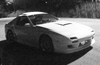

Full Member
Joined: Aug 2006
Posts: 207
Likes: 0
From: Vancouver, Canada
No offence but I thought this was a joke. I guess it can be justifiable to paint a conquest or 71 bug with a roller. Cars, since about late 80s may be early 90s generally have a 2 stage paint job, a few coats of base/color and a few coats of clear. Something like vintage red rx7 has a 3 stage paint, again a few coats of base, a couple of coats of tinted clear (a little color mixed in with clear) and then a few coats of clear, so I wouldn't do it with a roller, or a spray can. I would paint lawn mower with a spray can, rather than a roller. Once again, no offence intended.
P.S. I got my 02 wrx painted for $150, everything except the roof. Regular 2 stage paint job.
P.S. I got my 02 wrx painted for $150, everything except the roof. Regular 2 stage paint job.

 . BTW i'll PM you when i update pictures. you'll love it


Senior Member

Joined: Feb 2004
Posts: 658
Likes: 0
From: spokane wa
here goes another link with alot of pics. don't flame for the honda forum. lol
http://www.hondacivicforum.com/m_200..._1/key_/tm.htm
http://www.hondacivicforum.com/m_200..._1/key_/tm.htm


Steve
Joined: Dec 2006
Posts: 114
Likes: 0
From: Cincy OH
looks awsome, I do paint n body for a living, and have done this to 2 cars in the past, liek you said, the only hard part is sand and buff, takes forever an dlots of patience. Another, bit more expensive alternative is maaco. They spray for about 250 bucks by me. Just make sure you prep the car, and you wet sand and buff it, it looks good, and as long as your prep work is good, itll last.

Thread
Thread Starter
Forum
Replies
Last Post
