


Studding 13b


Chromoly , titanium or forged steel with a tensile strength of 180000psi or higher 1/2 inch (12.7mm) is what I see as most common . Grade a490 treated steel is about as close as I have found industrial commercially which is rated min150k-170k psi but I think I have seen stud kits rated as high as 205k psi if I remember correctly but maybe wrong I know I seen 195000k psi for sure
Last edited by heynoman; Sep 17, 2015 at 11:03 AM.


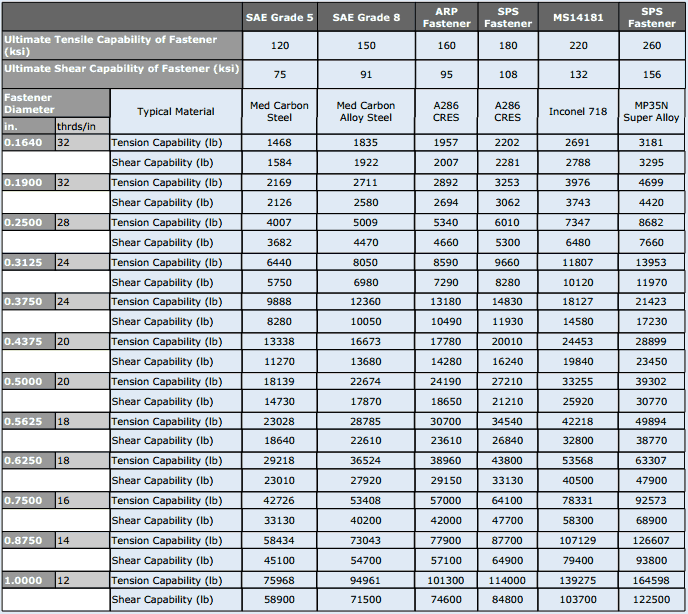
Factory engine bolts on 12a are 9.3mm same on s5 13b s4 13b bolts are only 8mm. 10mm is what most companies offer as a factory fit so you don't have to send your housings to be machine which is pricey I paid right around $1200 for my engine to be done with studs included but that's for the 12.7 (1/2") studs I would say Mazda bolts are probably only grade 8 and only keep the engine from opening apart and the dowel keep it from twisting to a point where the studs are design to do both I probably should have asked what is the purpose of your engine as in why are you planning on studding ???
Last edited by heynoman; Sep 17, 2015 at 04:04 PM.
Factory engine bolts on 12a are 9.3mm same on s5 13b s4 13b bolts are only 8mm. 10mm is what most companies offer as a factory fit so you don't have to send your housings to be machine which is pricey I paid right around $1200 for my engine to be done with studs included but that's for the 12.7 (1/2") studs I would say Mazda bolts are probably only grade 8 and only keep the engine from opening apart and the dowel keep it from twisting to a point where the studs are design to do both I probably should have asked what is the purpose of your engine as in why are you planning on studding ???
You can run 5 oversized bolts 1/2" I'll recommend a full set to anyone running over 500hp other will say it's not needed I like the added security so I replaced all of them if you do run studs you will need a aftermarket flywheel . One of the best thing you can do is have your rotors race clearances and balance your rotating assembly .
Trending Topics

balancing is only really needed above 8500 rpms, i never bother to recommend balancing on boosted engines because they shouldn't be spinning higher anyways unless using a more chatter resistant seal like ceramic, and that's a double edged knife anyways.
6 1/2" studs is plenty, and no, you don't need an aftermarket flywheel unless you leave them stupid long for some reason.
6 1/2" studs is plenty, and no, you don't need an aftermarket flywheel unless you leave them stupid long for some reason.
Currently running a light flywheel with appropriate counterweight, 720cc primarys 1600 secondarys 40psi basepressure fpr megasquirt 3x ecu with ls1 coils FFE mag kit, garrett t04R turbo with a 1.15 AR looking for 400-450whp, just wanted to be safe is all, 500whp would be nice but need a bigger turbo lol
balancing is only really needed above 8500 rpms, i never bother to recommend balancing on boosted engines because they shouldn't be spinning higher anyways unless using a more chatter resistant seal like ceramic, and that's a double edged knife anyways. 6 1/2" studs is plenty, and no, you don't need an aftermarket flywheel unless you leave them stupid long for some reason.
Last edited by heynoman; Sep 17, 2015 at 06:08 PM.
Currently running a light flywheel with appropriate counterweight, 720cc primarys 1600 secondarys 40psi basepressure fpr megasquirt 3x ecu with ls1 coils FFE mag kit, garrett t04R turbo with a 1.15 AR looking for 400-450whp, just wanted to be safe is all, 500whp would be nice but need a bigger turbo lol
what series is your engine?


Is it possible to stud a 13b while it is in the car? By just removing the tranny and flywheel and replacing every stud one by one? Orrrr would loosening even one stud cause the pinching of seals and whatnot?
there is 2 types, one that requires the block to be precision machined for studs to double as additional dowels which require the engine to be apart and there is oversize tension bolts that do not require disassembly. you can guess which is better.
i kinda went just a hair overboard on mine... 16 1/2" studs and reamed the block for tight tolerances. but the engine will never crack a plate at any power level.. with the S4 rotors the intent was to not have to tear it apart again for a long *** time, which is good because it isn't exactly easy to assemble with all those studs.

i kinda went just a hair overboard on mine... 16 1/2" studs and reamed the block for tight tolerances. but the engine will never crack a plate at any power level.. with the S4 rotors the intent was to not have to tear it apart again for a long *** time, which is good because it isn't exactly easy to assemble with all those studs.
Last edited by RotaryEvolution; Sep 19, 2015 at 12:46 PM.
That explains why you didn't have issues with your flywheel . And why you use 6 studs which is definitely plenty.most kits available are either 5 studs or bolts or your all in , I went all in too since I don't have the reinforce oil gallery in the rear iron (12a) .
Damn, that looks good Lyger. Next time I need to rebuild an engine I may get with you about machining for the studs. Thanks for the info. I plan to just get the turblown stud kit and install it when I swap my drivetrain. I just want some extra strength when I up the boost to get over 400 wheel.

Thread
Thread Starter
Forum
Replies
Last Post