


View Poll Results: Would you use Solid Corner Seals over OEM ones?
Yes


13
38.24%
No


20
58.82%
Don't care. They are about the same


1
2.94%
Voters: 34. You may not vote on this poll
solid corner seals vs OEM


solid corner seals vs OEM
I'm aware that Atkins makes one, and it's heavier, has a different finish, supposedly stronger.
I've searched and it seems that the results are pretty mixed. I'd like to hear from people who have used them extensively or over many miles, to learn how well they hold up, and how much more wear they cause on the side plates vs the OEM ones.
I've searched and it seems that the results are pretty mixed. I'd like to hear from people who have used them extensively or over many miles, to learn how well they hold up, and how much more wear they cause on the side plates vs the OEM ones.




I don't think the trade off between the strength, yet potentially added wear of the solid corners are worth it though. Reason being that the corner seals are not usually the weakest link, other issues such as bent/broken apex seals, collapsed seal springs, cracked housings, etc can all happen before or during, due to heat/detonation.
Thank you guys all for you input!

talking head

Joined: Apr 2008
Posts: 2,775
Likes: 15
From: Perth, WA, OZ
ive seen plenty of broke keyhole corner seals in my time.. havent seen many broke solids
also seen many engines without the plastic insert , either melted out, or built lacking
there is no way anyone can argue that keyholes without the insert will seal as well as a solid , or function as originally designed
have also seen that around 350 rwhp , ( on FC springs ) there is potential to overwhelm the side seal and corner seal springs and get blowby
evident by stuck corners or side seals and carbon witness marks down sides of the rotor..
in the distant past ( 90's ) ,, when the FD parts were not so obtainable ( where i am )
i always resorted to the double spring trick under corner and side seals when building my own street strip combos
( with the OEM corner seals )
some of these engines where repeat offenders for breaking corner seals and melting out the plugs
.. you can see why with the increased spring pressures and engine load
back then i dearly would have liked the options of a 2mm solid
.. but back then there wasnt the easy internet to reach out and find someone making these
currently i still reach for OEM.. but now i mostly only build for street cars
and i impose that 350- 400 rwhp limit on them
.. for reasons of the corner seal weakness , and that s4 rear plates have a limit in strength
anybody asking for more will be asked to supply s5 rear plate followed by recommends for solid corners and FD springs, and even pushed at some of the better aftermarket apex seal options
i think if you have gone so far as to have made the choice to move away from the mazda seal ( by all means the best seal up to a point )
then you have accepted a small sealing loss against the upgrade in strength
then you are also at the point where you have exposed the next weak link in the seals.. the corner seal .. and you may as well upgrade that too
also seen many engines without the plastic insert , either melted out, or built lacking
there is no way anyone can argue that keyholes without the insert will seal as well as a solid , or function as originally designed
have also seen that around 350 rwhp , ( on FC springs ) there is potential to overwhelm the side seal and corner seal springs and get blowby
evident by stuck corners or side seals and carbon witness marks down sides of the rotor..
in the distant past ( 90's ) ,, when the FD parts were not so obtainable ( where i am )
i always resorted to the double spring trick under corner and side seals when building my own street strip combos
( with the OEM corner seals )
some of these engines where repeat offenders for breaking corner seals and melting out the plugs
.. you can see why with the increased spring pressures and engine load
back then i dearly would have liked the options of a 2mm solid
.. but back then there wasnt the easy internet to reach out and find someone making these
currently i still reach for OEM.. but now i mostly only build for street cars
and i impose that 350- 400 rwhp limit on them
.. for reasons of the corner seal weakness , and that s4 rear plates have a limit in strength
anybody asking for more will be asked to supply s5 rear plate followed by recommends for solid corners and FD springs, and even pushed at some of the better aftermarket apex seal options
i think if you have gone so far as to have made the choice to move away from the mazda seal ( by all means the best seal up to a point )
then you have accepted a small sealing loss against the upgrade in strength
then you are also at the point where you have exposed the next weak link in the seals.. the corner seal .. and you may as well upgrade that too
bumpstart, thank you for sharing your experience. All good points. However, one thing that you didn't address was the reported increased wear caused by the solid corner seals.
I think this is the key differentiator that's pushing me to use OEM corner seals again. If your experience differ, then please share with us. Thanks!
I think this is the key differentiator that's pushing me to use OEM corner seals again. If your experience differ, then please share with us. Thanks!
Trending Topics
talking head
Joined: Apr 2008
Posts: 2,775
Likes: 15
From: Perth, WA, OZ
if you have aftermarket apex seals,, its likely you have increased wear,, and have considered that when you chose to move away from the mazda seal
// if you have taken that plunge , then its part and parcel to take the same risk on the solid corners .
after all , you not expecting 100 000 miles from a build with aftermarket apex seals
as is.. when i have built the older engines ( 3mm ) with oem mazda solids
- they show no more wear into the side plate than keyhole types
thats not specifically about the atkins 2mm type.. which i havent used yet
.. but an observation based on disassemble of many factory and rebuilt engines with and without the OEM solid corner seal
IIRC the factory moved away from the solid not for wear reasons.. plates with solids dont wear out quicker .. the keyhole corner seal seals better ( when it has the insert intact ) as is more flexible
// if you have taken that plunge , then its part and parcel to take the same risk on the solid corners .
after all , you not expecting 100 000 miles from a build with aftermarket apex seals
as is.. when i have built the older engines ( 3mm ) with oem mazda solids
- they show no more wear into the side plate than keyhole types
thats not specifically about the atkins 2mm type.. which i havent used yet
.. but an observation based on disassemble of many factory and rebuilt engines with and without the OEM solid corner seal
IIRC the factory moved away from the solid not for wear reasons.. plates with solids dont wear out quicker .. the keyhole corner seal seals better ( when it has the insert intact ) as is more flexible

Joined: Mar 2001
Posts: 30,782
Likes: 641
From: FL-->NJ/NYC again!
I've had numerous 500+ rwhp engines last for many years, not one broken OEM corner seal. If one breaks, there is a serious problem with the engine. I guess I just don't see the point, to each their own as they say of course 


and less mass means the springs don't have to work as hard, additionally less friction to wear the irons.


No reason what so ever to shy away from OEM Corners or Side seals. They dont fail, they just dont unless you have some CRAZY detonation and the apex seal doesnt let go first. Plus I have seen solid corners eat irons, especially resurfaced irons.

I had atkins solid corner seals in mines, and it pretty much worn down the irons. You can catch your nail on the lip of the path of the corner seal. While the OEM corner seals I have on another engine barely has the same wear.
I can see that from a price standpoint it might seem like a good idea.
I can see that from a price standpoint it might seem like a good idea.
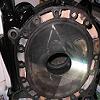
I slowly killed my 12A turbo by too lean air fuel high boost 1.7bar/ 25psi 9.4:1 compression on pump E85 fuel. I boosted it and drove it to the point where it would take 6+ very long cranks to get it to fire. Just a few weeks before I pushed it over the edge cold starts were taking 3 long cranks and hot starts 2 long cranks.
The failure points?
Apex seals low spot in centre (factory 12A ones and they are high spot in centre when new)
Flat corner seal springs (RX-8, getting replaced with FD3S ones)
I don't know too many people doing more than 25psi on a 9.4:1 compression engine with a lot of timing in it (more than 12 degrees BTDC)
This engine had RX-4 style solid corner seals with 3mm 12A apex seals. The apex seal springs are below the replacement height but not completely stuffed and the side seals and springs and corner seals are all inside specification.
All in all my lessions learnt?
Will always tune richer especially on E85 because you don't loose power (0.71 lambda)
Will start using 125:1 premix ratio
Will try to keep coolant temperature around 78C/172F
Rich air-fuel =cold, rich premix = cold seals, cold coolant = cold housings that apex seals are rubbing on. There are some very interesting plots in that Kenchi rotary engine book.
I am increasing the oil pressure from 4kg/cm2 (4bar / 60psi) to 6.5kg/cm2 (6.5bar / 95psi).
I am replacing the flat RX-8 corner seal springs with FD3S ones, I am reverting to standard 12A rubber plug corner seals. I am also changing over to competition outer oil control springs.
Other than that I got the street/extend port cut to the wide limit and slightly taller.
The failure points?
Apex seals low spot in centre (factory 12A ones and they are high spot in centre when new)
Flat corner seal springs (RX-8, getting replaced with FD3S ones)
I don't know too many people doing more than 25psi on a 9.4:1 compression engine with a lot of timing in it (more than 12 degrees BTDC)
This engine had RX-4 style solid corner seals with 3mm 12A apex seals. The apex seal springs are below the replacement height but not completely stuffed and the side seals and springs and corner seals are all inside specification.
All in all my lessions learnt?
Will always tune richer especially on E85 because you don't loose power (0.71 lambda)
Will start using 125:1 premix ratio
Will try to keep coolant temperature around 78C/172F
Rich air-fuel =cold, rich premix = cold seals, cold coolant = cold housings that apex seals are rubbing on. There are some very interesting plots in that Kenchi rotary engine book.
I am increasing the oil pressure from 4kg/cm2 (4bar / 60psi) to 6.5kg/cm2 (6.5bar / 95psi).
I am replacing the flat RX-8 corner seal springs with FD3S ones, I am reverting to standard 12A rubber plug corner seals. I am also changing over to competition outer oil control springs.
Other than that I got the street/extend port cut to the wide limit and slightly taller.

Joined: Feb 2001
Posts: 29,798
Likes: 128
From: London, Ontario, Canada
One of the reasons I have always used stock corner seals with the button is because the button is there to help dampen chatter. Mazda spent a lot of R&D to eliminate chatter and in the process moved away from solid corner seals. I've never seen any testing of the aftermarket solid seals in a daily driver scenario regarding chatter. Now obviously, in a race scenario, all bets are off.

One of the reasons I have always used stock corner seals with the button is because the button is there to help dampen chatter. Mazda spent a lot of R&D to eliminate chatter and in the process moved away from solid corner seals. I've never seen any testing of the aftermarket solid seals in a daily driver scenario regarding chatter. Now obviously, in a race scenario, all bets are off.
Plus you can't run a large street port with the rubber plugs and solids seals better than a stock one with no rubber.
problem is when people use them on the street attempting to squeeze 60k+ miles out of an engine.
Joined: Feb 2001
Posts: 29,798
Likes: 128
From: London, Ontario, Canada
I build bridgeports with the rubber plugs and have never lost one yet.

Psalms 37**25

Joined: Jan 2007
Posts: 866
Likes: 0
From: Garnerville N.Y
I think everyone on this post has their opinion based on street cars or relatively low horsepower cars.
Many friends I know including myself use the solid corners when pushing big boost. Slight detonation can break a factory corner seal or when the rotor smacks the irons but the solids will not crack or they will just get jammed in the corner slot when the rotor hits the iron.
Most of the big hp cars here in the east coast , Puerto rico or florida use the solid corner seals for a reason but then again they are a different bread from the folks on this board.
Many friends I know including myself use the solid corners when pushing big boost. Slight detonation can break a factory corner seal or when the rotor smacks the irons but the solids will not crack or they will just get jammed in the corner slot when the rotor hits the iron.
Most of the big hp cars here in the east coast , Puerto rico or florida use the solid corner seals for a reason but then again they are a different bread from the folks on this board.
I think everyone on this post has their opinion based on street cars or relatively low horsepower cars.
Many friends I know including myself use the solid corners when pushing big boost. Slight detonation can break a factory corner seal or when the rotor smacks the irons but the solids will not crack or they will just get jammed in the corner slot when the rotor hits the iron.
Most of the big hp cars here in the east coast , Puerto rico or florida use the solid corner seals for a reason but then again they are a different bread from the folks on this board.
Many friends I know including myself use the solid corners when pushing big boost. Slight detonation can break a factory corner seal or when the rotor smacks the irons but the solids will not crack or they will just get jammed in the corner slot when the rotor hits the iron.
Most of the big hp cars here in the east coast , Puerto rico or florida use the solid corner seals for a reason but then again they are a different bread from the folks on this board.
even in engines built for 800whp i sway away from them because i still have high expectancies of 50k+ miles from even highly abused street driven cars and irons are becoming more scarce with each passing season without shelling out $500 each for new ones with limited availability also. so if the engine is sacrificing itself to run for a few short years, that is unacceptable to me.
Last edited by RotaryEvolution; Aug 6, 2012 at 11:57 AM.

I use them, because I have seen several cases of burning up the rubber insert. The corner seal is one of the most critical areas of the engine with regard to temperature, and a rubber piece there isn't worth the risk IMO. I have never broken a corner seal, but just burning up the insert creates enough blowby to bother me. I have not run them for more than about 10k miles though, so I have no input on long term iron wear. That is not super important to me anyway.

On my 500hp plus bridged motor i have use OEM with no rubber inserts,compression was 120 on used housing and irons.Took the motor apart to change soft seal and 2 change the OEMs corner for Atkins solid and my compression went down 2 the 80s now this is the same motor that had 120 with OEMs but cause my bridges are so extreme i went with solids for piece in mind.Order a set of southcoast(from new zeland)solid corner seals and compression went back up.Every countersunk solid corner seal that i got from atkins was out of spec.s 2 begin with.
One of the reasons I have always used stock corner seals with the button is because the button is there to help dampen chatter. Mazda spent a lot of R&D to eliminate chatter and in the process moved away from solid corner seals. I've never seen any testing of the aftermarket solid seals in a daily driver scenario regarding chatter. Now obviously, in a race scenario, all bets are off.

