When you click on links to various merchants on this site and make a purchase, this can result in this site earning a commission. Affiliate programs and affiliations include, but are not limited to, the eBay Partner Network.
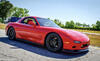
I’m fairly new to the rotary scene since this is my first Rx7 so please bear with me . I imported this 99 rx7 and I was noticing that the boost was higher than it was supposed to be ~around 15 psi instead of the usual 10 that it’s supposed to be. Since I don’t have access to the previous owner I’m going to ask you fine people.
I know that extra psi can blow seals which is why I am so concerned about it. I know people tune these for higher boost so I just checked out the ECU and I found this:
I looked it up and found nothing about it so hopefully you guys have some more info about it. So questions:
Should I be worried about the extra boost i’m seeing?
Should I be replacing this ECU just to make sure I won’t blow my engine?
The engine bay/engine is super pristine which makes me think that it was rebuilt recently not to mention high compression numbers in the 130 psi range across both rotors. I’m not seeing any fuel cut when I get to that 15psi boost and I didn’t notice a fuel cut defender hooked up either. What do you guys think?
Ah i feel stupid now for not searching it in Japanese… thank you for the website ! I know why it’s boosting to the 15 psi: “For FC3Ss that are over 25 years old, EcoCPU will reliably keep the sensor fixed value at 0.8 kg/cm2, regardless of the specifications or the degree of actuator deterioration. For FD3Ss, the factory specified boost (1.05 kg/cm2) will never be
exceeded.”
Although I don’t understand why they would put it to 1.05 when it should be 0.7? Maybe you would know why?
In Japan, 1 bar is just the standard boost pressure for "boost up" or "power up". A nice round number. I don't believe there is anymore consideration than that honestly
In Japan, 1 bar is just the standard boost pressure for "boost up" or "power up". A nice round number. I don't believe there is anymore consideration than that honestly
Well that’s not too reassuring haha. I contacted them on their website as well so hopefully I will get a reply back soon. I’m not sure I want to risk the health of my engine if that’s the answer they have for me as well.
A tuner shop might (Might) be able to see how much your drivetrain has be strengthened to handle the boost.
I wonder what is going on with the 130 psi compression test. rarely hear that high.
What sort of compression tester?
if you are using a standard compression tester that result could be cumulative (due to the shreader valve)..
Hm I’ll have to look into that. Here are the actual numbers that I got from a specialist rotary shop:
I would hope the shop would know what they are doing when taking the numbers but you never know. My guess is that since it’s likely recently rebuilt that the numbers are inflated and will come down over the next couple hundred miles.
Since you have a "99 you should be aware that the coil position was changed in and after 1996. If your mechanic uses the LHD shop manual as a guide, he/she could hook up the plugs or the coil harness in the wrong order. This can be very hazardous to your engine
Even experienced rotary shops can make this error as these later FD have only become available in the US recently and there are very few of them.
If you go in for a plug change and after your car runs very rough and backfiring, immediately suspect this problem.
Thanks for the heads up Rebul about the coils. Compression test was done in Japan so altitude shouldn’t affect the numbers. Car honestly runs great but i’m worried about the boost at the moment
I'd get another compression test. You might be seeing someone else's test in those pictures. Get your own tester for about $300. Buy extra sensors as they tend to fail.
Be careful on the order you attach the plugs after each test (see above).
I wonder how much the car has been modified?
Is the solenoid box still their under the UIM?
Be also aware that JDM did not have a check engine light. There is an engine overheat lamp in its place.
You need to run codes to learn if there are any issues.
Instead of a CEL, the ECU will make the car run poorly, if there are any codes arising.
The idea being you would take the car to the dealer for servicing.
What happens here is without a CEL, the shops will start to hunt and peck around your engine bay trying to find the issues.
We have had guys with their cars in the shops for six months.
The codes will tell you very quick where to look.
The JDM codes are very similar to the USDM codes.
You just have to learn to read the diagnostic module by hand.
(There is a $50 device now available that plugs into the module).
I'd get another compression test. You might be seeing someone else's test in those pictures. Get your own tester for about $300. Buy extra sensors as they tend to fail.
Be careful on the order you attach the plugs after each test (see above).
I wonder how much the car has been modified?
Is the solenoid box still their under the UIM?
Be also aware that JDM did not have a check engine light. There is an engine overheat lamp in its place.
You need to run codes to learn if there are any issues.
Instead of a CEL, the ECU will make the car run poorly, if there are any codes arising.
The idea being you would take the car to the dealer for servicing.
What happens here is without a CEL, the shops will start to hunt and peck around your engine bay trying to find the issues.
We have had guys with their cars in the shops for six months.
The codes will tell you very quick where to look.
The JDM codes are very similar to the USDM codes.
You just have to learn to read the diagnostic module by hand.
(There is a $50 device now available that plugs into the module).
Thanks for the info. Yeah I’m planning on doing a deep dive into the car today to see what kind of supporting mods the car has. Checking out the fuel system today to make sure the car can get enough fuel.
I’ll have to check to see if it still has the solenoid box as well.
That ecu is just remapped like many others have done. That article says 1.05 kg/cm2 or 14.93 psi so that reading you’re seeing seems accurate. With high grade fuel that it calls for in that link you’re probably fine. I will say that stock twin turbo life at that psi is shortened. You will not have any direct control over the boost control with that ecu. Depending upon your plan with the car that may or may not be acceptable.
As to your compression numbers, they seem on par to what these engines actually should be. We’ve started to accept low 100 psi as the norm now. When in reality, a nice tight fitting engine will be in the range you are seeing. Here are some numbers from a low mileage engine I acquired.
That ecu is just remapped like many others have done. That article says 1.05 kg/cm2 or 14.93 psi so that reading you’re seeing seems accurate. With high grade fuel that it calls for in that link you’re probably fine. I will say that stock twin turbo life at that psi is shortened. You will not have any direct control over the boost control with that ecu. Depending upon your plan with the car that may or may not be acceptable.
As to your compression numbers, they seem on par to what these engines actually should be. We’ve started to accept low 100 psi as the norm now. When in reality, a nice tight fitting engine will be in the range you are seeing. Here are some numbers from a low mileage engine I acquired.
~ GW
I definitely agree with you about the compression numbers. I think my compression is good and i’ve always ran 93 octane in it.
I’m really starting to think about getting an ecu that I can control that’s stuff with. In the future i’m planning to do a single turbo so a new ecu would be required anyways.
I can’t imagine that you can run 14 psi on the stock fuel pump though right? I feel like you wouldn’t be getting enough fuel to the engine
The questions you’re asking are a little more in depth. You’ll get a certain type answer to that fuel pump question. The pump size is dictated by the requirement of injector flow, which is dictated by the amount of pounds your turbo charger can produce. Ideally, you would pick a certain target horsepower level, then a turbo charger that can suffice, then your Injector sizing, then your pump.
My suggestion would be to take time, research and make a decision on what your wants / needs are, then follow accordingly. Just remember, the rabbit hole runs deep.
Seller has one for sale atm. He likely keeps rolling the auction over. If you click on the sellers name, you see he has a number of 3D printed FD parts for sale.
The device works with the stock ecu. I don't know if your modified ecu will through codes in the same way.
The questions you’re asking are a little more in depth. You’ll get a certain type answer to that fuel pump question. The pump size is dictated by the requirement of injector flow, which is dictated by the amount of pounds your turbo charger can produce. Ideally, you would pick a certain target horsepower level, then a turbo charger that can suffice, then your Injector sizing, then your pump.
My suggestion would be to take time, research and make a decision on what your wants / needs are, then follow accordingly. Just remember, the rabbit hole runs deep.
~ GW
For sure and i’m planning on getting into that when I start to build the car but right now i’m just trying to keep her healthy haha.
I guess my question would be that; would a stock fuel system be able to keep up with the 14psi boost that my car is making right now? The last thing i want is my car making too much boost and then the fuel system can’t keep up and it goes boom lol. I’m looking at the top of my fuel pump currently and it looks like it hasn’t been opened up so i’m doubtful that it has an aftermarket pump in.
Seller has one for sale atm. He likely keeps rolling the auction over. If you click on the sellers name, you see he has a number of 3D printed FD parts for sale.
The device works with the stock ecu. I don't know if your modified ecu will through codes in the same way.
I guess my question would be that; would a stock fuel system be able to keep up with the 14psi boost that my car is making right now? The last thing i want is my car making too much boost and then the fuel system can’t keep up and it goes boom lol. I’m looking at the top of my fuel pump currently and it looks like it hasn’t been opened up so i’m doubtful that it has an aftermarket pump in.
its an old car, someone could have put a pump in 20 years ago.
a stock pump will do 14psi, if everything is perfect, JDM tuners typically don't tune as rich as we do. us westerners looked at the already rich factory afr, and we've iterated a little richer for safety for ~20 years. so we want to run like 9.99:1 all the time, and the JDM tuners are probably more like 11.5:1. they probably would also be running colder than stock plugs
its an old car, someone could have put a pump in 20 years ago.
a stock pump will do 14psi, if everything is perfect, JDM tuners typically don't tune as rich as we do. us westerners looked at the already rich factory afr, and we've iterated a little richer for safety for ~20 years. so we want to run like 9.99:1 all the time, and the JDM tuners are probably more like 11.5:1. they probably would also be running colder than stock plugs
Looks like you’re right, Pulled the pump out and looks to be OEM replacement?
I should be fine then to keep running as is until I get a ECU replacement then? My main goal is to just keep it healthy until it blows up and then start building it.
Assuming will get you in a lot of trouble. You need to pull the pump hanger out to verify which pump you have. I cannot answer if it’s safe or not. You would need to know what the afr readings are to determine that.
Assuming will get you in a lot of trouble. You need to pull the pump hanger out to verify which pump you have. I cannot answer if it’s safe or not. You would need to know what the afr readings are to determine that.
~ GW
I pulled it out - check last reply to j9. Seems to be an OEM replacement - Denso 195130-0782. I think checking afr reading would be a good idea though




 . I imported this 99 rx7 and I was noticing that the boost was higher than it was supposed to be ~around 15 psi instead of the usual 10 that it’s supposed to be. Since I don’t have access to the previous owner I’m going to ask you fine people.