When you click on links to various merchants on this site and make a purchase, this can result in this site earning a commission. Affiliate programs and affiliations include, but are not limited to, the eBay Partner Network.
My goal is the least lag and the most power across the range, rather than max power. Durability is also important – I want my car set up as if it were endurance racing, although it was previously raced in time attack.
Maybe 99-02 turbos (with supporting hardware and tuning) are the best solution for me. I think the previous owner and tuner had the same goals in mind.
My goal is the least lag and the most power across the range, rather than max power. Durability is also important – I want my car set up as if it were endurance racing, although it was previously raced in time attack.
Maybe 99-02 turbos (with supporting hardware and tuning) are the best solution for me. I think the previous owner and tuner had the same goals in mind.
It's is all about the setup that you choose. With the introduction of bb turbos, the days of peaky hp curves are a thing of the past...
It's is all about the setup that you choose. With the introduction of bb turbos, the days of peaky hp curves are a thing of the past...
Doesn't seem to be the case to me.
When I look at modded sequential turbo FD dyno charts they are making 150-200RWHP at 3,000rpm.
Most people with GT35Rs are barely making 100rwhp at 3,000rpm and peaking ~400-450rwhp. If you drop to a smaller single turbo the top end torque falls off really fast and you still only make around 150rwhp at 3,000rpm.
My TII makes 120RWP at 3,000rpm and it is a complete pig down low compared to my ~270hp stock ECU sequential FD.
The sequential turbos match the peripheral exhaust port rotaries well as they need huge exhaust wheel area to cope with the external combustion from too much overlap without choking flow and "undersquare" nature of the 13B which means very little power (exhaust energy) at low rpms and high power at high rpms and can still spool extremely well on the low end.
Ofc ball bearing sequential turbos would really work well. Sequential EFR 6758s would be insane torque and ~400rwhp.
Show me just one single turbo FD dyno chart that makes 200rwp at 3,000rpm. That is LS V8 territory without the torque drop at higher rpms.
^^what does 200 hp at 3000 rpms have to do with a peaky hp curve? Nothing so I still stand by my statement that peaky hp are a thing of the past. Yes the v8 gets 200hp by 3000rpm *but* tops out at what rpm... now a single gt35r gets 200hp at 4000rpm *but* tops out at what rpm ... its all about POWERBAND.
BTW GT35Rs do not top out at 450rwhp. They have been known to hit 500rwhp.
Even a ball-bearing turbo has limitations. It's simply a question of physics. The size of the turbo dictates its air flow characteristics, no matter what kind of bearing or fancy blade configuration is used. Ball bearing turbos spool faster than journal bearing turbos – but using two turbos takes away the limitations of a single turbo while making the system more complex.
Nothing I've read about porting the 13B-REW mentions large gains in low end power, and most single turbo setups aren't designed to maximize low end power either (the tradeoff is not worth it), as far as I know.
^Thats exactly right. There is no free lunch. Smaller turbos have a lower boost threshold (better down low) but have a lower effifiency range. Bigger turbos have a higher boost threshold (lose down low) but have a higher efficiency range. The trick is to pick a setup that best suits your needs. Having an engine ported does not increase power downlow. In fact, it does the opposite. Streetporting get more power up top at the expense of power down low.
Regarding bb vs journal. Back in the days we would see plots of guys making 470rwhp but they would start spooling until 5000rpms. Now thats a peaky hp curve.... Today with bb turbos you can see guys hitting 10psi by 3200rpms, 15 psi by 3500 rpms and holding power past 8000rpms (ported engine dependent).
You guys lol. A properly setup GT35R will destroy the twins in the low-end. Those who say otherwise haven't experienced it or don't understand it. A stock 93 turbo on the primary will make boost around 2,500 RPM +/- whatever, it can make full boost before but is much slower. Ok, so now you have boost, how much power is it actually making between 2500 and 4500 RPM? Not much really, you don't even get that much of a tug, you just have boost. The twins really only wake up when the 2nd turbo kicks in and then you actually have power. The low-end of the primary turbo that you guys keep talking about is so flat, its not even funny.
Now lets take a GT35R that isn't part of an ebay kit or setup on the cheap. I'm talking full divided manifold with twin wastegates, 3.5-4" downpipe, and a short intercooler system (remember how small the stock IC system is). Assuming everything else with your setup isn't lacking, your going to get full boost around 3,000-3,200 RPM. It's going to come on HARD and blow the twins out of the water. Also, even before it hits full boost, the transitionary boost will start making more power then the primary turbo so technically sooner your making more power then the twin.
Now the problem with you guys is you just compare internet dyno's. Usually when a dyno plot is taken on the dyno, the owner/tuner doesn't really care about whats happening below 4,000 RPM. When I tune on the dyno, I set the starting point at 3500-4000 RPM or manually start it at that point. The sub 4,000 RPM is either tuned on the street or using simulated road. Dyno's load is also not the same as the street nor is the air so turbo's usually spool slower by nature and is not an accurate comparison.
Since porting was brought up I will also mention that. Most single turbo setup's have some form of large streetport done to them. Your average large streetport moves your torque powerband to 5000-8000 RPM. This is good as that is what the rotary is good for to begin with but if your talking about low-end then its not what your looking for (Although frankly a lot of people don't really know what they want when they have the twins because they don't know what the differences are). The term "streetport" is actually pretty arbitrary and has no real meaning, it just means its no longer stock and still isn't a bridge, so its really ANYTHING. An engine can be ported big to make low-end torque if that is what you wish but then you won't get the airflow up top. It's a sacrifice you have to make. But really torque is something you just feel, it doesn't actually make your car faster overall. Only when comparing RPM by RPM can you say its "faster".
I'd also like to add that any internet dyno's you see would also be with these large ports so again your perception of reality will be scewed. Also, have any of you guys ever driven a large streetport sequential setup that gets 400 rwhp? The low-end on the primary turbo on those setups is rediculously flat and turbo lazier then normal. This is because the motor is ported to make the power up top, not down low. So even though it has the boost, the motor isn't in its efficient range so at that point having boost is pointless.
And my last little tidbit... 200 rwhp @ 3,000 RPM? Are you ******* kidding me? You would have to be making 350 ft/lbs of torque at 3,000 RPM to make that kind of power. A stock port REW makes peak torque around 5,500 RPM and it would never be that much on twins regardless. By comparison the cosmo 20b made 300 ft/lbs of torque @ 3,000 RPM with the sequential setup and the exhaust manifold so it peaked out somewhere in the 6k rpm range. Good luck trying to make that on an 13b-REW, that motor was specifically designed to make low-end torque with everything about it like the intakes and the exhaust manifold were intended to make down low power. Just look at the REW intake design ffs.
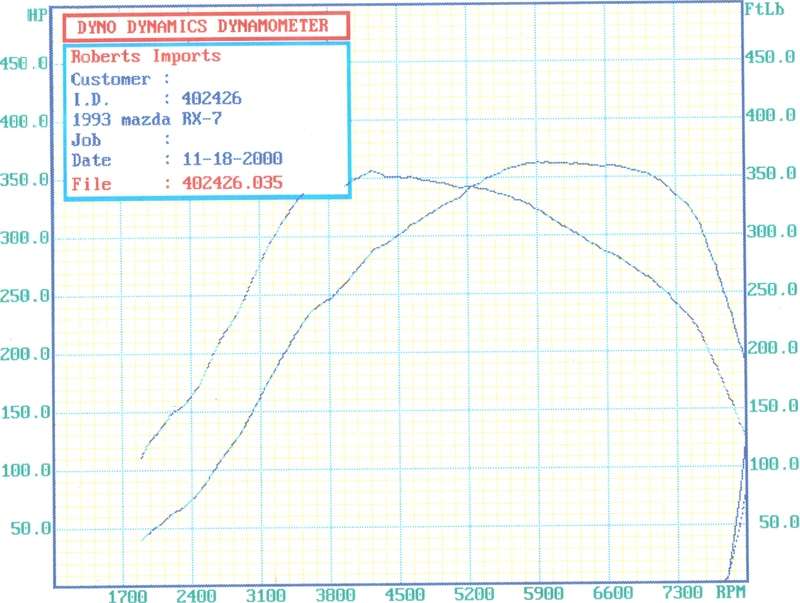
Here is the dyno graph of a setup that was specifically built to make torque...
Regarding bb vs journal. Back in the days we would see plots of guys making 470rwhp but they would start spooling until 5000rpms. Now thats a peaky hp curve.... Today with bb turbos you can see guys hitting 10psi by 3200rpms, 15 psi by 3500 rpms and holding power past 8000rpms (ported engine dependent).
That has more to do with newer turbo designs/advances than BB vs. Journal. Current day journal bearing turbos spool drastically faster than the old T78s/88s of a decade ago. BB does make a difference but in most situations it's 3-500rpms.
I would still love to see someone run a T4 precision 5862 on a rotary around 18-20lbs. Might be the best of both worlds. My personal FD that I drive often is sequential for whatever that's worth. Pettit ecu, water injection, stock fuel and 13-14lbs sequential is a hard all around setup to beat for a pleasurable street car.
Here is the dyno graph of a setup that was specifically built to make torque...
I don't know what to say except for thank you for making my point for me by posting that high torque single turbo dyno plot. Peaky torque early and then torque falls on its face on the top end because the GT35R exhaust wheel in .63 housing turbo cannot flow enough exhaust and the 55mm compressor can't flow enough air.
That set up is perfect for what it was built for-
putting the most power to the ground in 2nd gear auto-x courses. If it made top end torque it would just spin the tires from rpm torque multiplication in 2nd gear and the early torque makes up for the lower torque multiplication in lower rpms.
If that same car needed to be able to stretch its legs in 4th gear as well it would really benefit from another sequential turbo coming on at 4,500rpm to carry the torque in the high rpm.
If you look at high power sequential twins plots they don't start to drop torque until around 6,500rpm and it is a slower drop off.
You can find some sequential turbo dyno plots that make 175-200hp at 3,000rpm because they tune for full boost on the primary turbo (like the 19psi the single turbo plot you showed is running).
If you run the stock 10psi on the primary turbo you get the usual 100-120rwhp at 3,000rpm which is about where the usual GT35R builds are that are not limited to 10psi (except maybe by spool).
Fast forward 7 yrs, is the EFR a better choice?
Or upgraded twins still the preferred choice?
Dyno of stock port engine at 17psi with EFR 7670 on 93 pump, no water or meth injection.
I don't know if it's what's the better choice as to what's best for your goals and budget.
The EFR's are KILLER on a rotary, that's for sure. But, you do have the expense and work to get it all going.
Banzai Racing's dyno thread showing the power gains for each mod showed 350 rwhp at 14 psi with a good tune and healthy stock engine. People are getting 400hp to the ground all day with a BNR setup.
To answer the original question, I think about 380hp is about as far as you can wring the stock twins. You'll probably have shorter life on them and they are giving all they have. About 350 and some change is probably a good safe max power setup.
my curiosity led me to this thread, as i just dynoed my 2000 RX7 at 315whp and 299ft lbs on 93octane...stock twins, FMIC, intake, exhaust, haltech Elite 2500
16psi peak and held 14psi to redline
this thread doesnt make me as happy anymore lol
my curiosity led me to this thread, as i just dynoed my 2000 RX7 at 315whp and 299ft lbs on 93octane...stock twins, FMIC, intake, exhaust, haltech Elite 2500
16psi peak and held 14psi to redline
this thread doesnt make me as happy anymore lol
Why? Compare with yourself and the fact that you're making what amounts to ~370 horsepower on a platform that was released in 1993 with 255 not with other internet turds. These cars are old. They're still awesome but until you get out from under stock constraints - such as factory drivetrain and/or turbos they're not comparable to most modern vehicles.
I think people also forget how light these cars are. Becoming too obsessed with a power number will only lead to heartbreak anyways. Most people will never use the power they end up trying to develop. You'll hear a lot of people say... "If I could only go back to when...."
Yep. Also no traction control. I'm making probably 330 to the wheels. and with 255's on the back on cold tires I can just light them up in 1st gear.
Modern cars with insane horsepower figures all have traction control. All the power in the world is useless if all it does it turn tires into smoke and doesn't move you forward.
^ Yup, funny I was first to reply to this thread nearly 9 years ago
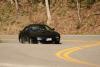
Now fast forward 9 years, I did get it tune in 2014 and made 355rwhp @1bar, am still running the same setup today except the twins are starting to complain with a little smoke under boost And just like Dale, 265s rear will come lose easily on a cold day but this car is a blast to drive.
Do you mean in the stock siamesed form factor or sequenial twins devorced from each other?
In the '90s M2 sold ball bearing hybrid stock twins.
Revolution sells a set of hybrid twins with a ball bearing primary turbo (2ndary is pre-spooled in sequential operation).
BNR sold hybrid stock twins using plain bearing GT28 center housing/rotating assemblies. These have dynamic seals instead of carbon seals.
Hitachi sells the smaller updated 1999-2002 "high power" spec stock twin turbos and the larger sized SP spec stock twin turbos along with the original twin turbos.
An Australian guy sells his take in the larger SP spec twins (RX-7 SP was a limited production homologation model to maintain FD dominance in endurance racing).
All these including dead stock 1991-2002 "low power" twin turbos have made over 400rwhp.
None have made over 450rwhp on internal wastegate.
One has made 475rwhp with a large external wastegate.
This has led me to believe the dead head turbine flow exiting the turbos in the stock siamesed twin turbos may be a limiting factor in peak power production.
No one has made a divorced sequential twin set-up that I know of.
Thank you for that incredibly thorough and knowledgeable reply! I recently picked up a '93 and was curious if you could create a wider powerband with small modern (e.g. EFRs) turbos. It sounds like a bigger engineering project than just a swap ...
Haven't seen any results, even though one of the vendors on this forum sold an unused Feed manifold some years back - a twin turbo system with one turbo per rotor......a non sequential system. The turbos it was intended to be used were a 90s design by Trust(?), similar in size to the twins with the remade SP compressor housing, not the new and improved stock replacement hitachis.
A wider powerband would be a bit of pipedream, even with the flanges cut off and 21st century turbos installed I'm sure. Avoiding the hell of the stock manifold and convoluted gas path inside the stock twins and out the exhaust you'd expect to improve the top end though.
Haven't seen any results, even though one of the vendors on this forum sold an unused Feed manifold some years back - a twin turbo system with one turbo per rotor......a non sequential system.
the JDM tuners used to like non sequential twins for a couple of reasons, the first being that Mazda's factory setup was non sequential twins, last appearing in the Racing Beat Bonneville FC (Full bridge port, 530hp@15psi)
second being that at the time they didn't have a lot of choices of turbos, so this was a way to get something that fit better.
i've seen a variety of turbos, TD04, TD05 and GT3037's, hp is usually around 500, although the headline cars, the KSP FC and FD were well over 700ps.
the downsides of course are cost, you need 2 of everything, and its complex, by 2001 you could just run a single HKS T51, like the big red Scoot car and make the HP, so its kind of a relic, but it is cool



 ... its all about POWERBAND.









 And just like Dale, 265s rear will come lose easily on a cold day but this car is a blast to drive.