


Ceramic Coating on Inside and/or Outside?


 Ceramic Coating on Inside and/or Outside?
Hi guys, I'm going to have a shop do the ceramic coating for me. I'm currently thinking of coating the following parts:
Downpipe
Midpipe
Upper Intake Manifold
Greddy Elbow
I'm wondering if the throttle body is worth the money to paint it? Also what part should I paint inside&outside and what part should I paint only the outside? I saw many people in the forum coating both inside the outside of the upper intake manifold. Wouldn't the intake air flow be affected if the coating is not smooth?
What's your opinion? Thanks!
Mike
Downpipe
Midpipe
Upper Intake Manifold
Greddy Elbow
I'm wondering if the throttle body is worth the money to paint it? Also what part should I paint inside&outside and what part should I paint only the outside? I saw many people in the forum coating both inside the outside of the upper intake manifold. Wouldn't the intake air flow be affected if the coating is not smooth?
What's your opinion? Thanks!
Mike


You actually want to have turbulence in the intake air stream to prevent fuel from condensing on the walls as it will with a smooth surface, so no problem there.
That said, avoid ceramic on ANYthing intake-side. I paid $240 for a "premium" ceramic coating, that started flaking and f'd up my 6 ports. Not only that, they ignored my specific instructions to not get any blast material in the VDI manifold, and f'd that up too. So I ended up having to buy another manifold and throw the old one out. I will never recommend ceramic again. I have never seen ceramic not crack or flake over time.
Take a look at your old ceramic coffee mugs. See al those cracks?
I have clients in the e-cig and portable vaporizer industry, and same deal. The units with ceramic bowls to hold the herb will crack and flake under the heat and friction, and you end up inhaling it.
Whether it's going into your lungs or into your engine, either way I'm not a fan. And don't get me wrong, I wanted it to be awesome, I was SO all for it, against the advice of several more experienced tuners. Should have listened, instead I wasted half a grand on f'n intake.
I'm sure you'll get 3 other people after me who say they have ceramic coated everything and it's just fine, but that has not been my, or my buddies experience.
I will never recommend ceramic coating after my experiences with it.
-Geoff
That said, avoid ceramic on ANYthing intake-side. I paid $240 for a "premium" ceramic coating, that started flaking and f'd up my 6 ports. Not only that, they ignored my specific instructions to not get any blast material in the VDI manifold, and f'd that up too. So I ended up having to buy another manifold and throw the old one out. I will never recommend ceramic again. I have never seen ceramic not crack or flake over time.
Take a look at your old ceramic coffee mugs. See al those cracks?
I have clients in the e-cig and portable vaporizer industry, and same deal. The units with ceramic bowls to hold the herb will crack and flake under the heat and friction, and you end up inhaling it.
Whether it's going into your lungs or into your engine, either way I'm not a fan. And don't get me wrong, I wanted it to be awesome, I was SO all for it, against the advice of several more experienced tuners. Should have listened, instead I wasted half a grand on f'n intake.
I'm sure you'll get 3 other people after me who say they have ceramic coated everything and it's just fine, but that has not been my, or my buddies experience.
I will never recommend ceramic coating after my experiences with it.
-Geoff






My turbine housing and HKS manifold are ceramic coated and HUGE difference in heat dissipation. I definitely recommend doing the outside of any part you want to protect. The inside, I don't have any personal input on it but I wouldn't as others have said. I know a few guys that have done the UIM/LIM outside and zero issues.
Go with Calico Coatings in Denver North Carolina. They do Nascar coating and the prices are very reasonable. I have them do all my coating for headers and downpipes inside and out. Cool Black or Cool Chrome

Trending Topics
Outside is theorhetically fine - the finish will crack but if it does it falls to the ground. The only issue then is that you trust the shop to properly seal the part during blasting.
As i mentioned, I gave my shop EXPLICIT instructions on how to coat the intake, which they ignored, and got blasting and ceramic material overspray on the INSIDE of the intake. It then cracked, flaked, and jammed my 6 port sleeves, which i'm HOPING are still useable.
As i mentioned, I gave my shop EXPLICIT instructions on how to coat the intake, which they ignored, and got blasting and ceramic material overspray on the INSIDE of the intake. It then cracked, flaked, and jammed my 6 port sleeves, which i'm HOPING are still useable.

I don't think fuel condensing on the walls of the intake would be a problem. I think that is only a problem in a wet intake system (i.e. carbureted)

I have had my UIM.LIM and turbo manifold coated for years with no issues...
Its all a matter of preference, I did the turbo manifold to help with under hood temps and the intake manifolds to keep heat out of the interior walls. No scientific evidence it has helped the intakes, just a mind game for me I guess. AHAHAHAHAHAHA
Its all a matter of preference, I did the turbo manifold to help with under hood temps and the intake manifolds to keep heat out of the interior walls. No scientific evidence it has helped the intakes, just a mind game for me I guess. AHAHAHAHAHAHA
I have had my UIM.LIM and turbo manifold coated for years with no issues... Its all a matter of preference, I did the turbo manifold to help with under hood temps and the intake manifolds to keep heat out of the interior walls. No scientific evidence it has helped the intakes, just a mind game for me I guess. AHAHAHAHAHAHA
What's your setup and who did the coating?


From MotoTune: Homework
Why Not Polish The Ports ??
Doesn't Air Flow Better on a Smooth Surface ???
Remember that the ultimate goal isn't "flow" ... it's POWER !!
The intake port is going to flow both fuel and air. The problem with fuel is that, since it weighs more, it's difficult to keep it evenly mixed with the air as it follows the contours of the port.
Boundary Layer
The next time you drive a car in the rain, notice that when the car is going 60 MPH, the rain drops go up the hood of the car at walking speed. That's because the smooth surface of the car creates what's known as a boundary layer, and the portion of that layer of air that's nearest to the surface is almost still.
The same thing happens inside an intake port. Except instead of raindrops, it's fuel droplets that will run down the port wall slower than the air. That causes a serious change in the fuel air mixture by the time it reaches the cylinder, ruining much of the engine's potential power.
Polishing the port walls will ensure that this happens.
The phrase "Port & Polish" always makes me laugh ... I think the idea came from 70's Hot Rod magazines or something. Anyways, the last thing you want to do is polish your ports !!!
Instead, by making a series of rough 60 grit lines that purposely go against the flow, the "boundary layer area" will be turbulent, and the fuel will stay suspended in the air.
Remember: Rough is Good !!
Doesn't Air Flow Better on a Smooth Surface ???
Remember that the ultimate goal isn't "flow" ... it's POWER !!
The intake port is going to flow both fuel and air. The problem with fuel is that, since it weighs more, it's difficult to keep it evenly mixed with the air as it follows the contours of the port.
Boundary Layer
The next time you drive a car in the rain, notice that when the car is going 60 MPH, the rain drops go up the hood of the car at walking speed. That's because the smooth surface of the car creates what's known as a boundary layer, and the portion of that layer of air that's nearest to the surface is almost still.
The same thing happens inside an intake port. Except instead of raindrops, it's fuel droplets that will run down the port wall slower than the air. That causes a serious change in the fuel air mixture by the time it reaches the cylinder, ruining much of the engine's potential power.
Polishing the port walls will ensure that this happens.
The phrase "Port & Polish" always makes me laugh ... I think the idea came from 70's Hot Rod magazines or something. Anyways, the last thing you want to do is polish your ports !!!
Instead, by making a series of rough 60 grit lines that purposely go against the flow, the "boundary layer area" will be turbulent, and the fuel will stay suspended in the air.
Remember: Rough is Good !!

Since it's along the subject line of the OP's question.....
https://www.rx7club.com/3rd-generati...4/#post4216015
http://swaintech.com/race-coatings/
http://swaintech.com/race-coatings/


Setup is single with standard FD intakes with Ceramic Chrome UIM and LIM. Turbo manifold is coated in Black cause it holds higher temps. Car made 552 whp on a Mustang Dyno
Coating was done locally at a placed called HotShotz, I worked with the owner due to the high temps from the Rotary. We monitored the coating and found that the Chrome does not hold up well on the turbo manifold unless he double coats it which makes cost higher. Intakes have been holding up well.

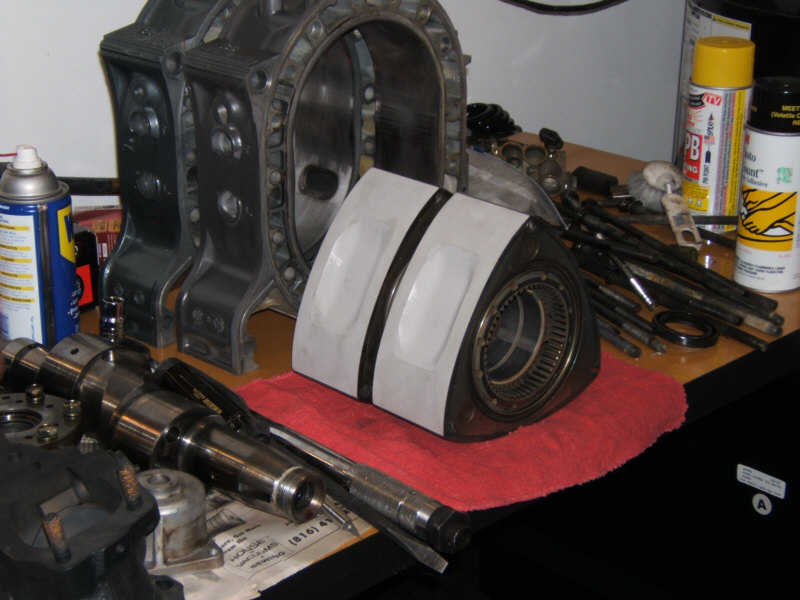
I've done engine rotors with no flaking and coated the turbo manifold with turbine housings inside and out with zero flaking issues. It's all about preparation, the proper coating, and proper curing process. It took a long time to find the right balance of all three I'm embarrassed to admit... 
Hi guys, thank you all very much for the input!! I took my uim, dp, and midpipe to a shop called Specialized Coating in Huntington Beach, CA since it was local to me. I will post up my results when I get my parts back.
Mike
Mike

Little late to the party with this one as you've already taken your parts in, but this might help the next guy.
The are two types of ceramic coatings, with one that acts as a thermal "barrier" and the other as a heat "dispersant". Just like their names suggest, thermal barriers act to hold heat in and dispersants aid in taking heat out.
Most guys only know of the thermal barrier ceramic coatings and use it on everything. There is a better way though and that is to use heat dispersant coatings on parts where you want the heat to dissipate as quickly as possible. So, parts such as your UIM, intercooler and piping, radiator, and your turbo center section and compressor housing (snail) should have a dispersant applied versus a thermal barrier. For these parts, you want to wick the heat out to keep things as cool as possible.
Here is a good primer on the two:
Thermal Barriers
These coatings reduce the ability of heat to escape from the applied part or protect a part from excessive heat. In combustion chambers you want to use the heat generated by combustion to push down on the piston rather than bleed off into surrounding surfaces. These coatings can also provide oil shedding properties.
Thermal Dispersants
Excessive temperature can lead to metal fatigue, boiling fluids damaging metal expansion and more. These coatings allow the metal to transfer heat away 15-20% more efficiently. They are also oil shedding, providing faster drain-back to the oil pan. Use them on any part that is or can be used to provide cooling.
Here is a summary chart that shows best practices for which type of coating to use on various parts. Scroll down to see the entire chart:
Engine Armor Automotive Performance Coatings | Applications
So, your down pipe and mid pipe should be treated with a ceramic barrier (you want to keep the heat in) and your UIM should be done with a thermal dispersant (you want the heat out to keep AITs down as much as possible).
I've just learned this stuff from my Borg Warner relationship and had no clue there were different types of ceramic coatings. My UIM was already coated in a ceramic barrier prior to me learning about the differences, so I'll probably leave it for now, but I am having a bunch of exhaust, header, and v-mount work done now and am using the ceramic barrier product on the exhaust and the header and the thermal dispersant on the radiator, intercooler, and piping.
Finally, as mono4lamer points out, prep work is key to making ceramic coatings stick and last. You have to ensure the parts you are coating are dirt and oil free and you then must "etch" the parts with a solution like iron phosphate. Do it right and you won't have flaking.
The are two types of ceramic coatings, with one that acts as a thermal "barrier" and the other as a heat "dispersant". Just like their names suggest, thermal barriers act to hold heat in and dispersants aid in taking heat out.
Most guys only know of the thermal barrier ceramic coatings and use it on everything. There is a better way though and that is to use heat dispersant coatings on parts where you want the heat to dissipate as quickly as possible. So, parts such as your UIM, intercooler and piping, radiator, and your turbo center section and compressor housing (snail) should have a dispersant applied versus a thermal barrier. For these parts, you want to wick the heat out to keep things as cool as possible.
Here is a good primer on the two:
Thermal Barriers
These coatings reduce the ability of heat to escape from the applied part or protect a part from excessive heat. In combustion chambers you want to use the heat generated by combustion to push down on the piston rather than bleed off into surrounding surfaces. These coatings can also provide oil shedding properties.
Thermal Dispersants
Excessive temperature can lead to metal fatigue, boiling fluids damaging metal expansion and more. These coatings allow the metal to transfer heat away 15-20% more efficiently. They are also oil shedding, providing faster drain-back to the oil pan. Use them on any part that is or can be used to provide cooling.
Here is a summary chart that shows best practices for which type of coating to use on various parts. Scroll down to see the entire chart:
Engine Armor Automotive Performance Coatings | Applications
So, your down pipe and mid pipe should be treated with a ceramic barrier (you want to keep the heat in) and your UIM should be done with a thermal dispersant (you want the heat out to keep AITs down as much as possible).
I've just learned this stuff from my Borg Warner relationship and had no clue there were different types of ceramic coatings. My UIM was already coated in a ceramic barrier prior to me learning about the differences, so I'll probably leave it for now, but I am having a bunch of exhaust, header, and v-mount work done now and am using the ceramic barrier product on the exhaust and the header and the thermal dispersant on the radiator, intercooler, and piping.
Finally, as mono4lamer points out, prep work is key to making ceramic coatings stick and last. You have to ensure the parts you are coating are dirt and oil free and you then must "etch" the parts with a solution like iron phosphate. Do it right and you won't have flaking.
^ No you want a dispersant. As I understand it, the metal is going to gain heat regardless of the coating. The question is how to best deal with it. The barrier will hold the heat in. That is good for parts like the exhaust manifold but not the UIM. For the UIM the more heat you can remove the better. Thus use a dispersant for lower AITs. If you spray meth like I do, I'd guess there won't be much of a difference either way as the meth does a great job of keeping things cool.
^ok, so I'm guessing this heat dispersion coating works in ways other than simply helping thermal conductivity, and there is some other kind of dark voodoo going on here.
Because unless you have a cold engine bay and hot intake charge, you would be putting heat in to the coated intake system, rather than shielding all your lovely cool intake charge from nasty rotary engine bay heat.
Because unless you have a cold engine bay and hot intake charge, you would be putting heat in to the coated intake system, rather than shielding all your lovely cool intake charge from nasty rotary engine bay heat.
Thanks David Hayes and WANKfactor! When I brought my parts in, the guy did not tell me anything about Thermal Barriers and Thermal Dispersants. Should I call them again on Monday??
Mike
Mike
When I was talking to the shop before wasting $240 and nuking my intake manifolds they suggested barrier layer on the underside of the intake manifold and dispersant on top.
It's true that it will still get just as hot as always, just take longer to do so, and also take longer to cool if you do full barrier coat. Using the dispersant would cool faster after ambient temps drop.
It's true that it will still get just as hot as always, just take longer to do so, and also take longer to cool if you do full barrier coat. Using the dispersant would cool faster after ambient temps drop.